
Imagine a stormy night. Rain lashes against the windows, thunder rolls across the sky, and inside a small living room, two siblings argue over who gets to play their favorite game. Their words are sharp, their gestures animated, and the tension is almost tangible. This is a fight—but it’s also much more than just an argument. In language, in storytelling, and in everyday life, we often use metaphors for fighting to make these conflicts vivid, dramatic, or even poetic.
Metaphors help us express emotions, actions, and conflicts in colorful and memorable ways. Instead of saying “we argued,” you can say “we went head-to-head like gladiators in the arena,” instantly painting a clear picture in someone’s mind. In writing, communication, or social media, metaphors give depth, drama, and personality. In this guide, we’ll explore 25+ powerful metaphors for fighting, explain their meanings, give examples, and even include exercises to help you use them creatively.
1. Battling Dragons
Meaning: Facing a huge, overwhelming challenge or opponent.
Example: “She was battling dragons when she confronted the company about unfair treatment.”
Alternative expressions: Fighting giants, taking on monsters, wrestling with behemoths.
Vivid detail: Imagine your opponent as a fire-breathing dragon, intimidating yet conquerable.
Exercise: Think of a personal challenge you faced recently. Write one sentence describing it as “battling a dragon.”
2. Going Toe-to-Toe
Meaning: Facing someone directly and equally in confrontation.
Example: “The politicians went toe-to-toe during the debate, exchanging sharp arguments.”
Alternative expressions: Locking horns, standing shoulder-to-shoulder, facing off.
Sensory detail: Feel the tension, the eye contact, the clashing ideas.
Exercise: Create a dialogue where two friends go toe-to-toe over a disagreement.
3. Locking Horns
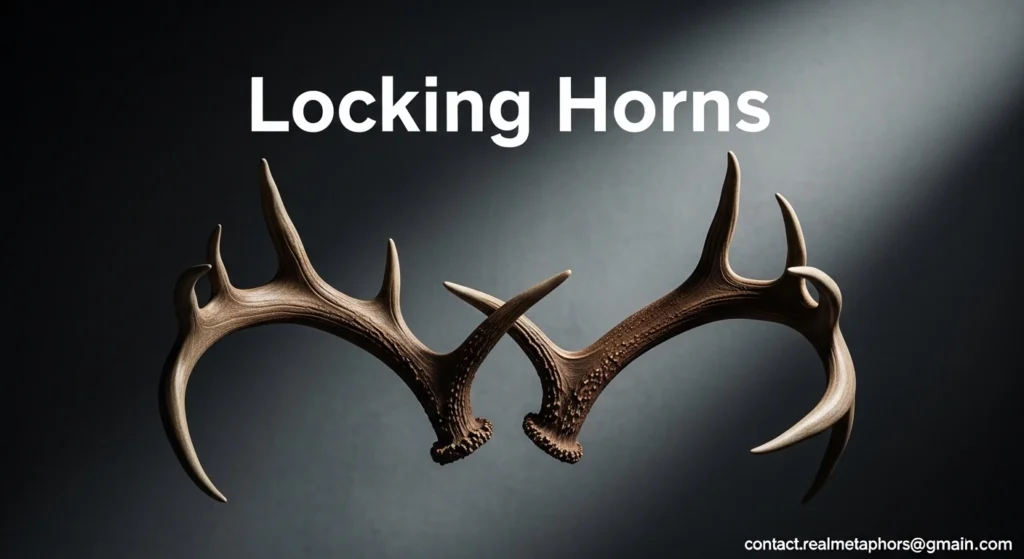
Meaning: Engaging in a fierce argument or competition.
Example: “The two companies locked horns over the patent rights.”
Alternative expressions: Butting heads, squaring off, dueling.
Cultural reference: Like two stags in a forest, their antlers tangled in a struggle for dominance.
Exercise: Describe a situation at work or school where people locked horns.
4. Clash of Titans
Meaning: A confrontation between two powerful forces.
Example: “The championship match was a clash of titans, each team giving their all.”
Alternative expressions: Battle of giants, epic showdown.
Sensory detail: Feel the energy, the cheers, and the tension building.
Exercise: Write a short story using this metaphor in a sports or political context.
5. Throwing Punches
Meaning: Actively engaging in an argument or fight, physically or metaphorically.
Example: “She threw punches in the meeting, defending her ideas passionately.”
Alternative expressions: Taking swings, lobbing attacks, hitting back.
Sensory detail: The sharpness of words, the sting of criticism.
Exercise: Imagine a verbal fight in a café—write it as if punches were being thrown.
6. Slugfest
Meaning: A prolonged, intense fight or argument.
Example: “Their debate turned into a real slugfest over company policies.”
Alternative expressions: Brawl, free-for-all, row.
Vivid imagery: Every word is like a heavy punch landing.
Exercise: Describe a conversation you had that felt like a slugfest.
7. War of Words
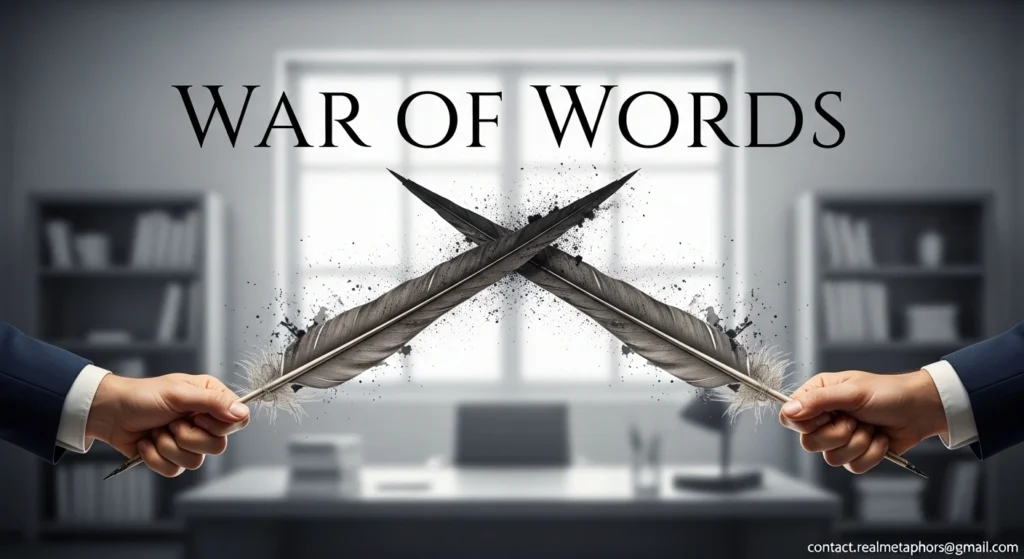
Meaning: A verbal battle between people.
Example: “The authors engaged in a war of words over literary style.”
Alternative expressions: Verbal sparring, rhetorical battle.
Sensory detail: The tension of words as sharp as swords.
Exercise: Try writing a short “war of words” dialogue between two fictional characters.
8. Picking a Fight
Meaning: Intentionally starting a conflict.
Example: “He was just picking a fight to get attention.”
Alternative expressions: Provoking a battle, stirring up trouble.
Emotional detail: The sly thrill of confrontation.
Exercise: Write a mini-story where someone picks a fight by accident or on purpose.
9. In the Crosshairs
Meaning: Being the focus of someone’s attack or criticism.
Example: “After the report was published, she found herself in the crosshairs of the media.”
Alternative expressions: Targeted, under fire, in the line of fire.
Sensory detail: Imagine the tense aim, the pressure, the sense of danger.
Exercise: Reflect on a time you felt “in the crosshairs” and describe it metaphorically.
10. Swordplay
Meaning: A fight or argument with clever, quick moves.
Example: “Their debate was full of intellectual swordplay, each point parried and countered.”
Alternative expressions: Wit duel, verbal fencing, sparring.
Literary reference: Think of Hamlet’s fencing scene—elegant but dangerous.
Exercise: Write a dialogue with rapid exchanges using “swordplay” as a theme.
11. Battleground
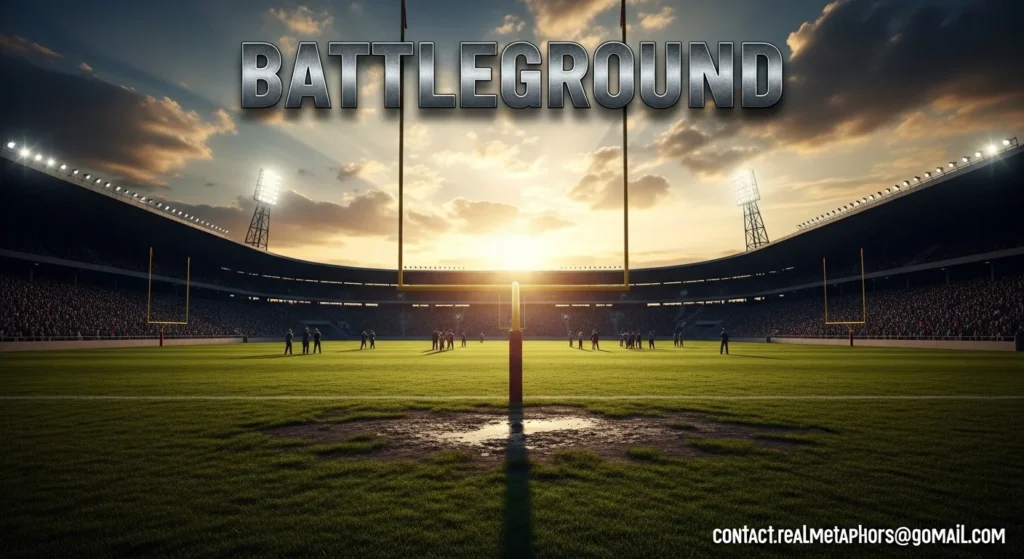
Meaning: Any place where conflict happens.
Example: “The office became a battleground when the new policies were introduced.”
Alternative expressions: Arena, front line, war zone.
Sensory detail: Tension, clashing ideas, emotional sparks flying.
Exercise: Describe your own “battleground” at school, work, or home.
12. Going Nuclear
Meaning: Escalating a conflict to an extreme level.
Example: “She went nuclear when she found out the truth.”
Alternative expressions: Blowing up, unleashing fury, all-out attack.
Emotional detail: Heat, rage, destruction.
Exercise: Write a mini-story where someone “goes nuclear” over a misunderstanding.
13. Fighting Fire with Fire
Meaning: Responding to an attack using the same tactics.
Example: “They fought fire with fire, matching every lie with a stronger counter.”
Alternative expressions: Retaliating, striking back, matching aggression.
Sensory detail: Flames, heat, sparks flying.
Exercise: Think of a situation where you or someone fought fire with fire. Write one paragraph describing it.
14. Eye for an Eye
Meaning: Seeking revenge or justice in kind.
Example: “He believed in an eye for an eye, responding to every insult with equal force.”
Alternative expressions: Tit-for-tat, payback, retaliation.
Emotional detail: The cold justice, the moral weight.
Exercise: Create a dialogue showing two friends debating an “eye for an eye” approach.
15. Throwing Down the Gauntlet
Meaning: Issuing a challenge.
Example: “She threw down the gauntlet, daring anyone to prove her wrong.”
Alternative expressions: Challenging, daring, issuing a call.
Cultural reference: Medieval knights would literally throw their gauntlet to declare a duel.
Exercise: Write a short scene where a character throws down the gauntlet.
16. Skirmish
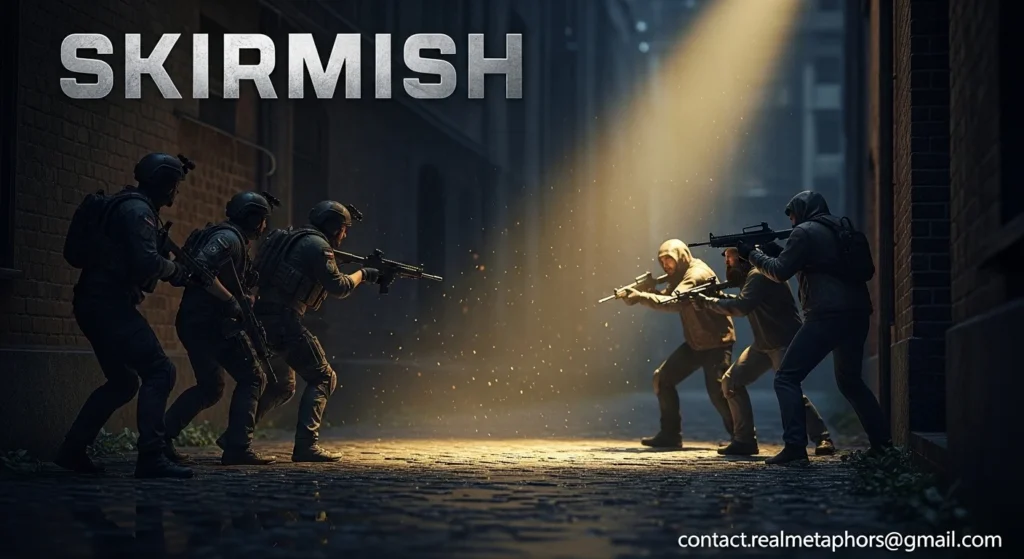
Meaning: A minor or brief conflict.
Example: “There was a skirmish between the two neighbors over the fence line.”
Alternative expressions: Scuffle, spat, tussle.
Sensory detail: Quick, sharp, fleeting clash.
Exercise: Describe a skirmish in a family or workplace setting.
17. Under Siege
Meaning: Being overwhelmed by criticism or attacks.
Example: “The CEO was under siege after the scandal broke.”
Alternative expressions: Besieged, bombarded, attacked.
Sensory detail: Pressure, relentless arrows, tension.
Exercise: Imagine being “under siege” in school, work, or social media, and describe it metaphorically.
18. Battle Lines Drawn
Meaning: Positions taken before a fight or argument.
Example: “The battle lines were drawn before the budget meeting even started.”
Alternative expressions: Taking sides, preparing for conflict.
Emotional detail: Anticipation, readiness, tension.
Exercise: Create a short dialogue showing two groups with battle lines drawn.
19. Fighting Tooth and Nail
Meaning: Using every resource and effort to win a struggle.
Example: “They fought tooth and nail to save their family business.”
Alternative expressions: All-out effort, struggling fiercely, relentless fight.
Sensory detail: Pain, determination, sweat, grit.
Exercise: Write a mini-story showing someone fighting tooth and nail for a goal.
20. Throwing Bombs
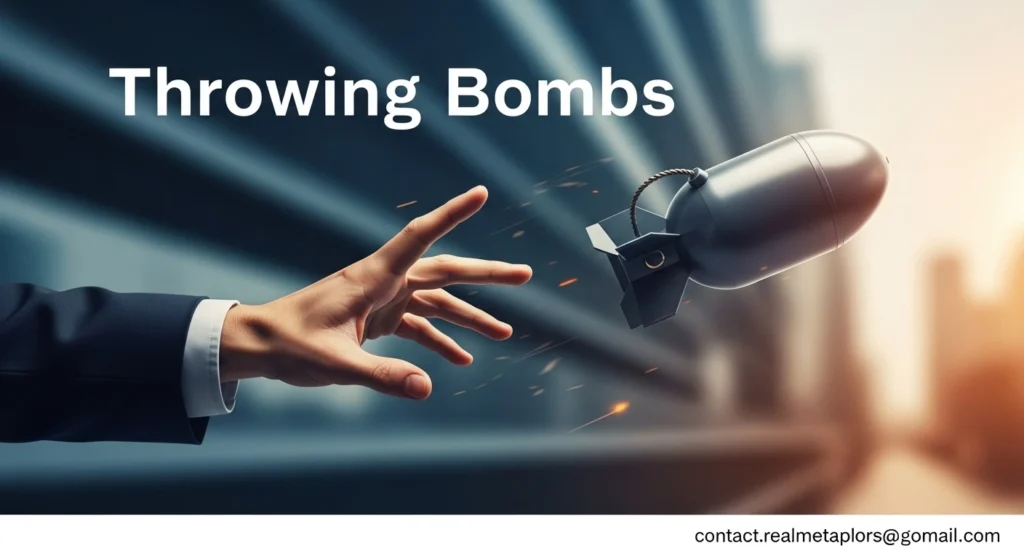
Meaning: Making harsh or shocking statements in an argument.
Example: “He kept throwing verbal bombs during the meeting.”
Alternative expressions: Dropping bombs, lobbing attacks, verbal explosions.
Sensory detail: Sudden impact, shockwaves, tension.
Exercise: Imagine a heated online debate. Write one message “throwing a bomb.”
21. Blood on the Tracks
Meaning: Intense conflict or consequences of a fight.
Example: “There was blood on the tracks after the violent protest.”
Alternative expressions: Aftermath, fallout, messy confrontation.
Sensory detail: Stains, tension, danger, consequences.
Exercise: Write a short paragraph describing a metaphorical “blood on the tracks” scenario in school, work, or social life.
22. Going for the Jugular
Meaning: Attacking the most vulnerable part directly.
Example: “In the debate, she went for the jugular, exposing his weak argument.”
Alternative expressions: Hitting hard, striking at the core, ruthless attack.
Sensory detail: Sharp, precise, ruthless.
Exercise: Imagine a negotiation or argument where someone goes for the jugular and write it.
23. Fighting Shadows
Meaning: Struggling against imaginary or unclear problems.
Example: “He was fighting shadows, worrying about things that weren’t real.”
Alternative expressions: Chasing ghosts, battling illusions, grappling with fears.
Emotional detail: Frustration, confusion, uncertainty.
Exercise: Reflect on a personal fear or doubt and describe it as fighting shadows.
24. Gladiator Arena
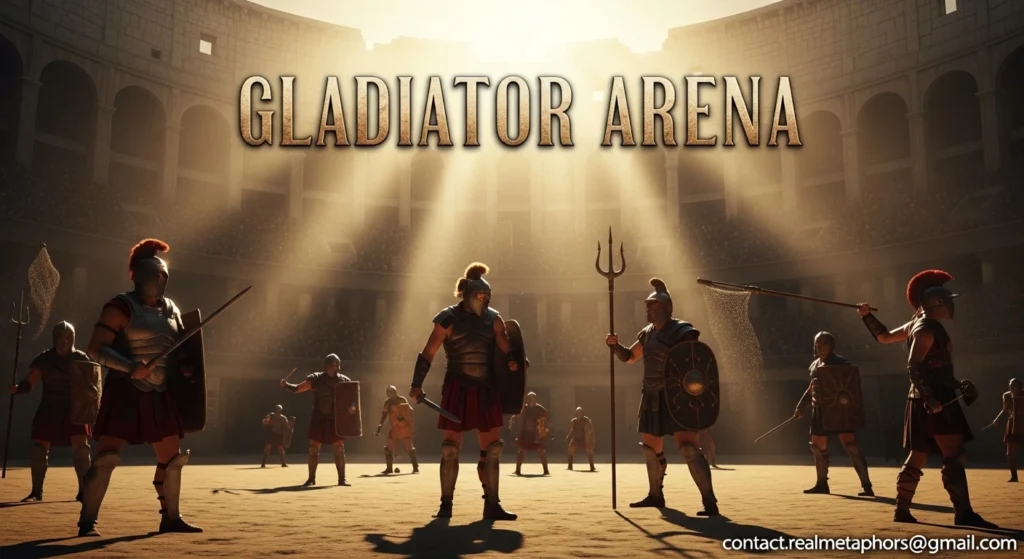
Meaning: A high-stakes, intense place of competition.
Example: “The courtroom became a gladiator arena as lawyers debated fiercely.”
Alternative expressions: Colosseum, high-stakes battleground, combat zone.
Sensory detail: Roars, sweat, tense anticipation.
Exercise: Write a scene in a “gladiator arena” of your own—sports, debate, or work.
25. Storming the Castle
Meaning: Attacking or confronting a heavily defended position.
Example: “They stormed the castle of bureaucracy to get their permits.”
Alternative expressions: Breaking through defenses, full-scale attack, raiding.
Sensory detail: Siege engines, battering rams, loud clashes.
Exercise: Imagine a workplace or school obstacle as a castle and describe “storming it.”Bonus Tips for Using Metaphors for Fighting
- Match the metaphor to the emotion: High-intensity fights suit “clash of titans,” minor disagreements fit “skirmish.”
- Mix physical and emotional imagery: Combine “fighting tooth and nail” with feelings like frustration or determination.
- Use in dialogue for realism: Characters sound more alive when their arguments are metaphorical.
- Social media & storytelling: Metaphors grab attention. Instead of “I argued a lot today,” try “I went toe-to-toe with my boss over the project.”
- Be mindful of tone: Some metaphors are dramatic (“blood on the tracks”), others playful (“fighting shadows”). Choose based on context.
Conclusion
Metaphors for fighting turn ordinary conflicts into vivid, memorable stories. They help us express frustration, courage, strategy, or determination in ways that ordinary words can’t. From “battling dragons” to “storming the castle,” these 25+ metaphors give you tools to write, speak, or think creatively about confrontation. Practice them in your writing, conversations, or social media posts, and notice how much more engaging your communication becomes. Fighting doesn’t have to be literal—it can be a playground for imagination.
FAQs
1. Why should I use metaphors for fighting in writing?
They make your description vivid, emotional, and memorable. Instead of saying “we argued,” you can say “we went toe-to-toe,” which paints a clearer picture.
2. Can I create my own metaphors for fighting?
Absolutely! Think about the emotions, intensity, or setting, and match it to an image. For example, “wrestling thunderstorms” could represent a chaotic argument.
3. Are metaphors for fighting only for stories or books?
No. They’re useful in everyday conversation, social media, speeches, or emails when you want to make your message more engaging.