Imagine a park on a sunny afternoon. Children of different ages, backgrounds, and abilities play together. Some climb the jungle gym, others kick a ball, and a few sit under the shade, drawing in the sand. Despite their differences, they share the space equally. No one dominates the swings, no one is left out. In that small park, equality exists—not as a law, but as a living, breathing reality.
Metaphors for equality work the same way. They help us explain fairness, balance, and justice in ways that feel alive, relatable, and memorable. Whether in writing, conversation, or storytelling, metaphors turn abstract ideas like equality into something you can see, feel, and touch. In this article, we will explore 25+ powerful metaphors for equality, explain their meaning, and show you how to use them creatively.
1. Equality is a Level Playing Field
Meaning: Everyone has the same opportunities.
Example: “In a classroom, equality is a level playing field where every student can score their own goals.” Alternatives: “Equal footing,” “fair ground,” “even field.”
Sensory detail: Picture athletes starting a race at the same line, lungs ready, hearts racing.
Exercise: Write a paragraph describing your workplace, school, or community as a “level playing field.” How do people share opportunities?
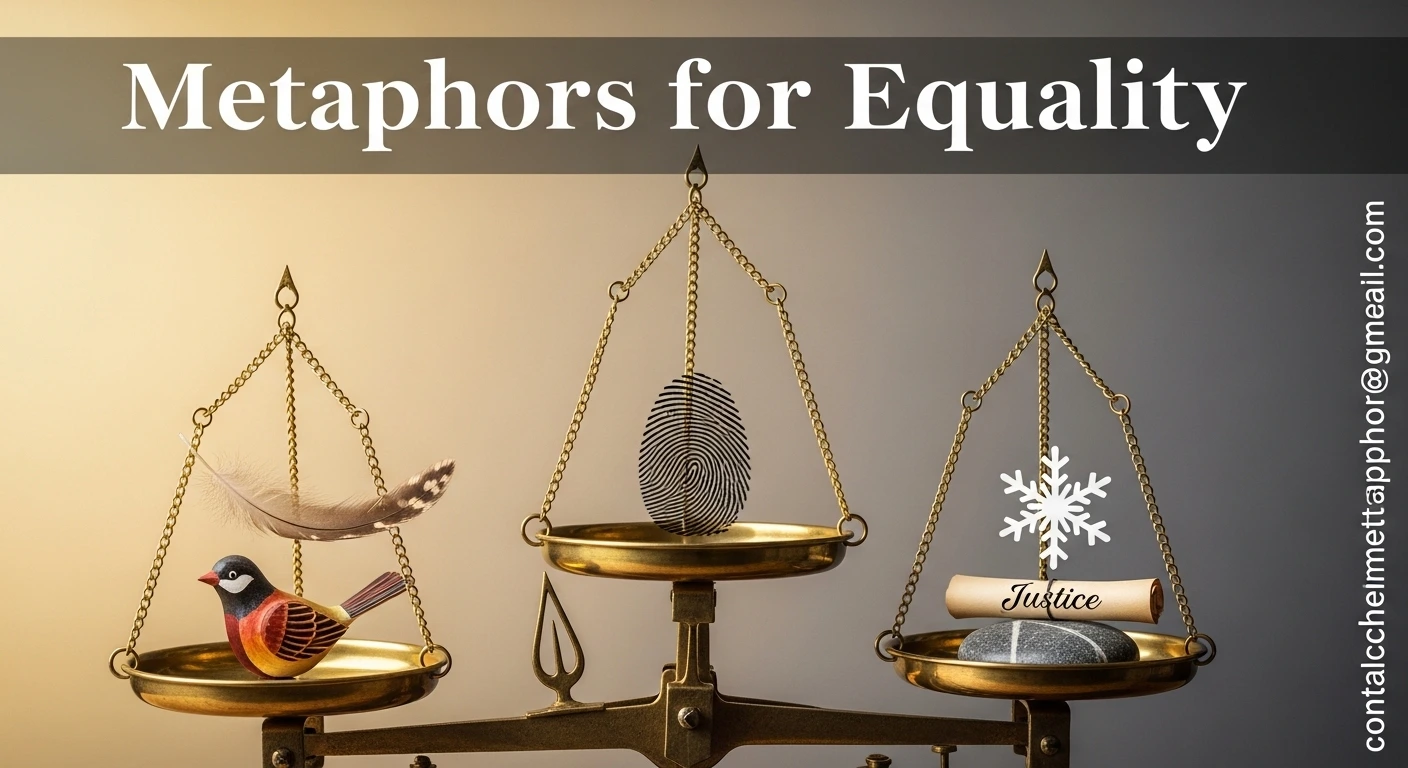
2. Equality is a Balancing Scale
Meaning: Fairness is maintained by giving equal weight to all sides.
Example: “The new policy is like a balancing scale; no one’s voice outweighs another’s.”
Alternatives: “Equilibrium,” “even balance,” “tipping point.”
Mini-story: A judge places stones of equal size on both pans, smiling at the perfect symmetry.
Exercise: Draw a mental image of your own balancing scale in life. Who or what does it balance?
3. Equality is a Mirror
Meaning: Every person reflects the same dignity and value.
Example: “Treating colleagues with respect is like looking in a mirror; their worth is your worth.”
Alternatives: “Reflection of fairness,” “mirror of humanity.”
Emotional detail: Seeing someone’s eyes, noticing they shine with the same potential as yours.
Prompt: Write a dialogue between two people who see each other as mirrors of fairness.
4. Equality is a Shared Table
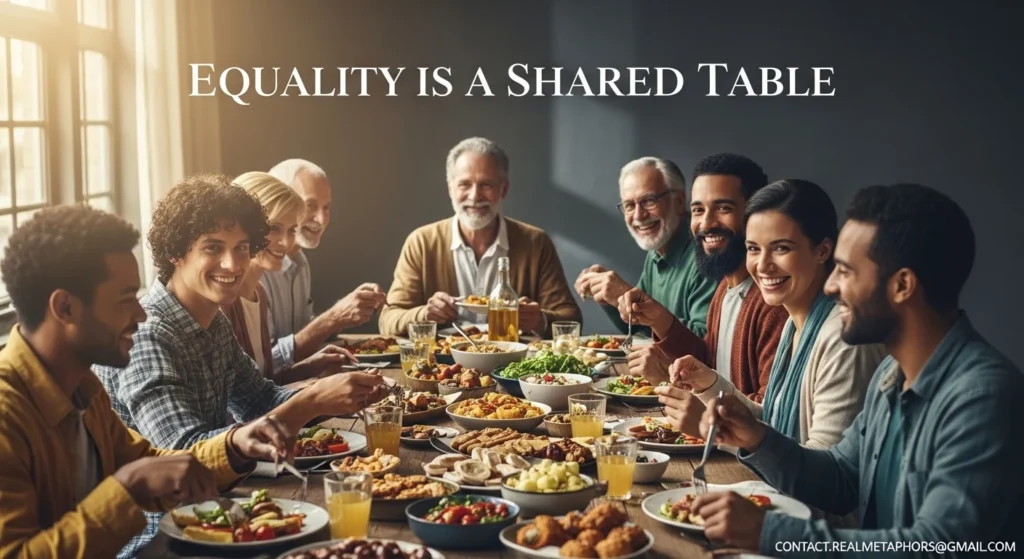
Meaning: Everyone has an equal chance to take part.
Example: “During the festival, the community’s shared table reminds us that equality is about inclusion.” Alternatives: “Common table,” “gathering place,” “circle of sharing.”
Sensory detail: Smell of fresh bread, laughter, hands reaching together for dishes.
Exercise: Imagine hosting a “shared table” in your neighborhood. Who sits there, and what does it symbolize?
5. Equality is a Common Garden
Meaning: Everyone can grow and flourish together.
Example: “In a classroom where equality thrives, students are like plants in a common garden.”
Alternatives: “Shared garden,” “community orchard.”
Sensory detail: Flowers of different colors blooming side by side, roots intertwined beneath the soil.
Prompt: Describe your community or team as a garden. Which flowers represent which qualities?
6. Equality is a Bridge
Meaning: It connects different people and ideas.
Example: “Equality acts as a bridge between the rich and the poor, the young and the old.”
Alternatives: “Link,” “pathway,” “connection.”
Cultural reference: Think of the Brooklyn Bridge, connecting diverse neighborhoods.
Exercise: Write a short story where equality acts as a bridge in resolving a conflict.
7. Equality is an Open Door
Meaning: Everyone has access to opportunities.
Example: “The scholarship is an open door, inviting all students equally.”
Alternatives: “Gateway,” “welcoming entrance,” “invitation.”
Sensory detail: Feel the cool metal handle, the fresh breeze as the door swings open.
Exercise: Reflect on a time when an “open door” changed your life or someone else’s.
8. Equality is a Song
Meaning: Different voices harmonize without overpowering each other.
Example: “A team that values equality is like a choir singing in perfect harmony.”
Alternatives: “Melody of fairness,” “harmony,” “chorus of voices.”
Sensory detail: Imagine the warmth of combined voices, each note clear and equal.
Prompt: Write a few lines of a song about fairness in your life.
9. Equality is a Candlelight
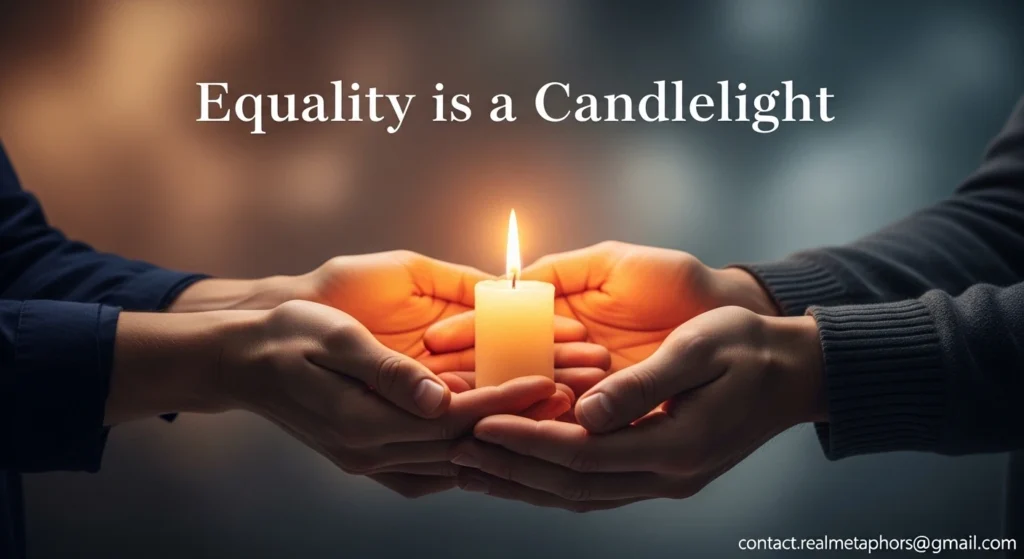
Meaning: Every person brings light, no one shines more than another.
Example: “In the group project, equality was the candlelight that made everyone visible.”
Alternatives: “Shared flame,” “equal glow.”
Sensory detail: Flickering flame casting soft shadows, everyone equally warmed.
Exercise: Describe a moment in your life illuminated by “candlelight equality.”
10. Equality is a Circle
Meaning: Everyone has a place; no one is above or below.
Example: “At the council meeting, equality formed a circle where all voices mattered.”
Alternatives: “Ring of fairness,” “loop of respect.”
Emotional detail: Hands joined, eyes meeting in an unbroken line.
Prompt: Draw your own “circle of equality” and note who belongs in it.
11. Equality is a River
Meaning: Opportunities flow freely and equally to all.
Example: “Education should be a river, carrying knowledge to every child.”
Alternatives: “Flow of fairness,” “stream of opportunity.”
Sensory detail: Cool, clear water moving smoothly, touching every bank equally.
Exercise: Write a story where equality is a river that nurtures your community.
12. Equality is a Quilt
Meaning: Different pieces come together to form a whole.
Example: “Our team is a quilt of talents; equality stitches every piece together.”
Alternatives: “Patchwork,” “woven tapestry,” “fabric of fairness.”
Sensory detail: Soft textures, colorful patches, warmth under the collective.
Prompt: Create your own metaphorical quilt with the people in your life.
13. Equality is a Lighthouse
Meaning: Guidance and fairness illuminate the way.
Example: “A strong leader acts as a lighthouse, showing the path to equality.”
Alternatives: “Beacon of fairness,” “shining guide.”
Sensory detail: Flashing light cuts through darkness, steady and dependable.
Exercise: Describe a mentor in your life as a lighthouse of equality.
14. Equality is a Tree
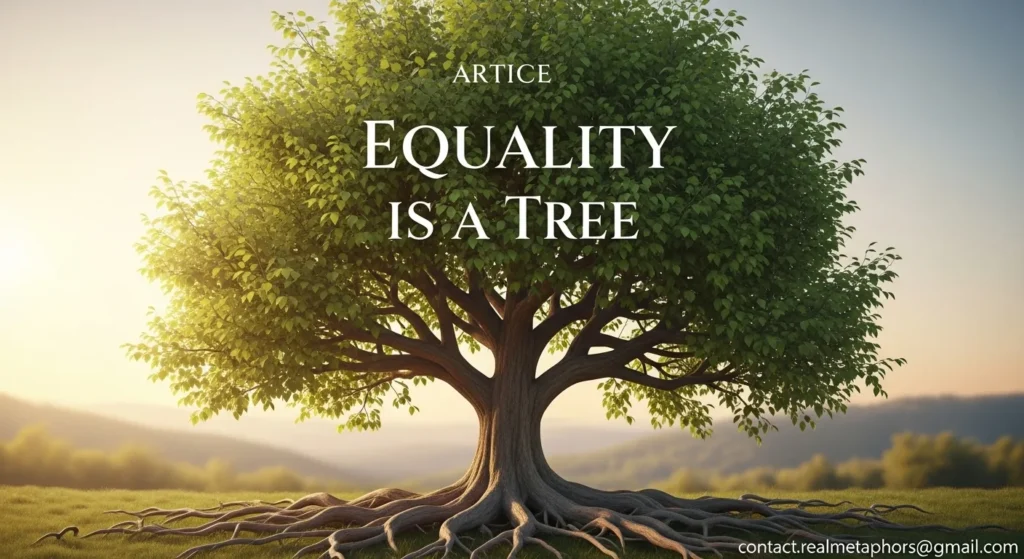
Meaning: Everyone has the same roots and potential to grow.
Example: “Society should be a tree, providing shade and fruits equally.”
Alternatives: “Rooted fairness,” “tree of opportunity.”
Sensory detail: Leaves rustling, branches stretching outward equally.
Prompt: Write a poem about equality using the tree metaphor.
15. Equality is a Compass
Meaning: Guides everyone in the right direction without bias.
Example: “Justice is a compass pointing toward equality.”
Alternatives: “Moral guide,” “direction of fairness.”
Sensory detail: Feel the needle steady, pointing true north.
Exercise: Reflect on a time when fairness acted as a compass in your decision-making.
16. Equality is a Bridge of Words
Meaning: Language connects people on equal terms.
Example: “During the debate, equality was the bridge of words allowing all opinions to meet.”
Alternatives: “Communication link,” “dialogue pathway.”
Cultural reference: Think of multilingual conferences where interpreters create bridges.
Prompt: Write a dialogue that builds a “bridge of words” between two conflicting people.
17. Equality is a Shared Flame
Meaning: Inspiration and opportunity are spread equally.
Example: “Volunteers kept the campfire alive as a shared flame of equality.”
Alternatives: “Common fire,” “mutual spark.”
Sensory detail: Heat of fire on hands, orange glow reflecting smiles.
Exercise: Describe a group activity where equality acts as a shared flame.
18. Equality is a Rainbow
Meaning: Different colors exist together beautifully.
Example: “In a diverse team, equality is the rainbow that makes each person shine.”
Alternatives: “Spectrum of fairness,” “arc of diversity.”
Sensory detail: Sunlight hitting raindrops, colors stretching across the sky.
Prompt: Identify “colors” in your life community that represent different talents or perspectives.
19. Equality is a Blanket
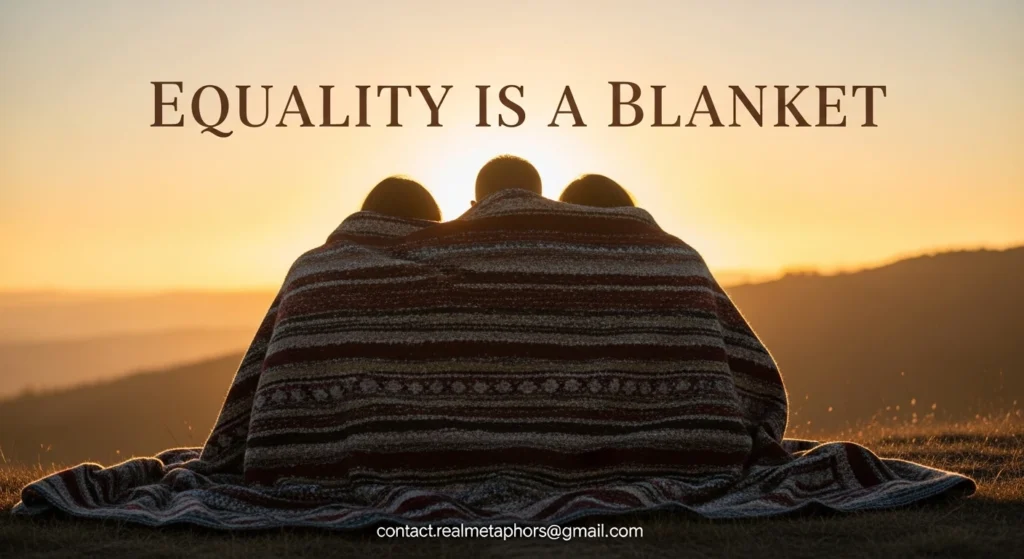
Meaning: Everyone is covered and protected.
Example: “The new law is a warm blanket of equality for all citizens.”
Alternatives: “Wrap of fairness,” “covering of justice.”
Sensory detail: Soft fabric, comforting warmth enveloping everyone equally.
Exercise: Write a short scene where equality is a blanket in a moment of need.
20. Equality is a Key
Meaning: Unlocks doors for everyone equally.
Example: “Education is the key to equality, opening doors for all children.”
Alternatives: “Unlocking fairness,” “key of opportunity.”
Sensory detail: Cold metal in hand, turning smoothly in a lock.
Prompt: Describe a situation in which equality acts as a key to a personal achievement.
21. Equality is a Stepping Stone
Meaning: Helps everyone rise without blocking others.
Example: “Mentorship programs are stepping stones to equality.”
Alternatives: “Pathway stone,” “fair steps.”
Sensory detail: Smooth stones leading across a river, one for each person.
Exercise: List your “stepping stones” in life that brought you equality.
22. Equality is a Shared Song
Meaning: Everyone contributes to the melody of life.
Example: “Community festivals are shared songs, celebrating equality.”
Alternatives: “Collective tune,” “harmony of voices.”
Sensory detail: Drums and flutes blending into a joyful chorus.
Prompt: Write a short verse or chant celebrating equality.
23. Equality is a Bridge of Hands
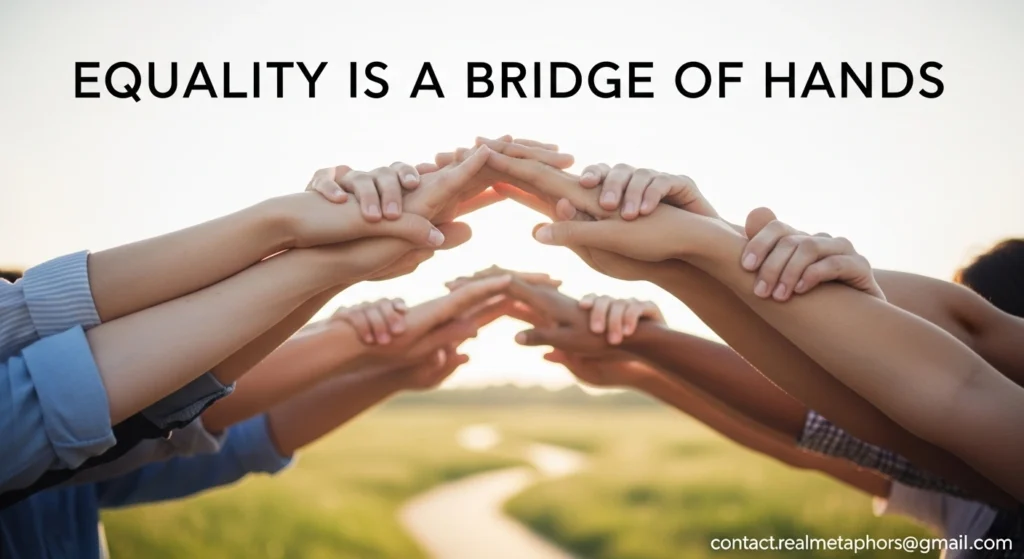
Meaning: Human connection ensures fairness.
Example: “Volunteers form a bridge of hands, supporting each other equally.”
Alternatives: “Helping hands,” “circle of support.”
Sensory detail: Palm to palm, fingers interlocked.
Exercise: Recall a real-life moment where people formed a “bridge of hands” in unity.
24. Equality is a Candle in the Dark
Meaning: Provides hope to everyone.
Example: “The campaign is a candle in the dark, spreading equality in every neighborhood.”
Alternatives: “Beacon of fairness,” “light of justice.”
Sensory detail: Warm, small light flickering steadily.
Prompt: Reflect on a person or event that acted as a “candle in the dark” for you.
25. Equality is a Circle of Trust
Meaning: Everyone feels safe and valued.
Example: “In the support group, equality formed a circle of trust where all could speak freely.”
Alternatives: “Ring of safety,” “loop of respect.”
Sensory detail: Feeling embraced, both physically and emotionally.
Exercise: Sketch your “circle of trust” and write who belongs in it and why.
Bonus Tips for Using Metaphors for Equality
- Be specific: Pair your metaphor with a concrete image. Instead of just saying “equality is a river,” describe the water, the banks, and who it touches.
- Use in social media posts: Metaphors make abstract ideas shareable and memorable. Pair with emojis or visuals.
- Storytelling: Open a story with a metaphor to immediately set the tone of fairness or balance.
- Everyday conversation: Use metaphors to simplify complex discussions about rights, fairness, or opportunity.
Conclusion
Metaphors for equality transform abstract ideas into living, breathing images. They help us explain fairness, share opportunities, and connect emotionally with others. From level playing fields to circles of trust, each metaphor gives a new lens to understand and celebrate equality. Use them in writing, conversations, or even your imagination to make the concept tangible.
Remember: equality is not just a word; it’s a story, a river, a flame—and with metaphors, we can see it clearly, feel it deeply, and share it widely.
FAQs about Metaphors for Equality
1. What makes a metaphor effective for equality?
A metaphor is effective when it creates a vivid, relatable image, like a bridge connecting people or a garden where everyone grows. It helps abstract ideas become tangible.
2. Can I use multiple metaphors in one sentence?
Yes! For example: “Equality is a river flowing through a garden, giving every flower a chance to bloom.” Just make sure it doesn’t get confusing.
3. How do I practice using equality metaphors?
Try writing short stories, poems, or dialogues where equality plays a central role. Use prompts like “shared table” or “candlelight” to spark creativity.
4. Are these metaphors suitable for social media?
Absolutely. Short, visual metaphors like “Equality is a shared flame” or “a level playing field” work great in posts, captions, and hashtags.
5. Can metaphors help in real-life communication?
Yes. They make discussions about fairness and rights more relatable and emotionally engaging, whether in classrooms, workplaces, or daily conversations.