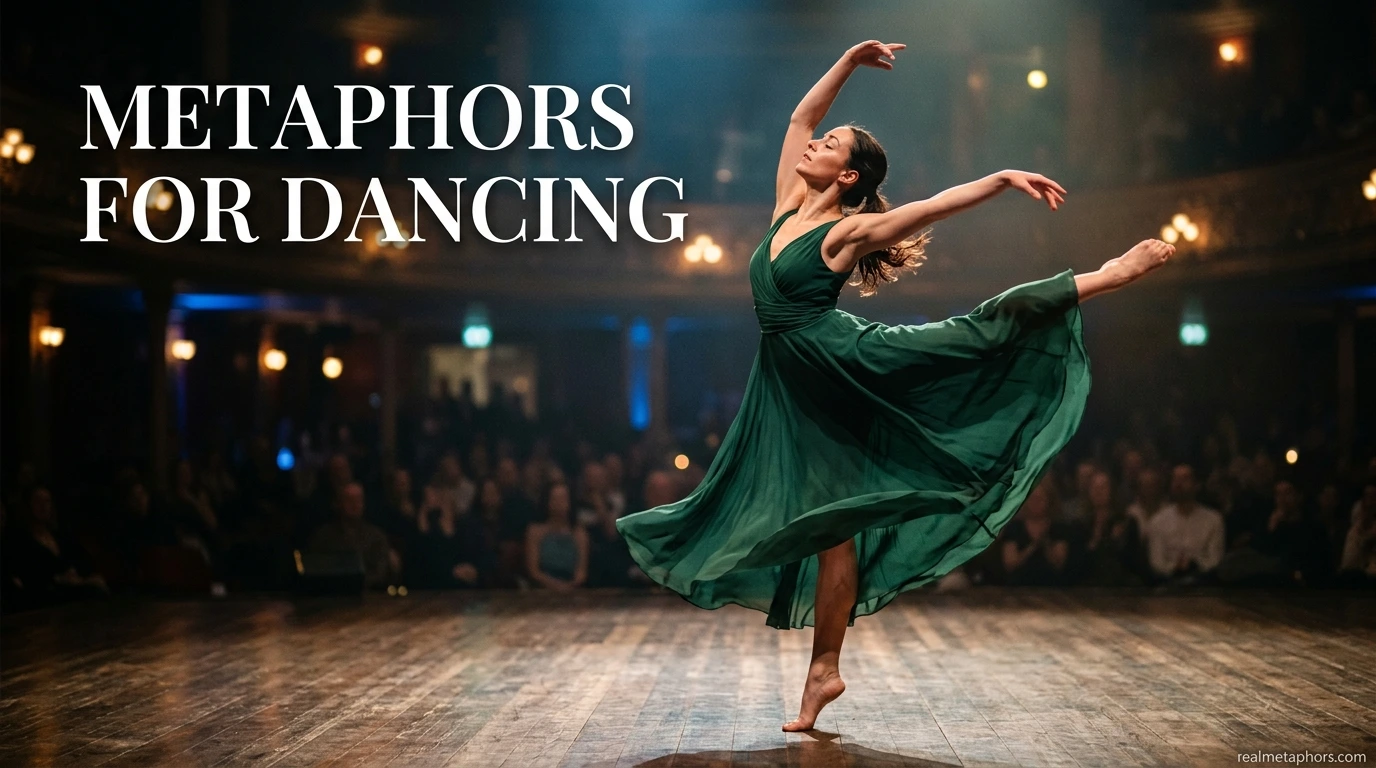
Imagine stepping onto a quiet stage, the spotlight washing over your face, and the first note of music filling the room. Your body begins to move—sometimes gently, sometimes wildly—responding to the rhythm, the emotion, and the story in the music. Dancing is more than just moving your body; it is a language, a feeling, a story told through motion. And like any language, dance can inspire powerful metaphors that we can use in writing, conversation, and self-expression.
In this guide, we will explore over 25 metaphors for dancing, each carefully explained with examples, alternative expressions, sensory details, and creative exercises. Whether you are a writer, a social media creator, or someone who loves playing with words, these metaphors will help you make your descriptions of movement, emotion, and life more vivid and memorable.
1. Dancing as Flying
Meaning: Dancing is compared to flying when it feels free, light, and effortless.
Example: “She danced across the floor as if her feet had wings.”
Alternative expressions: soaring, gliding, floating.
Sensory details: Imagine the wind brushing past your face, your heart lifting, and your body feeling weightless.
Exercise: Write a sentence describing your happiest moment using the metaphor of flying. How does it feel emotionally and physically?
2. Dancing as a Conversation
Meaning: Dancing can be like a dialogue between people or between a person and music.
Example: “They danced as if every step was a word and every spin a sentence.”
Alternative expressions: talking with your body, communicating without words.
Mini-story: A couple at a wedding moved in perfect rhythm, their eyes locking in silent understanding.
Exercise: Imagine a conversation you had recently. How could that conversation look if it were a dance?
3. Dancing as Telling a Story
Meaning: Each movement can narrate a tale of joy, love, or struggle.
Example: “Her twirls and leaps told a story of a summer long gone.”
Alternative expressions: storytelling through movement, narrative in motion.
Sensory details: Picture the audience leaning forward, feeling the story without a single word.
Exercise: Write a short story in which the main character’s emotions are revealed through dancing.
4. Dancing as a River Flowing
Meaning: Dance can move smoothly, constantly changing like a flowing river.
Example: “He danced like a river, twisting and turning with effortless grace.”
Alternative expressions: fluid, gliding, meandering.
Sensory details: Imagine water moving over rocks, smooth and unstoppable.
Exercise: Observe a stream or river and write how its flow could inspire a dance.
5. Dancing as Fire
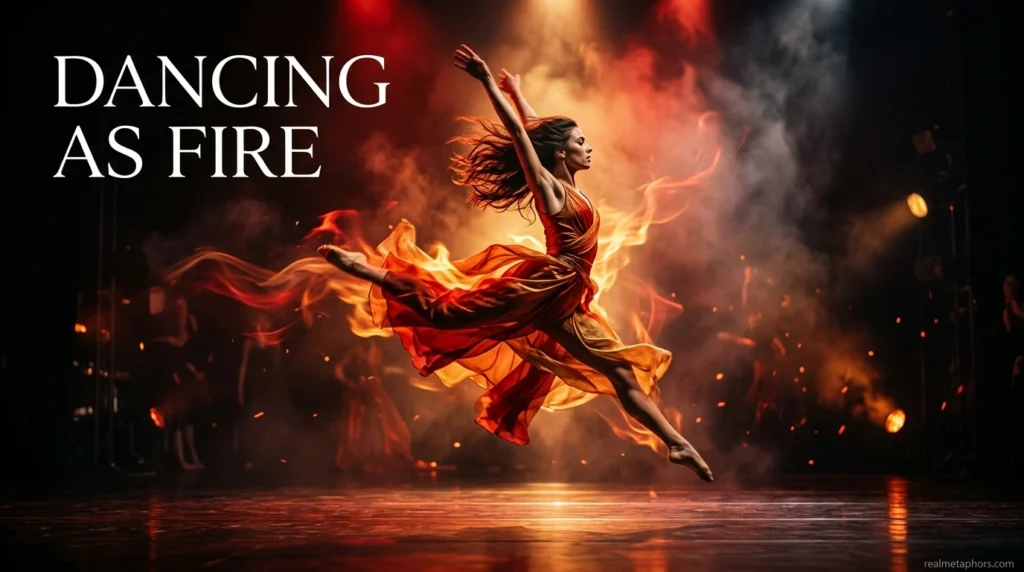
Meaning: When dancing is fiery, energetic, and passionate.
Example: “Her flamenco was fire incarnate, each stomp sending sparks across the floor.”
Alternative expressions: blazing, burning, scorching.
Sensory details: Feel the heat rising, the pounding rhythm, the intensity in the air.
Exercise: Describe an emotion as a fire and translate it into a dance movement in a paragraph.
6. Dancing as a Battle
Meaning: Dance can be combative, powerful, and full of tension.
Example: “The two dancers circled each other like warriors preparing for a duel.”
Alternative expressions: sparring, wrestling with rhythm, dueling steps.
Mini-story: In traditional Capoeira, every kick and spin is both play and fight, blending martial art with dance.
Exercise: Imagine a challenge or conflict in your life as a dance battle. How would you move?
7. Dancing as a Dream
Meaning: Dancing can feel surreal, like moving in a dream.
Example: “She floated across the ballroom as if gravity had forgotten her.”
Alternative expressions: ethereal, dreamlike, floating.
Sensory details: Picture soft, glowing light and music that seems to come from another world.
Exercise: Recall a dream you’ve had and describe a dance inspired by it.
8. Dancing as Leaves in the Wind
Meaning: Movements are gentle, light, and unpredictable.
Example: “Her scarf twirled in the air, and she moved like leaves caught in the wind.”
Alternative expressions: drifting, swaying, fluttering.
Sensory details: Hear the rustle of leaves, feel a sudden breeze.
Exercise: Step outside, observe leaves, and mimic their movement with your body. Write about it.
9. Dancing as a Battle with Gravity
Meaning: Dancing defies gravity, jumping, spinning, and lifting against weight.
Example: “Each leap was a rebellion against the pull of the earth.”
Alternative expressions: defying gravity, soaring, taking flight.
Exercise: Think of a time you felt free and unstoppable. How would that moment look as a dance?
10. Dancing as Painting in the Air
Meaning: Movements create shapes and colors in the imagination.
Example: “He danced like a brush painting streaks of joy in the air.”
Alternative expressions: painting with motion, drawing with steps, sketching with limbs.
Sensory details: Imagine seeing colors swirl with each step.
Exercise: Close your eyes and visualize a dance as a painting. What colors, shapes, and emotions appear?
11. Dancing as Fireflies at Night
Meaning: Small, bright, fleeting movements that are playful and magical.
Example: “The children danced like fireflies in the dark garden.”
Alternative expressions: twinkling, shimmering, fluttering.
Exercise: Describe your happiest, playful movement using the firefly metaphor.
12. Dancing as a Whisper
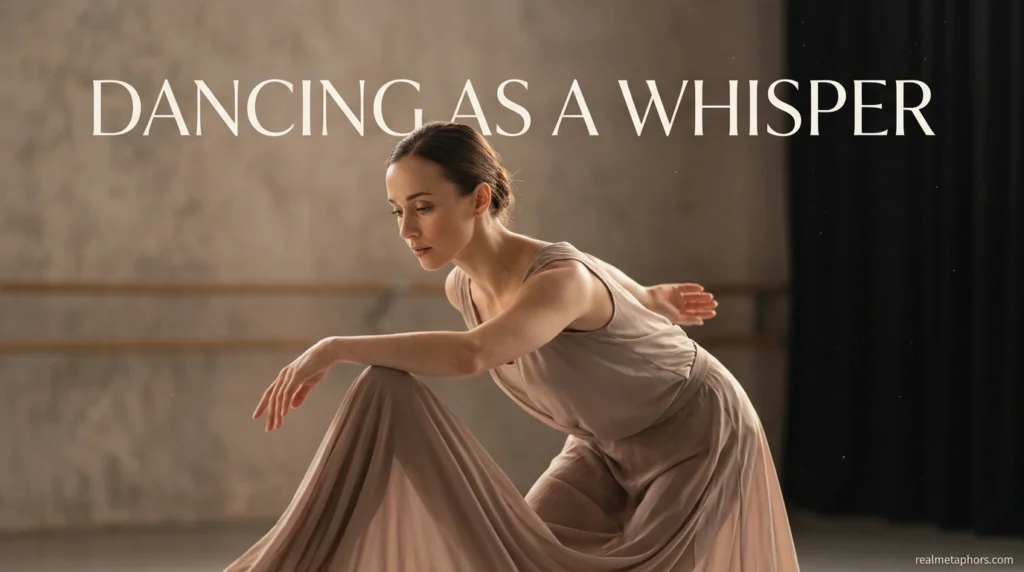
Meaning: Quiet, subtle, intimate movements.
Example: “She danced across the room like a whisper of wind through curtains.”
Alternative expressions: gentle, soft, delicate.
Sensory details: Imagine the soundless brushing of air and hushed elegance.
Exercise: Practice moving quietly in your space. Describe it in a single sentence using this metaphor.
13. Dancing as a Storm
Meaning: Powerful, chaotic, and intense movements.
Example: “He danced like a storm breaking over the ocean.”
Alternative expressions: whirlwind, tempest, thunderous.
Sensory details: Feel the wind, hear crashing waves, imagine unstoppable energy.
Exercise: Write a paragraph describing a stormy emotion through dance.
14. Dancing as a Puppet
Meaning: Movements appear controlled, precise, almost mechanically beautiful.
Example: “Her arms moved like a puppet guided by invisible strings.”
Alternative expressions: marionette, controlled, rhythmic.
Exercise: Imagine letting someone else guide your movements. Write how it feels emotionally and physically.
15. Dancing as Water Droplets
Meaning: Small, bouncing, lively movements.
Example: “They danced like water droplets skipping on a pond.”
Alternative expressions: bouncing, skipping, lively.
Sensory details: Hear the light splashes, feel joy in small motions.
Exercise: Create a mini-dance with small, quick movements and write a description using this metaphor.
16. Dancing as a Wave
Meaning: Movements rise and fall gracefully, like ocean waves.
Example: “Her body moved in waves, cresting and falling with the rhythm.”
Alternative expressions: rolling, flowing, undulating.
Exercise: Watch ocean waves and mimic them in movement. Write a sentence describing the feeling.
17. Dancing as Fireworks
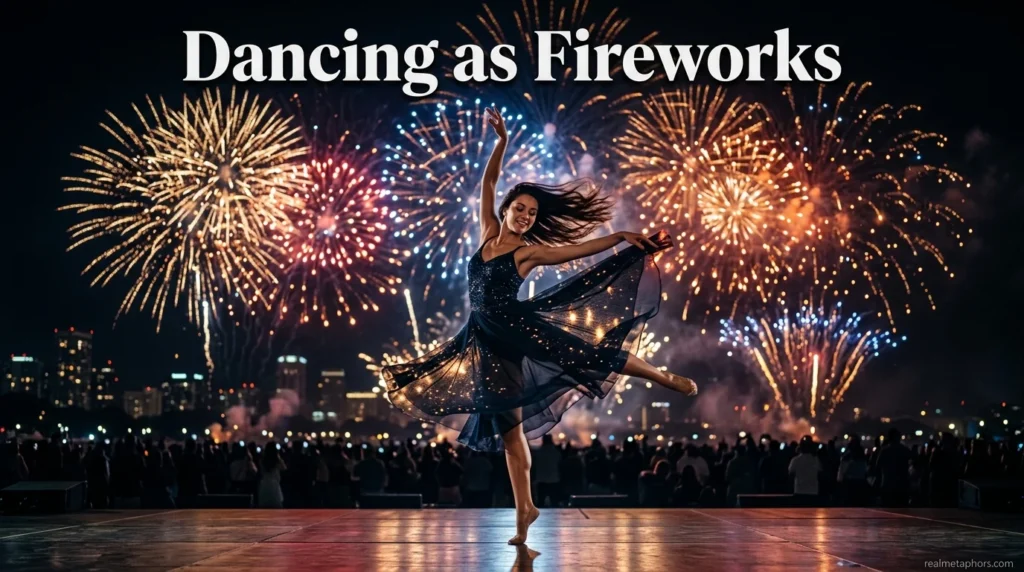
Meaning: Sudden, bright, explosive bursts of energy and joy.
Example: “His spins were fireworks, lighting up the stage with brilliance.”
Alternative expressions: explosive, bursting, dazzling.
Exercise: Think of a moment of celebration. How would it look as a dance of fireworks?
18. Dancing as a Butterfly
Meaning: Light, delicate, and playful movements.
Example: “She fluttered across the room like a butterfly in spring.”
Alternative expressions: gentle, hovering, floating.
Exercise: Imagine yourself as a butterfly. Describe your movements and emotions in a paragraph.
19. Dancing as a Clock
Meaning: Precise, rhythmic, and mechanical movements.
Example: “They danced with clockwork precision, every step timed perfectly.”
Alternative expressions: methodical, rhythmic, synchronized.
Exercise: Time yourself dancing to a beat. Write how precision changes the feeling.
20. Dancing as a Flame in the Wind
Meaning: Flickering, unpredictable, and alive.
Example: “Her dance flickered like a candle in a gust of wind.”
Alternative expressions: flickering, dancing flame, alive.
Exercise: Imagine emotions that are changeable or fleeting. Express them in a dance metaphor.
21. Dancing as a Spiral
Meaning: Movements that circle, twist, and grow outward.
Example: “He twirled in spirals, expanding into the space around him.”
Alternative expressions: twisting, circling, swirling.
Exercise: Spin gently and write how the spiral motion mirrors your feelings or thoughts.
22. Dancing as a Shadow
Meaning: Quiet, mysterious, or reflective movements.
Example: “She moved across the floor like a shadow following the light.”
Alternative expressions: ghostly, silent, reflective.
Exercise: Dance in a dimly lit space and describe how shadows enhance emotion.
23. Dancing as a River Stone
Meaning: Smooth, grounded, and steady movements.
Example: “He moved across the floor like a river stone, polished and steady.”
Alternative expressions: grounded, solid, flowing.
Exercise: Imagine yourself as a stone in a river. Describe the balance between movement and stability.
24. Dancing as Stars in the Sky
Meaning: Sparkling, magical, and scattered movements.
Example: “Her arms spread like stars across the night sky.”
Alternative expressions: twinkling, glittering, celestial.
Exercise: Think of a magical night and express it in a dance description using stars.
25. Dancing as a Poem
Meaning: Graceful, expressive, rhythmic movements that tell a story or emotion.
Example: “Every step was a line in the poem she composed with her body.”
Alternative expressions: lyrical, expressive, rhythmic.
Mini-story: Ballets often tell entire stories without words—pure poetry in motion.
Exercise: Write a short “dance poem” where every line describes a movement.
Bonus Tips: Using Dance Metaphors Effectively
- In Writing: Metaphors make descriptions vivid, showing instead of telling. Example: instead of “she danced happily,” say “she danced like sunlight on a summer morning.”
- In Social Media: Short, powerful metaphors attract attention. Pair them with visuals or videos.
- In Conversation: Using metaphors like “dancing with your thoughts” or “her mood danced like flames” adds color to everyday speech.
- In Storytelling: Metaphors for dance can show emotion, conflict, or growth without explaining directly.
- Practice Daily: Observe dances, music videos, nature, and people. Create new metaphors inspired by real life.
Conclusion
Dance is a universal language that transcends words, culture, and even time. Using metaphors inspired by dancing allows us to express emotions, movements, and stories in ways that are vivid, memorable, and deeply human. From flying to fire, rivers to stars, every metaphor opens a new way to see the world—and to share it with others. By practicing these metaphors, playing with your own creations, and observing life around you, your writing, speech, and storytelling will gain rhythm, color, and life. So step onto your stage, even if it’s just your living room, and let your words—and movements—dance.
FAQs
Q1: Why are metaphors for dancing useful in writing?
A: They turn abstract emotions into vivid images, making descriptions more memorable and engaging.
Q2: Can anyone create their own dance metaphors?
A: Absolutely! Observe movement, nature, or emotions, then compare them to dancing in creative ways.
Q3: How can I use these metaphors in everyday conversation?
A: Use them to describe emotions, energy, or situations, e.g., “He danced through the problems like a leaf on the wind.”
Q4: Are dance metaphors only for professional dancers?
A: No. Any movement, emotion, or life experience can inspire a metaphor, regardless of skill.
Q5: How do I practice using these metaphors creatively?
A: Write mini-stories, social media posts, or journal entries using one or more metaphors each day. Observe real life and translate it into dancing language.