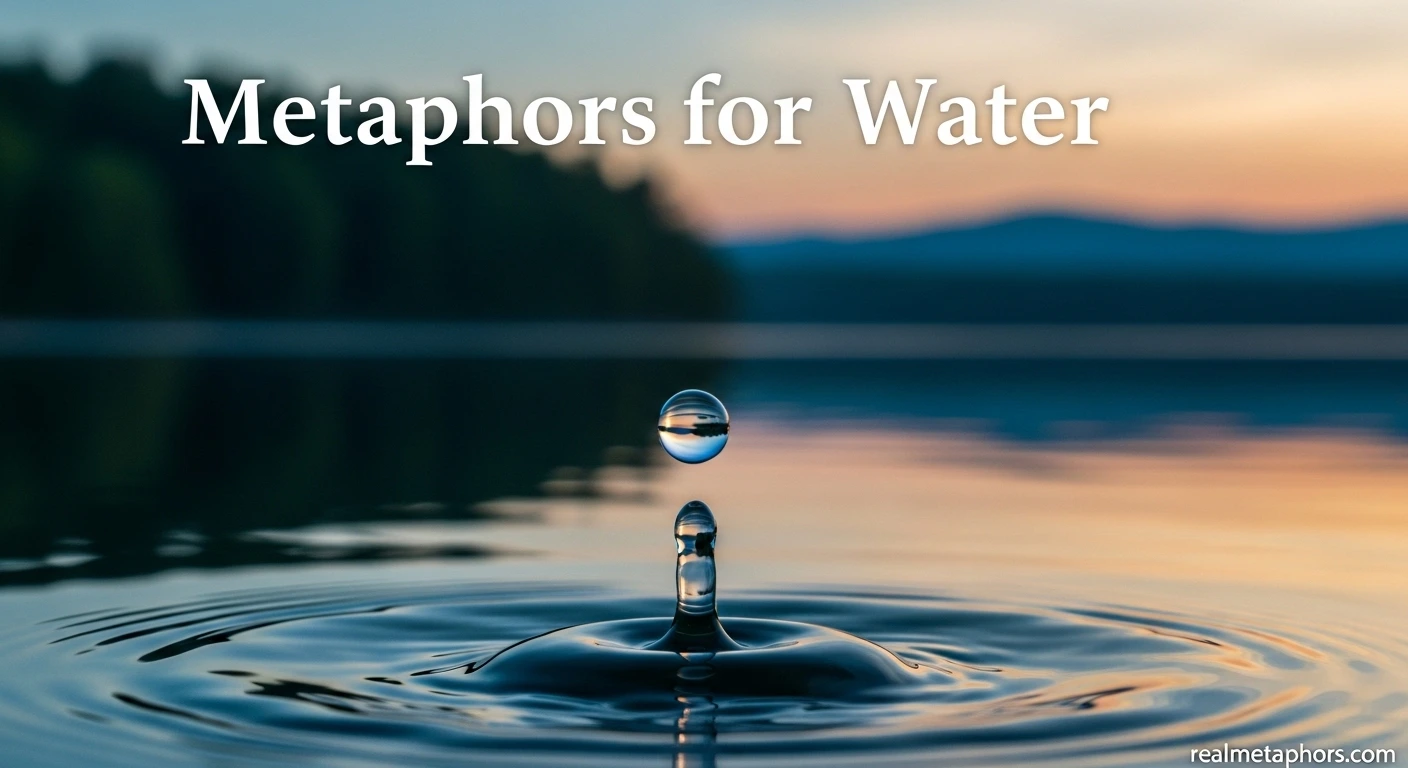
Imagine standing by a river at dawn. The water glimmers like liquid silver, weaving around stones, whispering secrets as it moves. You dip your hand in, and it’s cold, alive, and free. Water is simple, yet powerful. It can calm or destroy, give life or wash it away. That’s why writers, poets, and everyday speakers often use water as a metaphor: it helps explain feelings, ideas, and experiences in ways that touch the senses.
In this article, we’ll explore over 25 metaphors for water, explain what they mean, show examples, and even give you tips to use them in writing, social media, or conversation.
What Are Water Metaphors?
A metaphor is a way of describing something by saying it is something else. Instead of literally saying “water moves fast,” you might say “water is a racing horse.” It paints a picture and makes your words more vivid.
Water metaphors are popular because water is part of life everywhere. Its qualities—flowing, still, turbulent, clear, murky—make it perfect to describe emotions, situations, or ideas.25+ Water Metaphors and How to Use Them
1. Water is life
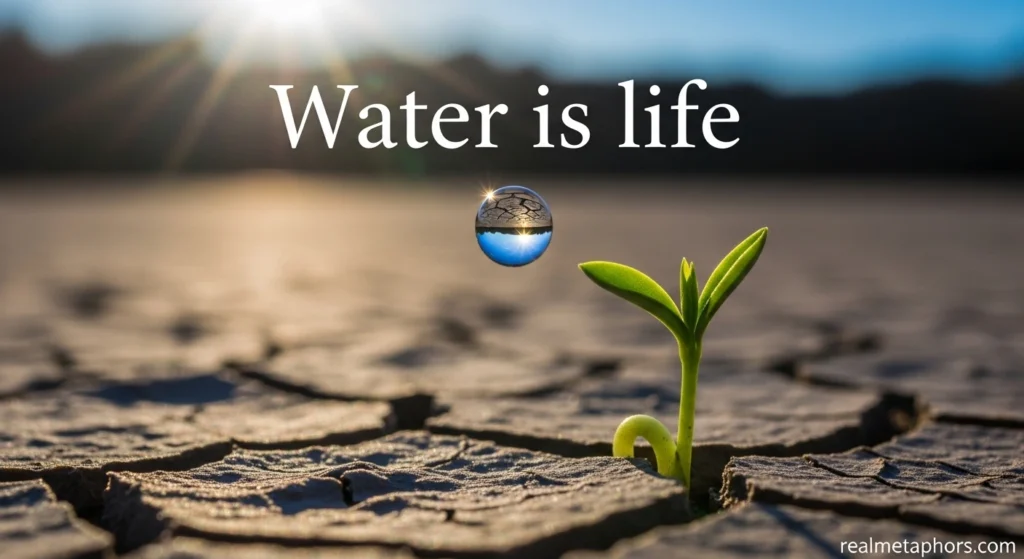
Meaning: Water sustains all living things.
Example: “Her love was water, nourishing everyone around her.”
Alternative: “Her support flowed like water, giving life.”
Imagery: Imagine a plant wilting without water, then blooming after a drink.
2. Water is a mirror
Meaning: Calm water reflects everything like a mirror.
Example: “His mind was a mirror, reflecting the chaos around him.”
Alternative: “Her thoughts were as reflective as a still pond.”
Imagery: Picture a lake showing the sky perfectly.
3. Water is a thief
Meaning: Water can erode, take, or destroy over time.
Example: “Time was a thief, like water wearing down stone.”
Alternative: “It swept away the old memories like a river floods a bank.”
Imagery: Visualize waves slowly eating away a sandy shore.
4. Water is freedom
Meaning: Water flows without restraint.
Example: “She felt like water, free to move wherever life took her.”
Alternative: “His spirit was liquid, slipping past every barrier.”
Imagery: Think of a stream twisting through a forest.
5. Water is emotion
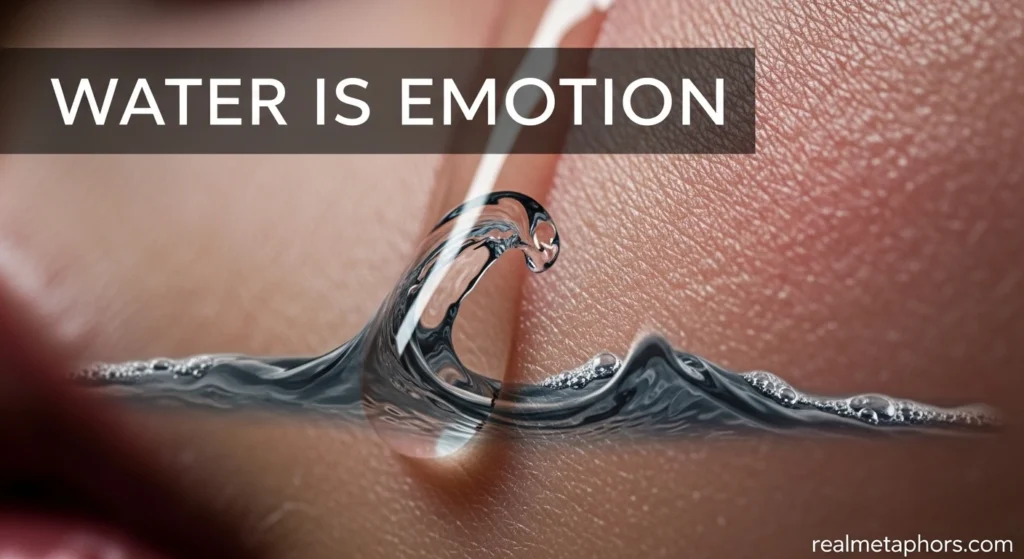
Meaning: Emotions can be like water: calm, turbulent, or overwhelming.
Example: “Grief hit him like a tidal wave.”
Alternative: “Her sadness bubbled like a spring.”
Imagery: Waves crashing, rivers swelling, raindrops falling.
6. Water is a mirror to the soul
Meaning: Water reflects inner feelings or truth.
Example: “He stared into the pond, seeing his own doubts staring back.”
Alternative: “The river showed the turmoil within him.”
Imagery: A cloudy pond reflecting a stormy sky.
7. Water is a storyteller
Meaning: Flowing water tells stories of time, nature, and life.
Example: “The stream whispered tales of the mountains it crossed.”
Alternative: “Rivers hum histories of lands unseen.”
Imagery: Imagine listening to a babbling brook in the forest.
8. Water is power
Meaning: Water can destroy, shape, or command attention.
Example: “The hurricane was water in its most furious form.”
Alternative: “The river roared like a wild beast.”
Imagery: Envision a waterfall crashing into rocks.
9. Water is clarity
Meaning: Clear water symbolizes understanding and insight.
Example: “Her mind cleared like water in a mountain spring.”
Alternative: “Truth shone like sunlight on a calm lake.”
Imagery: Crystal-clear pond revealing pebbles beneath.
10. Water is mystery
Meaning: Deep or dark water hides secrets.
Example: “The ocean was a mystery, holding stories untold.”
Alternative: “His heart was like a deep, hidden lake.”
Imagery: Dark waters, swirling currents, things unseen.
11. Water is time
Meaning: Water flows, representing the passage of time.
Example: “Life moved like a river, unstoppable and relentless.”
Alternative: “Moments slipped away like water through fingers.”
Imagery: Think of a river gradually wearing down stones.
12. Water is a healer
Meaning: Water restores and refreshes.
Example: “A bath of hot water eased her stress away.”
Alternative: “The rain washed away the pain.”
Imagery: Imagine soaking in a warm spring.
13. Water is a bridge
Meaning: Water connects people or places.
Example: “The river was a bridge between two villages.”
Alternative: “Conversation flowed like a connecting stream.”
Imagery: Picture boats crossing calm water to meet each other.
14. Water is resilience
Meaning: Water keeps moving, no matter what blocks its path.
Example: “Like water, he found a way around every obstacle.”
Alternative: “Her determination flowed like an unstoppable current.”
Imagery: Water slipping around rocks, never stopping.
15. Water is a mirror of society
Meaning: Calm or murky water can reflect society’s state.
Example: “The polluted river mirrored the city’s corruption.”
Alternative: “Life’s river reflects its people, clear or clouded.”
Imagery: Think of muddy water showing chaos above.
16. Water is a blanket
Meaning: Water can comfort and envelop.
Example: “The warm bath was a blanket of calm after a long day.”
Alternative: “The gentle waves wrapped her in peace.”
Imagery: Picture floating in gentle water, cocooned and safe.
17. Water is a dance
Meaning: Water moves gracefully, rhythmically.
Example: “The fountain danced in the sunlight.”
Alternative: “Her laughter flowed like dancing water.”
Imagery: Streams swirling and spinning in harmony.
18. Water is a mirror of nature
Meaning: Water reflects the environment around it.
Example: “The lake mirrored the autumn leaves perfectly.”
Alternative: “A puddle captured the sky in its tiny frame.”
Imagery: A serene pond reflecting trees and clouds.
19. Water is patience
Meaning: Water shapes stone slowly, teaching patience.
Example: “Time, like water, carved wisdom into her soul.”
Alternative: “Patience flowed like a river wearing down mountains.”
Imagery: Erosion shaping cliffs over centuries.
20. Water is purity
Meaning: Clean water symbolizes innocence or cleanliness.
Example: “His heart was pure, like untouched spring water.”
Alternative: “Her intentions were as clear as mountain streams.”
Imagery: Crystal-clear waterfalls, sparkling in the sun.
21. Water is danger
Meaning: Water can be threatening or uncontrollable.
Example: “The flood was water turned into a monster.”
Alternative: “Storm waves threatened to swallow the shore.”
Imagery: Envision raging seas and powerful currents.
22. Water is a veil
Meaning: Water can hide or obscure things.
Example: “Fog rolled over the lake like a watery veil.”
Alternative: “Rain blurred the world like a soft curtain.”
Imagery: Misty lakes hiding what’s beneath.
23. Water is a journey
Meaning: Water travels, symbolizing life’s path.
Example: “The river’s journey mirrored his own life, winding and unpredictable.”
Alternative: “Life flows like water, full of twists and turns.”
Imagery: Streams branching into rivers, rivers into the ocean.
24. Water is a song
Meaning: Water has rhythm and sound, like music.
Example: “The brook sang as it tumbled over rocks.”
Alternative: “Her voice flowed like water over stones.”
Imagery: Hear the trickle of a spring or waves lapping the shore.
25. Water is a teacher
Meaning: Water shows lessons about life and adaptability.
Example: “Watching the river taught him patience and resilience.”
Alternative: “The ocean’s tides were lessons in letting go.”
Imagery: Waves reminding you that everything changes.
Fun Exercises and Challenges
- Daily Water Metaphor Journal: Write a sentence each day using water as a metaphor for your mood.
- Visual Prompt Challenge: Look outside at any body of water and describe it metaphorically in three ways.
- Social Media Twist: Turn your morning coffee or shower experience into a mini water metaphor story.
- Story Starter: “The river knew my secrets, but kept them flowing…” – finish the story in 100 words.
- Mix and Match: Combine water metaphors with emotions: “Anger was a stormy sea” or “Joy flowed like a gentle stream.”
Tips for using metaphors:
- Keep them simple and relatable.
- Use sensory details—sight, sound, touch.
- Avoid overloading; one strong metaphor often beats several weak ones.
- Practice daily—your brain will start seeing the world metaphorically.
FAQs
1. Why are water metaphors useful?
They make abstract ideas concrete, helping readers feel, see, and imagine experiences.
2. Can water metaphors describe emotions?
Absolutely! Water’s flow, turbulence, and calmness match many human emotions.
3. How do I create my own water metaphor?
Observe water—its movement, color, sound—and compare it to feelings, ideas, or situations.
4. Are water metaphors only for writing?
No, they can be used in speeches, social media, journaling, or everyday conversation.
5. What is a common mistake when using water metaphors?
Overcomplicating them or mixing too many at once. Keep metaphors clear and focused.
6. How do I make a metaphor memorable?
Add sensory details, a touch of surprise, or a tiny story around it.
7. Can water metaphors be cultural?
Yes! Rivers, oceans, or rain can have different symbolic meanings in different cultures.
8. How many water metaphors should I use in a story?
One strong, well-placed metaphor is better than many scattered ones. Use them to highlight key moments.
Water is everywhere—in nature, in life, and in our words. Using metaphors for water lets you express feelings, describe scenes, and create stories that flow naturally, just like a river.