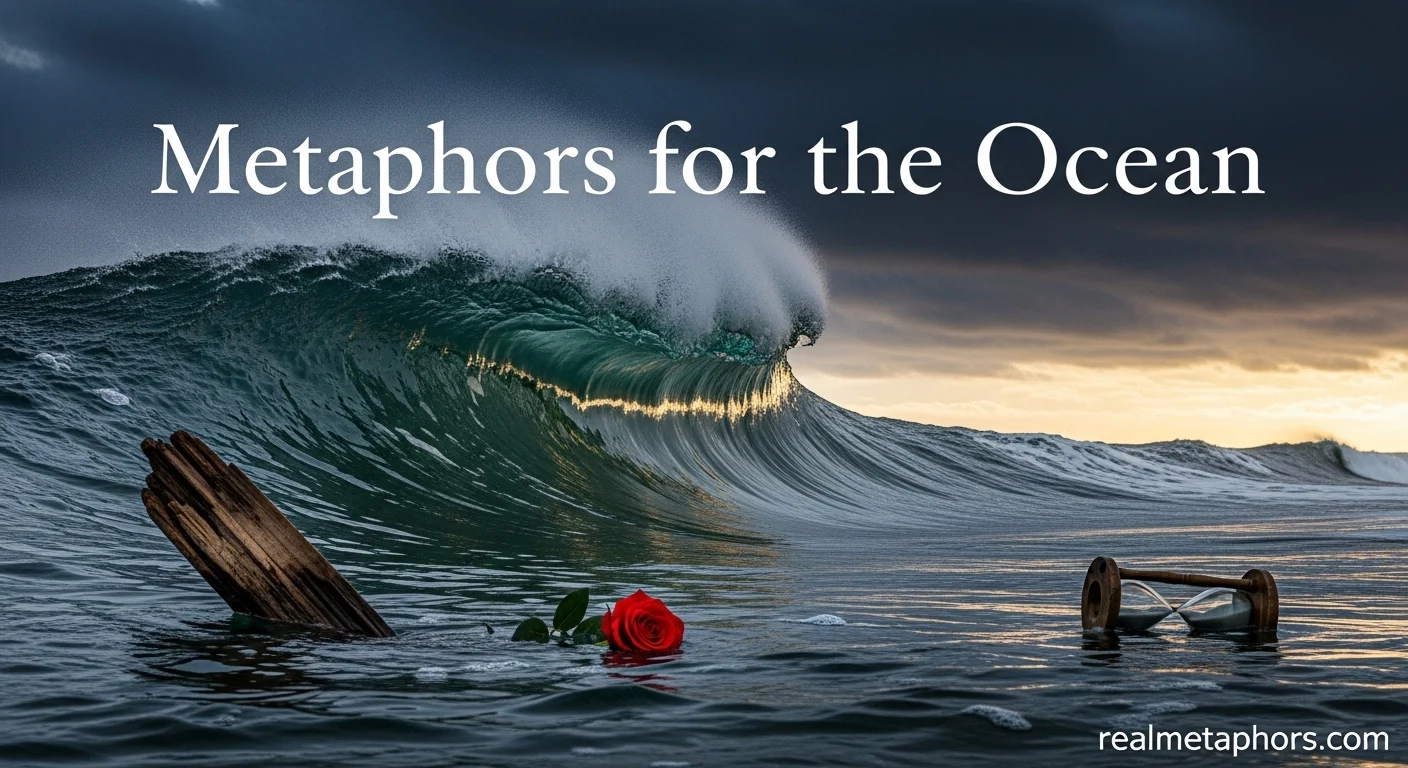
The ocean has always fascinated humans. Imagine standing on a sandy beach, feeling the cold waves lap at your feet, smelling the salty air, and hearing the endless rhythm of water crashing against the shore. The ocean is not just water—it’s mystery, power, calm, and chaos all at once. Using metaphors can help capture this complexity in writing, conversations, or even social media posts. A metaphor is a way of comparing one thing to another to make an idea stronger, more vivid, or emotional. In this article, we’ll explore over 25 metaphors for the ocean, explain their meaning, and give examples so you can use them easily.
1. The Ocean as a Mirror
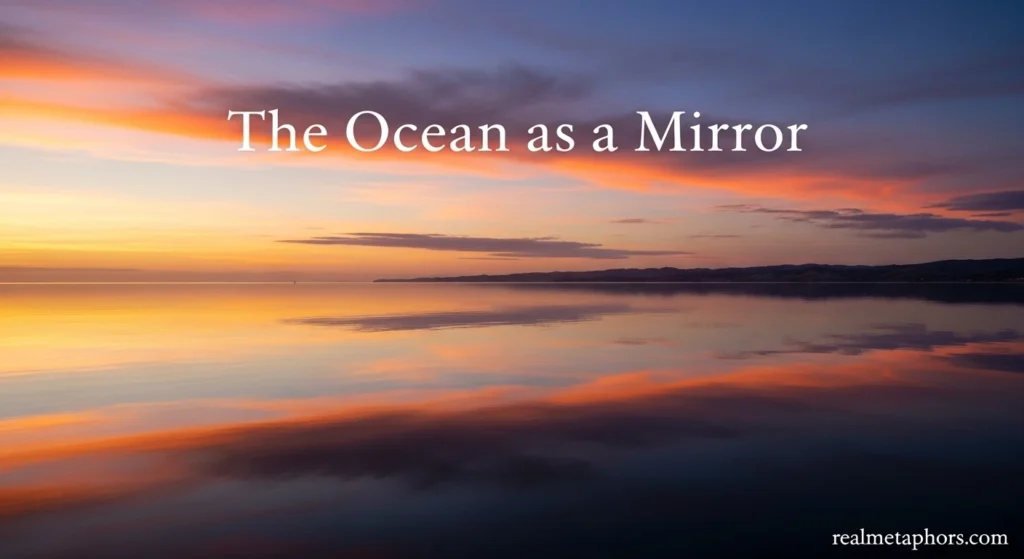
Meaning: Reflects the sky, mood, or world around it.
Example: “The ocean mirrored the pink clouds of sunset.”
Alternative: “The sea was a glass painting of the sky.”
Imagery: Calm water reflecting the soft colors of evening, like a giant mirror.
2. The Ocean as a Giant Heart
Meaning: Full of life, rhythm, and emotion.
Example: “The ocean’s waves pulsed like the heartbeat of the planet.”
Alternative: “The sea throbbed with life.”
Imagery: Imagine feeling the world’s pulse through the waves.
3. The Ocean as a Playground
Meaning: Fun, lively, and full of movement. Example: “Children ran along the beach, treating the ocean as a playground.” Alternative: “The sea was a giant playground of foam and sand.” Imagery: Waves as slides, tides as swings, endless fun.
4. The Ocean as a Blanket
Meaning: Protective, comforting, or covering.
Example: “Fog rolled over the sea like a soft blanket.”
Alternative: “The waves wrapped the coast in gentle warmth.”
Imagery: Imagine the ocean hugging the land softly.
5. The Ocean as a Monster
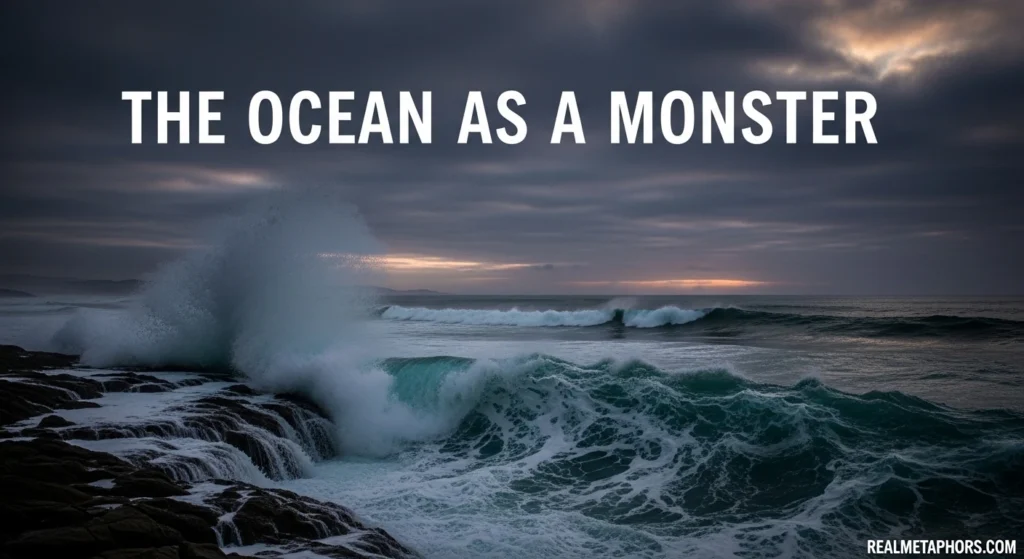
Meaning: Dangerous, powerful, or scary.
Example: “Stormy waves roared like an angry monster.”
Alternative: “The sea was a wild beast that could swallow ships.”
Imagery: Waves towering like claws, crashing with fury.
6. The Ocean as a Teacher
Meaning: Shows lessons about patience, power, and change.
Example: “The ocean taught me to let go, one wave at a time.”
Alternative: “The sea whispered lessons to those who listened.”
Imagery: Waves pulling sand back into the water, showing impermanence.
7. The Ocean as a Blanket of Blue
Meaning: Calm, soothing, and endless.
Example: “A blanket of blue stretched across the horizon.”
Alternative: “The sea lay in calm sheets of color.”
Imagery: Smooth, endless waves like a soft blue quilt.
8. The Ocean as a Road
Meaning: Journey, exploration, and adventure.
Example: “Sailors set out, seeing the ocean as a road to new worlds.”
Alternative: “The sea opened paths to the unknown.”
Imagery: Waves like lanes, ships traveling like cars on water.
9. The Ocean as a Treasure Chest
Meaning: Holds secrets, riches, and surprises.
Example: “The coral reefs were treasure chests of life beneath the waves.”
Alternative: “The ocean hid gems beneath its surface.”
Imagery: Bright fish and sunken ships sparkling underwater.
10. The Ocean as a Stage
Meaning: Drama, performance, or storytelling.
Example: “Storm waves performed a dramatic show on the shore.”
Alternative: “The sea was a stage for nature’s play.”
Imagery: Waves as actors, seagulls as the audience.
11. The Ocean as a Friend
Meaning: Loyal, comforting, and always present.
Example: “I walked along the shore, feeling the ocean was my friend.”
Alternative: “The sea offered silent companionship.”
Imagery: Gentle waves like a friend’s hand resting on your shoulder.
12. The Ocean as a Blanket of Fog
Meaning: Mysterious, hiding secrets.
Example: “A foggy ocean concealed distant ships.”
Alternative: “The sea was a veil of mystery.”
Imagery: Mist curling around waves like a soft secret.
13. The Ocean as a Symphony
Meaning: Harmonious, musical, rhythmic.
Example: “Waves crashed in a symphony of sound.”
Alternative: “The sea played melodies of foam and tide.”
Imagery: Hear the rhythm of each wave like music notes.
14. The Ocean as a Mirror of the Soul
Meaning: Reflects emotions, moods, or inner state.
Example: “The calm sea reflected my quiet mind.”
Alternative: “The waves mirrored the storm in my heart.”
Imagery: Calm water for peace, stormy waves for anger.
15. The Ocean as a Puzzle
Meaning: Complex, mysterious, hard to understand.
Example: “Exploring the deep ocean is like solving a giant puzzle.”
Alternative: “The sea hides secrets in its pieces of waves.”
Imagery: Currents, depths, and creatures forming a giant enigma.
16. The Ocean as a Canvas
Meaning: Beautiful, artistic, and creative.
Example: “Sunset painted the ocean as if it were a canvas.”
Alternative: “The waves were brushstrokes of nature.”
Imagery: Colorful skies reflected in moving water.
17. The Ocean as a Whisper
Meaning: Soft, gentle, secretive.
Example: “The tide whispered secrets to the shore.”
Alternative: “The sea murmured in quiet tones.”
Imagery: Light waves touching sand, barely making a sound.
18. The Ocean as a Labyrinth
Meaning: Confusing, twisting, and difficult to navigate.
Example: “Stormy waters formed a labyrinth of waves.”
Alternative: “The sea wove paths that confused sailors.”
Imagery: Currents crossing, waves rising and falling unpredictably.
19. The Ocean as a Mirror of Time
Meaning: Shows change, cycles, and eternity.
Example: “The ocean reflected decades of sunsets.”
Alternative: “The sea held centuries in its waves.”
Imagery: Waves coming and going, leaving footprints in the sand.
20. The Ocean as a Blanket of Stars
Meaning: Magical, sparkling, and dreamy.
Example: “Bioluminescent waves lit the night like a blanket of stars.”
Alternative: “The sea glittered like heaven itself.”
Imagery: Tiny lights glowing underwater, night reflecting magic.
21. The Ocean as a Serpent
Meaning: Sinuous, moving, dangerous.
Example: “The river feeding into the ocean slithered like a serpent.”
Alternative: “Waves coiled like snakes along the shore.”
Imagery: Waves twisting and curling, unpredictable and alive.
22. The Ocean as a Fortress
Meaning: Strong, protective, or impenetrable.
Example: “The cliffs and waves formed a fortress against the storm.”
Alternative: “The sea was a shield against invaders.”
Imagery: Waves pounding rocks like guards defending a castle.
23. The Ocean as a Giant Clock
Meaning: Constant, rhythmic, measures time.
Example: “Tides marked the hours like a giant clock.”
Alternative: “The sea ticked in waves and currents.”
Imagery: Every wave as a second, tide as an hour, eternal rhythm.
24. The Ocean as a Bridge
Meaning: Connects lands, people, or ideas.
Example: “Ships sailed across the ocean like travelers on a bridge.”
Alternative: “The sea linked distant shores.”
Imagery: Waves forming invisible paths, connecting continents.
25. The Ocean as a Dream
Meaning: Magical, limitless, and imaginative.
Example: “Looking at the horizon, the ocean felt like a dream.”
Alternative: “The sea was a floating dreamscape.”
Imagery: Endless horizon, soft waves, and sky blending together.
26. The Ocean as a Teacher of Humility
Meaning: Shows humans their smallness and vulnerability.
Example: “Standing before the stormy sea, I realized my smallness.”
Alternative: “The ocean reminded me how tiny I am.”
Imagery: Giant waves dwarfing boats, reminding us of nature’s power.
Fun Exercises and Writing Prompts
- Daily Metaphor Journal: Write one metaphor about the ocean each day for a week.
- Story Starter: Begin a story with “The ocean was…” and continue using 3 different metaphors.
- Social Media Challenge: Describe your mood using an ocean metaphor.
- Mix and Match: Combine two metaphors (e.g., “The ocean was a blanket of stars… and a monster at heart”) in one sentence.
- Visual Exercise: Draw a picture inspired by one ocean metaphor.
Extra Tip: Use sensory details—sounds, smells, and feelings—to make metaphors more vivid and emotional.
FAQs
1. What is a metaphor?
A metaphor is a comparison that shows one thing as if it were another to make ideas vivid and meaningful.
2. Why use ocean metaphors?
They capture the ocean’s beauty, power, mystery, and emotion in an easy-to-imagine way.
3. Can I make my own ocean metaphors?
Yes! Observe the ocean and compare it to feelings, objects, or ideas. Be creative.
4. Common mistakes with metaphors?
Mixing unrelated ideas or making comparisons too complicated. Keep them clear and visual.
5. How can I use metaphors in writing?
In stories, poems, captions, or daily reflections to make ideas more emotional and engaging.
6. Are metaphors only for writing?
No! They are useful in speaking, teaching, advertising, and social media to explain or impress.
7. How do I make metaphors easy to understand?
Use familiar images and simple language. Add details to help readers picture it.