
Imagine walking into an empty library. The air feels thick, the only sound is the faint rustle of pages, and your own breathing seems loud in the quiet. That feeling—where words vanish and only stillness remains—is what we call silence. Silence is powerful, sometimes comforting, sometimes heavy, and always meaningful. Using metaphors for silence helps writers, speakers, and storytellers capture its mood in creative, relatable ways.
Below, you’ll find over 25 metaphors for silence, explained in simple terms, with examples, alternative expressions, and small details to bring them to life.
1. Silence is a Blanket

Meaning: Silence can wrap around you like a soft, protective layer.
Example: After the argument, they sat together in silence, a blanket around their sorrow.
Other way to say it: Silence covers the room.
Imagery: Imagine wrapping yourself in a warm blanket on a winter night—safe, calm, and cocooned.
2. Silence is a Desert
Meaning: Silence can feel vast and empty.
Example: His words were gone; the room was a desert of silence.
Other way to say it: Silence stretches like an empty plain.
Imagery: Endless sand, scorching sun, not a sound but wind.
3. Silence is Gold
Meaning: Silence is valuable and rare.
Example: Sometimes, the best response is silence; silence is gold.
Other way to say it: Silence is precious.
Imagery: A quiet pause in a noisy argument can be as powerful as a treasure.
4. Silence is a Storm Waiting
Meaning: Silence can hint at tension or upcoming action.
Example: His calm stare made everyone uneasy; silence was a storm waiting.
Other way to say it: Silence before the storm.
Imagery: Dark clouds gathering, wind whispering, tension building.
5. Silence is a Shadow
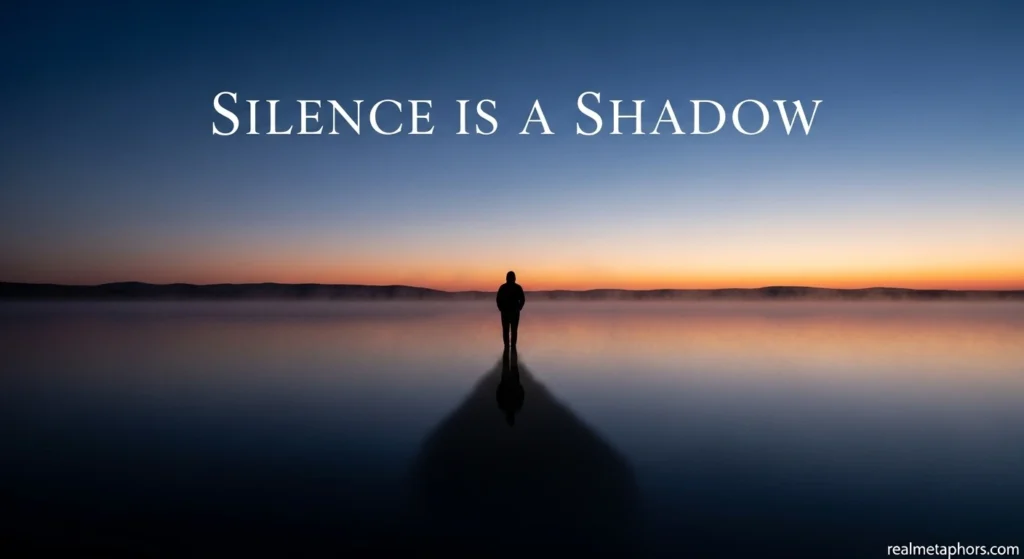
Meaning: Silence follows you, sometimes unnoticed, always present.
Example: After the announcement, silence was a shadow over the room.
Other way to say it: Silence lingers like a shadow.
Imagery: Quiet, invisible, but felt everywhere.
6. Silence is a Mirror
Meaning: Silence reflects our thoughts and feelings.
Example: Alone in the quiet, she realized silence is a mirror.
Other way to say it: Silence shows what’s inside.
Imagery: Looking into still water and seeing your own reflection.
7. Silence is a Cage
Meaning: Silence can feel restrictive or imprisoning.
Example: He wanted to speak, but silence was a cage around his words.
Other way to say it: Silence holds you back.
Imagery: A locked door, walls closing in, unable to escape your own thoughts.
8. Silence is a River
Meaning: Silence flows smoothly, sometimes quietly moving emotions
Example: Their conversation ended; silence flowed like a river between them.
Other way to say it: Silence moves like water.
Imagery: Gentle, calm, carrying feelings along without sound.
9. Silence is a Blanket of Snow
Meaning: Silence can be soft, covering, and muffling everything around.
Example: After the snowfall, the forest was peaceful; silence was a blanket of snow.
Other way to say it: Silence covers like snow.
Imagery: Snowfall absorbs sound, making everything seem serene.
10. Silence is a Pause Button
Meaning: Silence can stop action or thought, like pressing pause.
Example: He didn’t know how to answer, so he hit the pause button of silence.
Other way to say it: Silence stops the moment.
Imagery: Life frozen for a second, thoughts catching up.
11. Silence is a Cage of Thoughts
Meaning: Silence can make you overthink.
Example: Alone in silence, her mind spun; silence was a cage of thoughts.
Other way to say it: Silence traps your mind.
Imagery: Trapped inside your own head, ideas bouncing endlessly.
12. Silence is a Secret
Meaning: Silence holds hidden information or emotions.
Example: He didn’t speak about it; silence was a secret.
Other way to say it: Silence keeps things hidden.
Imagery: A locked box, words held safely inside.
13. Silence is a Curtain
Meaning: Silence separates, hides, or shields.
Example: Between the two friends, silence fell like a curtain.
Other way to say it: Silence hides the scene.
Imagery: A theater curtain, separating actors from the audience.
14. Silence is an Ocean
Meaning: Silence can feel deep, endless, and overwhelming.
Example: Her mind was quiet, yet full; silence was an ocean.
Other way to say it: Silence is vast.
Imagery: Waves lapping quietly, the depth unknown, immense calm.
15. Silence is a Cage Door
Meaning: Silence can also give freedom or hold back words.
Example: He wanted to speak, but the cage door of silence was closed.
Other way to say it: Silence locks words in.
Imagery: A small opening, tempting yet barred.
16. Silence is a Winter Night
Meaning: Silence can be cold but beautiful.
Example: Outside, the street was empty; silence was a winter night.
Other way to say it: Silence chills the air.
Imagery: Frost on the window, stars shining, stillness all around.
17. Silence is a Key
Meaning: Silence can unlock understanding.
Example: She listened carefully; silence was the key to his heart.
Other way to say it: Silence opens doors.
Imagery: Turning a key slowly, unlocking hidden feelings.
18. Silence is a Canvas
Meaning: Silence allows imagination or emotions to paint themselves.
Example: In the quiet room, silence was a canvas for her dreams.
Other way to say it: Silence inspires creation.
Imagery: Blank white space, waiting for colors and ideas.
19. Silence is a Ghost
Meaning: Silence can feel eerie or haunting.
Example: The abandoned house whispered nothing; silence was a ghost.
Other way to say it: Silence haunts.
Imagery: Shadows moving, footsteps echoing, invisible presence felt.
20. Silence is a Pause in Music
Meaning: Silence is as meaningful as sound.
Example: The song ended; silence was a pause in music.
Other way to say it: Silence is the beat between notes.
Imagery: Like the rest in a melody, giving shape to sound.
21. Silence is a Locked Chest
Meaning: Silence holds treasures or secrets.
Example: He didn’t reveal the truth; silence was a locked chest.
Other way to say it: Silence keeps things safe.
Imagery: Heavy wooden chest, key missing, contents unknown.
22. Silence is a Fog
Meaning: Silence can obscure understanding.
Example: Their conversation was unclear; silence was a fog.
Other way to say it: Silence clouds clarity.
Imagery: Mist hiding the path, making everything dl.
23. Silence is a Pause for Breath
Meaning: Silence gives a moment to recover or think.
Example: After the shocking news, silence was a pause for breath.
Other way to say it: Silence allows rest.
Imagery: Deep inhale, calm settling, mind catching up.
24. Silence is a Safe House
Meaning: Silence can protect you from danger or stress.
Example: She stayed in her room, silence a safe house from the chaos outside.
Other way to say it: Silence shelters.
Imagery: Cozy walls, soft light, feeling secure.
25. Silence is a Bridge
Meaning: Silence connects understanding or emotions.
Example: They didn’t speak, but silence was a bridge between their hearts.
Other way to say it: Silence links souls.
Imagery: Walking across a quiet bridge, feeling together without words.
Fun Exercises & Writing Prompts
- Metaphor Match: Pick 5 metaphors from above and write a one-sentence story for each.
- Create Your Own: Take any emotion (anger, happiness, fear) and write 3 new metaphors for silence around it.
- Social Media Challenge: Write a tweet using one metaphor for silence in 280 characters.
- Daily Observation: Notice moments of silence in daily life and describe them with a metaphor.
- Story Starter: “The room was quiet, but the silence…” — finish the sentence using one metaphor.
Tips:
- Use metaphors to make writing vivid.
- Combine metaphors with senses—sight, sound, touch—for stronger imagery.
- Don’t overuse—one or two metaphors per paragraph keeps them powerful.
FAQs
1. Why are metaphors for silence useful?
They make abstract concepts like silence easier to feel and imagine.
2. Can anyone create metaphors?
Yes! Start with an object, nature, or feeling and compare it to silence.
3. How do I avoid cliché metaphors?
Think about unique experiences or sensory details from your life.
4. Where can I use metaphors for silence?
Stories, poems, social media posts, speeches, or journals.
5. Can silence have positive metaphors?
Absolutely! Silence can be comforting, protective, or inspiring.
6. How do I practice using metaphors?
Observe life, emotions, and surroundings. Then describe them with creative comparisons.
7. What’s a common mistake with metaphors?
Overcomplicating or mixing too many ideas—keep them clear and simple.
8. Can metaphors change the mood of silence?
Yes! Silence can feel peaceful, tense, lonely, or magical depending on the metaphor you choose.
Conclusion
This article is friendly, simple, and packed with examples, making it easy to understand and use metaphors for silence in everyday writing and creative work.