Imagine standing on a sandy beach, the sun warming your back, waves gently lapping at your feet. You watch the endless blue horizon, feeling tiny yet connected to something vast and mysterious. That’s the sea—a force of nature, a world of stories, and a treasure trove of inspiration for writers, poets, and storytellers. One way to bring its magic to life in words is through metaphors.
Metaphors are comparisons that describe one thing as if it were another, helping readers feel, imagine, and experience ideas vividly. Today, we’ll dive into 25+ easy metaphors for the sea that you can use in stories, social media captions, poems, or everyday conversations.
1. The Sea is a Mirror
Meaning: Reflects everything around it, like your feelings or the sky.
Example: The calm sea was a mirror, showing the pink clouds of sunset.
Other Way to Say: The sea reflects the world.
Visual: Imagine standing on the shore, seeing the sky perfectly reflected on the water’s surface.
2. The Sea is a Blanket
Meaning: Protective, comforting, and wrapping the earth.
Example: The fog rolled in, covering the city like a soft sea blanket.
Other Way to Say: The sea hugs the land.
Visual: Think of the sea gently enveloping the coastline.
3. The Sea is a Monster
Meaning: Dangerous, powerful, and unpredictable.
Example: The storm turned the sea into a furious monster.
Other Way to Say: The sea roars like a beast.
Visual: Waves crash like claws reaching for the shore.
4. The Sea is a Journey
Meaning: Life is like a voyage across the water.
Example: Sailing across the sea felt like navigating life’s challenges.
Other Way to Say: Life is a sea voyage.
Visual: Picture a small boat moving steadily through endless water.
5. The Sea is a Playground
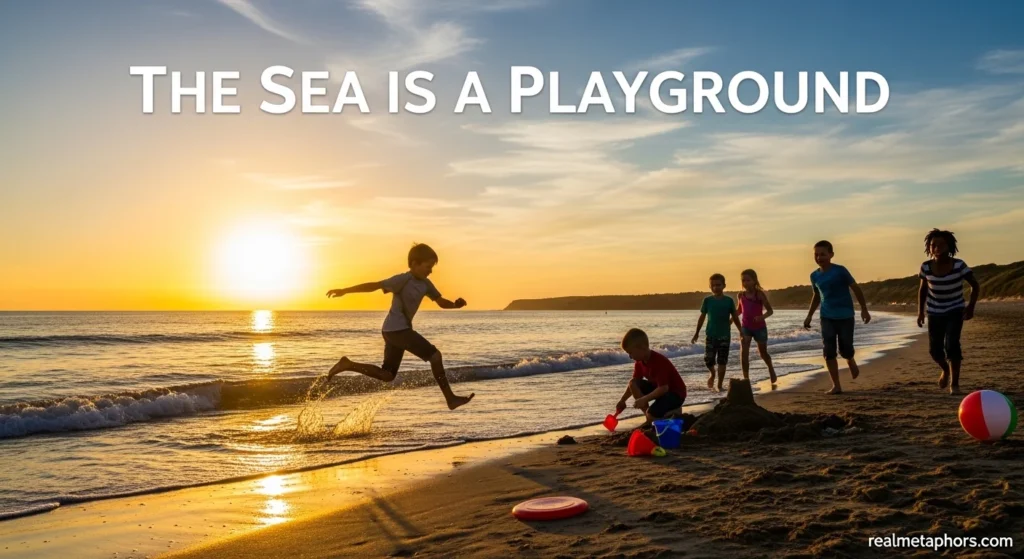
Meaning: Fun, lively, and full of adventure.
Example: Children laughed as they played in the sea playground.
Other Way to Say: The sea is a fun space.
Visual: Waves bouncing, kids jumping, seagulls circling.
6. The Sea is a Blanket of Stars
Meaning: Sparkling and beautiful at night.
Example: Moonlight danced on the sea, turning it into a blanket of stars.
Other Way to Say: The sea sparkles like the night sky.
Visual: Imagine tiny glittering waves under a moonlit sky.
7. The Sea is a Mirror of Emotions
Meaning: Reflects moods, calm or stormy.
Example: Her heart felt turbulent, just like the stormy sea.
Other Way to Say: The sea echoes our feelings.
Visual: Peaceful waves for calm, crashing waves for anger.
8. The Sea is a Garden
Meaning: Full of life, plants, and creatures.
Example: Coral reefs made the sea a colorful garden.
Other Way to Say: The sea blooms with life.
Visual: Bright fish, swaying plants, and coral shapes everywhere.
9. The Sea is a Blanket of Silence
Meaning: Quiet, peaceful, and serene.
Example: Early morning, the sea was a blanket of silence.
Other Way to Say: The sea rests quietly.
Visual: A still sea at dawn, with only gentle ripples.
10. The Sea is a Messenger
Meaning: Carries news, stories, or change.
Example: Ships sailing from distant lands made the sea a messenger of tales.
Other Way to Say: The sea delivers messages.
Visual: Waves bring shells, letters, or driftwood to the shore.
11. The Sea is a Mirror of the Sky
Meaning: Reflects the sky’s colors, moods, and moods.
Example: After the rain, the sea mirrored the gray clouds above.
Other Way to Say: The sea copies the sky.
Visual: Dark clouds creating dark waves; sunsets painting golden waters.
12. The Sea is a Thief
Meaning: Takes things away, like ships, treasures, or hopes.
Example: The stormy sea became a thief, swallowing the small boat.
Other Way to Say: The sea steals.
Visual: Waves carrying objects away into the deep.
13. The Sea is a Blanket of Fog
Meaning: Mysterious, hiding things underneath.
Example: Morning mist turned the sea into a blanket of fog.
Other Way to Say: The sea hides itself in fog.
Visual: Waves barely visible through dense mist.
14. The Sea is a Playground for Winds
Meaning: Waves dance with wind, playful and energetic.
Example: The breeze made the sea a playground for dancing waves.
Other Way to Say: Winds frolic over the water.
Visual: Waves twirling, winds tossing them around.
15. The Sea is a Silver Ribbon
Meaning: Shiny, flowing, and graceful.
Example: Moonlight turned the waves into a silver ribbon across the horizon.
Other Way to Say: The sea glistens like a ribbon.
Visual: Sparkling waves reflecting moonlight.
16. The Sea is a Book
Meaning: Full of stories, mysteries, and secrets.
Example: Every wave whispered a story; the sea was a book of tales.
Other Way to Say: The sea tells stories.
Visual: Imagine listening to the waves as if reading chapters.
17. The Sea is a Whisper
Meaning: Soft, gentle, and secretive.
Example: At dawn, the sea whispered to the shore.
Other Way to Say: The sea speaks softly.
Visual: Small waves brushing sand quietly.
18. The Sea is a Blanket of Peace
Meaning: Calm, restful, soothing.
Example: Sitting by the shore, the sea was a blanket of peace over her mind.
Other Way to Say: The sea soothes.
Visual: Gentle blue waves, quiet breeze, and still water.
19. The Sea is a Monster of Emotion
Meaning: Stormy, full of passion or anger.
Example: Their argument made the sea seem like a monster of emotion.
Other Way to Say: The sea rages with feeling.
Visual: Waves crashing like fists in a storm.
20. The Sea is a Dream
Meaning: Magical, inspiring, limitless.
Example: Gazing at the horizon, the sea felt like a dream.
Other Way to Say: The sea inspires imagination.
Visual: Endless blue stretching forever.
21. The Sea is a Painter
Meaning: Colors, shapes, and moods change constantly.
Example: Sunset painted the sea in shades of gold and pink.
Other Way to Say: The sea creates art.
Visual: Waves glowing in every imaginable color.
22. The Sea is a Stage
Meaning: Shows dramatic action, life, and performance.
Example: Storms turned the sea into a stage of nature’s fury.
Other Way to Say: The sea performs.
Visual: Thunder, lightning, crashing waves—nature’s theater.
23. The Sea is a Friend
Meaning: Comforting, reliable, soothing.
Example: When she was sad, the sea felt like a friend listening.
Other Way to Say: The sea keeps you company.
Visual: Gentle waves lapping the shore, calm and steady.
24. The Sea is a Labyrinth
Meaning: Complex, mysterious, full of twists and turns.
Example: Sailing through the rocky coastline, the sea was a labyrinth.
Other Way to Say: The sea is tricky to navigate.
Visual: Winding paths of islands, rocks, and hidden bays.
25. The Sea is a Treasure Chest
Meaning: Full of wonders, gifts, and secrets.
Example: The sea held a treasure chest of colorful shells and rare fish.
Other Way to Say: The sea is full of riches.
Visual: Discovering hidden beauty beneath the waves.
26. The Sea is a Blanket of Clouds
Meaning: Looks soft, fluffy, and dreamlike from above.
Example: Flying over the ocean, it appeared like a blanket of clouds.
Other Way to Say: The sea floats like clouds.
Visual: Waves gently rippling like soft cotton.
Fun Exercises & Challenges
- Daily Metaphor Practice: Write 1 metaphor about the sea every day. Try to use senses like touch, smell, or sound.
- Social Media Challenge: Caption your beach photo with a metaphor instead of a literal description.
- Story Exercise: Create a short story where the sea represents a character’s emotions using 3 different metaphors.
- Mix & Match: Combine two metaphors in one sentence. Example: The sea was a monster of emotion and a blanket of peace all at once.
- Visual Writing: Draw a wave or sea scene, then write 5 metaphors inspired by your drawing.
Extra Tips:
- Use metaphors to evoke feelings, not just describe.
- Match the metaphor with the tone: stormy for anger, calm for peace.
- Experiment with everyday objects: The sea is a mirror for your soul.
FAQs
Q1: What is a metaphor?
A metaphor is a figure of speech that describes one thing as if it were another to create vivid images.
Q2: Why use metaphors for the sea?
They make writing more vivid, emotional, and memorable. Readers can “feel” the sea, not just see it.
Q3: How do I create my own metaphors?
Think of the sea’s qualities: calm, wild, deep, sparkling. Compare it to things with similar traits.
Q4: Can metaphors be used in everyday life?
Yes! Social media captions, stories, speeches, or even casual conversations can use metaphors.
Q5: What are common mistakes with metaphors?
- Mixing too many in one sentence
- Using clichés without creativity
- Forgetting the emotional impact
Q6: How can metaphors improve storytelling?
They show emotion, set mood, and create memorable imagery.
Q7: Can metaphors be funny or playful?
Absolutely! The sea was a giant soup bowl for the floating bread of waves!
Q8: How many metaphors should I use in a piece?
Balance is key. 2–4 strong metaphors in a paragraph can make it vivid without overwhelming the reader.
Conclusion
Metaphors turn the ordinary into extraordinary. The sea is not just water; it can be a mirror, a monster, a dream, or a treasure chest. Next time you look at the waves, try describing them with a metaphor—you’ll see the magic unfold.