Imagine sitting in a cozy corner, a warm cup of tea in hand, and opening a book. The words on the page lift you into another world—maybe a bustling city, a magical forest, or even into someone else’s mind. Reading isn’t just looking at letters; it’s a journey, a key, a bridge. In fact, writers often use metaphors to describe reading in ways that make us feel, imagine, and connect deeply.
In this article, we’ll explore 25+ easy metaphors for reading, explain what they mean, and show how you can use them in your writing or everyday life. We’ll even include fun exercises to practice creating your own metaphors.
1. Reading is a Window
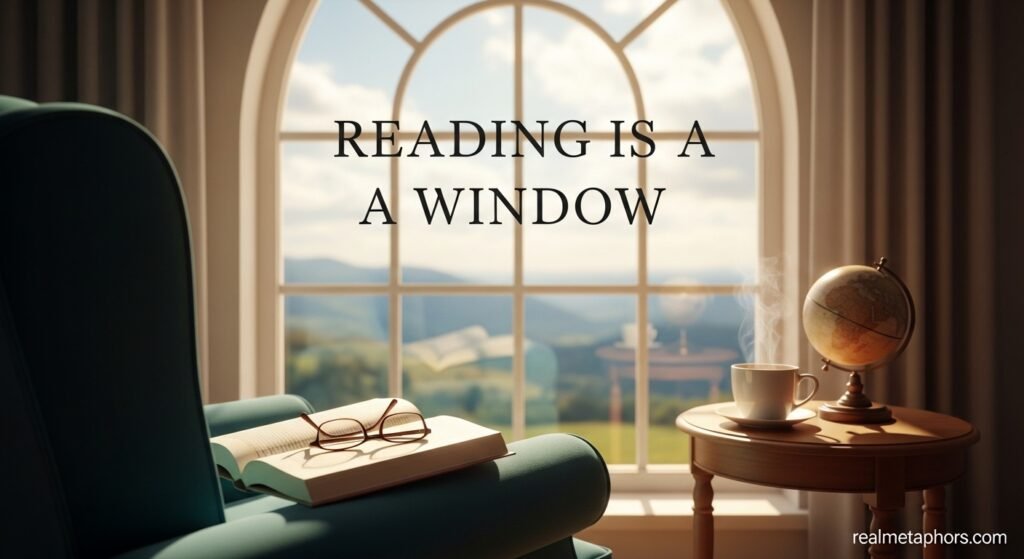
Meaning: Books let you see into new worlds or perspectives.
Example: “Reading that novel was like looking through a window into a life I’d never known.”
Alternative: Reading is a lens.
Details: Imagine peeking through a window and seeing a snow-covered village—you wouldn’t experience it without that view.
2. Reading is a Journey
Meaning: Reading takes you on a path from start to finish, with surprises along the way.
Example: “Every chapter was a step on a long, exciting journey.”
Alternative: Reading is an adventure.
Details: Like walking through a forest, you never know what you’ll find around the next corner.
3. Reading is a Key
Meaning: It opens doors to knowledge, imagination, or secrets.
Example: “Her library card was a key to endless adventures.”
Alternative: Reading is unlocking doors.
Details: Think of turning a key in a locked door and suddenly entering a room full of wonders.
4. Reading is a Bridge
Meaning: It connects you to other people, times, or ideas.
Example: “Through history books, I built a bridge to the past.”
Alternative: Reading is building connections.
Details: Imagine walking over a sturdy bridge from your world to someone else’s life.
5. Reading is a Garden
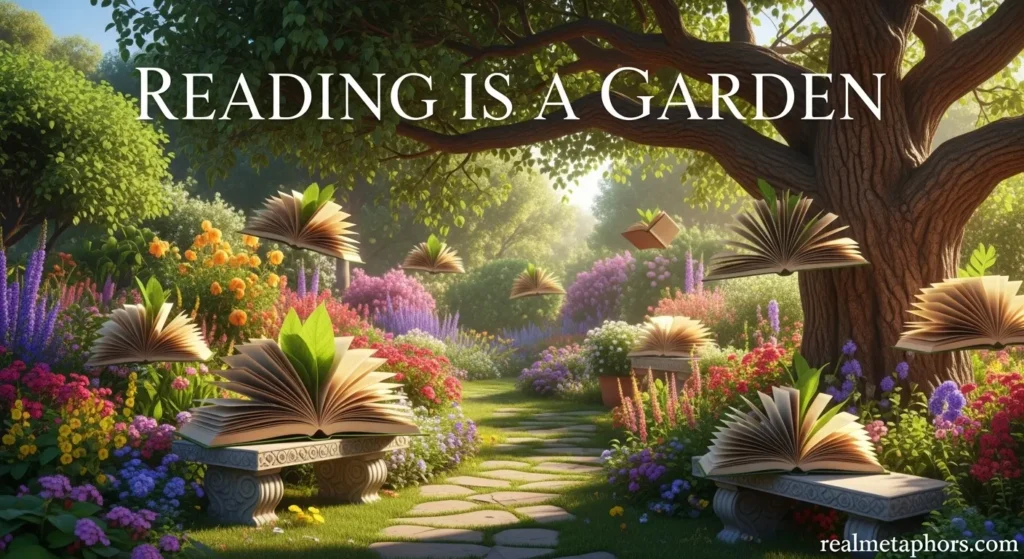
Meaning: Reading helps your mind grow and flourish.
Example: “Each book planted a seed of curiosity in her mind.”
Alternative: Reading is cultivating ideas.
Details: Like watering a plant, revisiting books helps knowledge bloom.
6. Reading is a Treasure Chest
Meaning: Books are full of valuable ideas or experiences.
Example: “Every page was a jewel in a treasure chest of wisdom.”
Alternative: Reading is collecting treasures.
Details: Imagine opening a chest and finding sparkling gems—you can explore and admire each one.
7. Reading is a Lantern
Meaning: Books light up dark or confusing ideas.
Example: “The guidebook was a lantern in my foggy understanding of history.”
Alternative: Reading is illuminating the mind.
Details: Picture holding a lantern in a dark cave; suddenly, walls and paths appear.
8. Reading is Diving into a Sea
Meaning: Immersing yourself in a book feels like exploring deep waters.
Example: “She dived into the story, swimming among the characters’ emotions.”
Alternative: Reading is plunging into another world.
Details: Think of bubbles, waves, and the thrill of discovery under the water.
9. Reading is a Telescope
Meaning: Books allow you to see faraway places, times, or ideas.
Example: “History books were telescopes to ancient civilizations.”
Alternative: Reading is zooming out to see the bigger picture.
Details: Like peering into the sky, you see things far beyond your immediate reach.
10. Reading is a Mirror
Meaning: It reflects your thoughts, feelings, or life experiences.
Example: “That novel was a mirror, showing me my own fears and dreams.”
Alternative: Reading is self-reflection.
Details: Imagine seeing your own face in a mirror, recognizing familiar patterns and emotions.
11. Reading is a Map
Meaning: Books guide you through unknown territories of thought.
Example: “Her guide to philosophy was a map for her wandering mind.”
Alternative: Reading is charting a course.
Details: Like unfolding a map, every page shows you where to go next.
12. Reading is a Fire
Meaning: It warms, inspires, or excites the mind.
Example: “That story ignited a fire of creativity in me.”
Alternative: Reading is sparking inspiration.
Details: Imagine a cozy fireplace, crackling and bright.
13. Reading is a Flight
Meaning: Books lift you up and let your imagination soar.
Example: “The fantasy novel let me fly above mountains and rivers.”
Alternative: Reading is soaring through ideas.
Details: Picture wings carrying you through clouds of adventure.
14. Reading is a Puzzle
Meaning: You piece together information, ideas, or mysteries.
Example: “Each chapter was a puzzle piece that revealed the bigger picture.”
Alternative: Reading is solving riddles.
Details: Like finding matching pieces, the story clicks together in your mind.
15. Reading is a Time Machine
Meaning: Books take you to the past, future, or imagined worlds.
Example: “The novel transported me to 19th-century Paris.”
Alternative: Reading is traveling through time.
Details: Imagine pressing a button and suddenly arriving in another era.
16. Reading is a Feast
Meaning: Books offer rich experiences to enjoy slowly or with gusto.
Example: “I savored the novel like a feast of flavors.”
Alternative: Reading is indulging in ideas.
Details: Picture a table overflowing with delicious dishes, each bite full of delight.
17. Reading is a Keyhole
Meaning: Gives a small glimpse into something bigger.
Example: “Poetry gave me a keyhole view of the poet’s soul.”
Alternative: Reading is peeking into another world.
Details: Like looking through a small opening, you see but don’t touch everything—curiosity grows.
18. Reading is a Compass
Meaning: Books help you find direction in thoughts or life.
Example: “Self-help books became a compass during difficult times.”
Alternative: Reading is guiding your way.
Details: Imagine holding a compass; the needle points you forward.
19. Reading is a Ladder
Meaning: It helps you rise to new levels of understanding.
Example: “Every book I read was a ladder rung toward wisdom.”
Alternative: Reading is climbing toward knowledge.
Details: Step by step, your perspective grows higher.
20. Reading is a Boat
Meaning: Books carry you safely through unknown waters of ideas or imagination.
Example: “The story was a boat that floated me away from boredom.”
Alternative: Reading is sailing through stories.
Details: Imagine drifting gently, watching scenery glide by.
21. Reading is a Key to the Soul
Meaning: Books help you understand emotions, both yours and others’.
Example: “That memoir opened a door to empathy I never had.”
Alternative: Reading is unlocking hearts.
Details: Like turning a special key, feelings flow freely.
22. Reading is a Treasure Hunt
Meaning: You search for hidden meaning, lessons, or joy.
Example: “Each page was a clue leading to wisdom.”
Alternative: Reading is exploring for gems.
Details: Imagine hunting for buried treasure, each discovery exciting.
23. Reading is a Cocoon
Meaning: It offers comfort and transformation.
Example: “Wrapped in her book, she felt safe, growing into new ideas.”
Alternative: Reading is a safe space for growth.
Details: Like a caterpillar in a cocoon, you emerge renewed.
24. Reading is a Music Box
Meaning: Books create rhythms, emotions, and harmony in your mind.
Example: “The novel played a melody that lingered long after I closed it.”
Alternative: Reading is listening to stories.
Details: Imagine turning the key and hearing delicate notes that tell a story.
25. Reading is a Key to Imagination
Meaning: Opens doors to creative and limitless thinking.
Example: “Books gave her wings to imagine worlds beyond reality.”
Alternative: Reading is fueling creativity.
Details: Like unlocking a door, your mind flies free.
Fun Exercises and Challenges
- Metaphor Matching: Take a book and write 3 metaphors for it—can you describe it as a journey, a fire, or a garden?
- Daily Practice: Pick an object or activity and write 3 metaphors connecting it to reading.
- Story Integration: Write a 100-word story using 2 metaphors for reading in it.
- Social Media Twist: Share a metaphor about your current read as a post or tweet.
- Creative Swap: Rewrite a common metaphor (“reading is fun”) using unusual imagery like “reading is diving into starlight.”
Tips: Use sensory details, think about emotions, and connect metaphors to real-life experiences. Metaphors become stronger when readers can feel, see, or imagine them.
FAQs
Q1: Why are metaphors useful in describing reading?
A1: They make abstract ideas concrete and help readers connect emotionally.
Q2: Can anyone create metaphors?
A2: Yes! Start by comparing reading to something you know or feel.
Q3: What are common mistakes in using metaphors?
A3: Avoid mixing too many images at once or using clichés without creativity.
Q4: How do I practice metaphors daily?
A4: Observe objects, experiences, or books and ask, “This is like what?”
Q5: Can metaphors improve writing for social media or stories?
A5: Absolutely! They make posts, captions, and stories more vivid and memorable.
Q6: Are metaphors only for poetry?
A6: No. They work in novels, essays, blogs, and everyday speech.
Q7: How many metaphors should I use in one story?
A7: A few strong ones are better than many weak ones—balance is key.
Q8: Can metaphors be cultural or personal?
A8: Yes! A metaphor that resonates with your life or culture is often more powerful.
Conclusion
By thinking of reading as a window, a fire, or a treasure chest, you can describe it in ways that spark imagination, emotion, and curiosity. Try creating your own metaphors—you’ll see reading in a whole new light.