It was a dark, foggy night. Children in costumes roamed the streets, their laughter echoing between the old, creaky houses. Jack-o’-lanterns flickered in every window, casting shadows that danced like mischievous spirits. Halloween wasn’t just a night of candy and costumes—it was a feeling, a mood, an atmosphere you could almost touch. And just like that, metaphors for Halloween help us capture this magic in words.
A metaphor is when you describe something by comparing it to something else without using “like” or “as.” So instead of saying, “Halloween is spooky,” you might say, “Halloween is a whisper of ghosts under the moonlight.” Metaphors make writing vivid, fun, and memorable.
Here are 25+ easy metaphors for Halloween, explained clearly, with examples, and ideas for using them in stories, social media, or daily life.
1. Halloween is a haunted house of memories
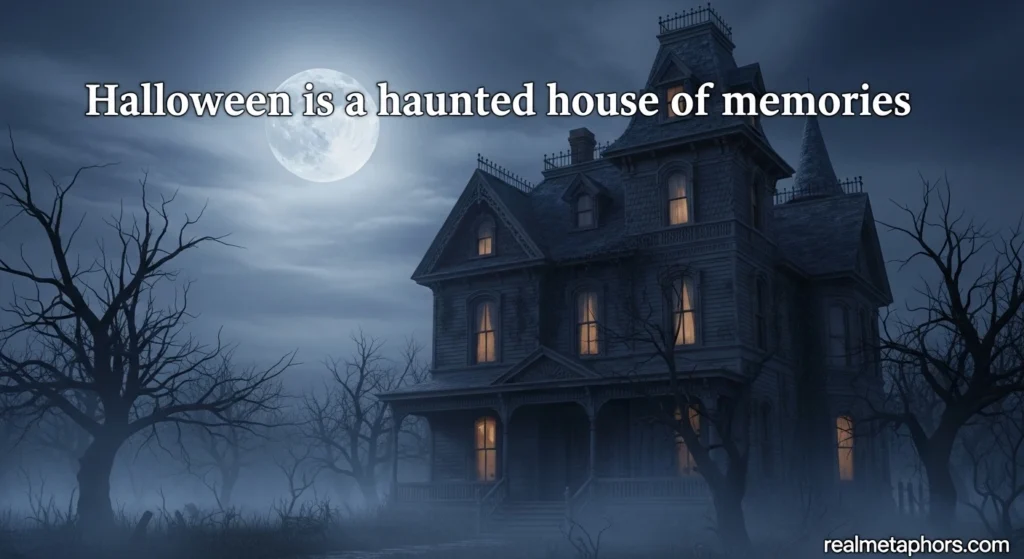
Meaning: Halloween brings back childhood memories, fun, and maybe a little fear.
Example: “Walking past the decorated street felt like stepping into a haunted house of memories.” Alternative: Halloween is a memory maze.
Imagery: Think of old photos, costumes from your childhood, and that nostalgic thrill.
2. Halloween is a pumpkin-spiced dream
Meaning: It’s sweet, warm, and cozy, but still full of seasonal fun.
Example: “The pumpkin patches and cinnamon smells made Halloween a pumpkin-spiced dream.” Alternative: Halloween is autumn’s candy.
Details: Imagine crunchy leaves, pumpkin pies, and cups of hot cocoa.
3. Halloween is a shadow dance
Meaning: Spooky lights and shadows create movement and mystery.
Example: “The trees cast moving shapes, turning the yard into a shadow dance.”
Alternative: Halloween is a waltz of shadows.
Details: Picture candlelight flickering on the walls.
4. Halloween is a cauldron of chaos
Meaning: A mix of costumes, excitement, and unexpected fun.
Example: “The party was a cauldron of chaos with witches, pirates, and ghosts.”
Alternative: Halloween is a potion of pandemonium.
Details: Think of everyone laughing, bumping into each other, and the energy buzzing.
5. Halloween is a mask of mystery
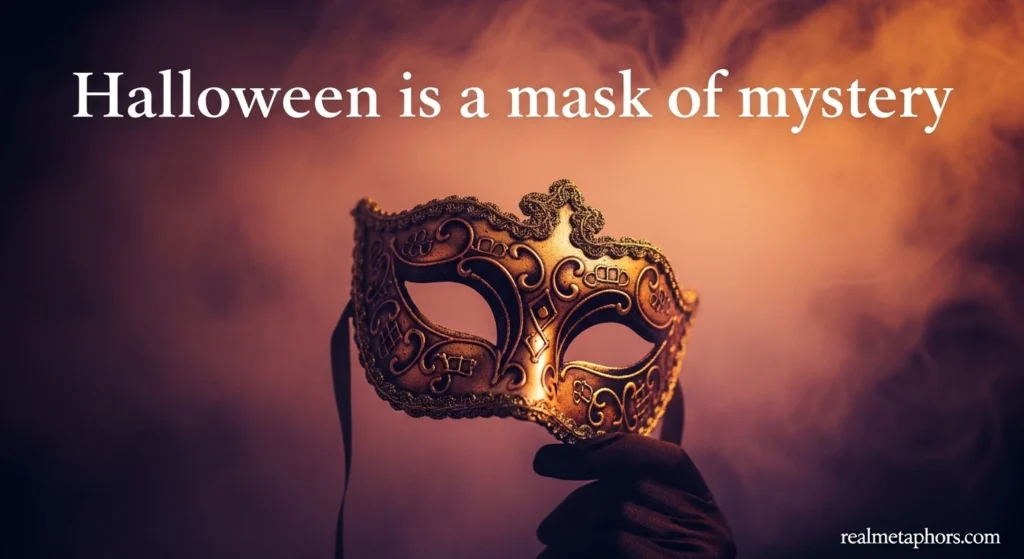
Meaning: People hide behind costumes, revealing and hiding themselves.
Example: “Behind each mask, Halloween whispered a secret story.”
Alternative: Halloween is a veil of intrigue.
Details: Imagine colorful, creepy, or silly masks hiding expressions.
6. Halloween is a candy-colored storm
Meaning: Bright, chaotic, and full of energy.
Example: “The children ran through the streets like a candy-colored storm.”
Alternative: Halloween is a sugar hurricane.
Details: Lollipops, chocolate wrappers, and candy bags everywhere.
7. Halloween is a night of whispers
Meaning: Quiet, eerie moments with suspense.
Example: “The wind through the trees made Halloween a night of whispers.”
Alternative: Halloween is a murmuring darkness.
Details: Rustling leaves, quiet footsteps, and soft ghostly sounds.
8. Halloween is a lantern-lit path
Meaning: Guiding, glowing, and magical.
Example: “The jack-o’-lanterns lit a lantern-lit path to the party.”
Alternative: Halloween is a trail of flickering hope.
Details: Imagine glowing pumpkins lighting the sidewalk.
9. Halloween is a spiderweb of stories
Meaning: Intricate tales, connections, and suspense.
Example: “Every haunted house held a spiderweb of stories waiting to be discovered.”
Alternative: Halloween is a tangle of tales.
Details: Think of scary stories, myths, and shared urban legends.
10. Halloween is a broomstick ride
Meaning: Adventure, thrill, and a touch of magic.
Example: “The night sky felt like a broomstick ride through excitement and fright.”
Alternative: Halloween is a magical flight.
Details: Imagine flying across rooftops on a witch’s broomstick.
11. Halloween is a cauldron of shadows
Meaning: Full of mystery and the unknown.
Example: “The forest at night was a cauldron of shadows and secrets.”
Alternative: Halloween is a pot of darkness.
Details: Think of fog, eerie lights, and hidden creatures.
12. Halloween is a masquerade of mischief
Meaning: Costumes and pranks make the night playful and sneaky.
Example: “The children turned the street into a masquerade of mischief.”
Alternative: Halloween is a festival of playful deceit.
Details: Consider harmless tricks, laughing, and mysterious faces.
13. Halloween is a pumpkin parade
Meaning: Colorful, festive, and lively.
Example: “The front yards glowed like a pumpkin parade.”
Alternative: Halloween is an orange carnival.
Details: Rows of carved pumpkins glowing like tiny suns.
14. Halloween is a ghostly symphony
Meaning: Sounds of creaking doors, laughter, wind, and spooky music.
Example: “The haunted house played a ghostly symphony that thrilled everyone.”
Alternative: Halloween is an orchestra of spirits.
Details: Imagine eerie melodies and spooky effects blending together.
15. Halloween is a cauldron of laughter
Meaning: Fun, joy, and playful fear combined.
Example: “Every trick-or-treater added to the cauldron of laughter.”
Alternative: Halloween is a bubbling joy potion.
Details: Giggles, screams of excitement, and playful chaos.
16. Halloween is a cloak of darkness
Meaning: Nighttime hides secrets and creates suspense.
Example: “The moon peeked through clouds on Halloween’s cloak of darkness.”
Alternative: Halloween is a shadowed robe.
Details: Deep shadows, moonlight, and mystery.
17. Halloween is a cauldron of imagination
Meaning: Endless creativity in costumes, decorations, and stories.
Example: “Every costume party was a cauldron of imagination.”
Alternative: Halloween is a brew of creativity.
Details: From handmade costumes to elaborate pumpkin carvings.
18. Halloween is a night of flying bats
Meaning: Energy, movement, and excitement.
Example: “The streets swarmed like a night of flying bats.”
Alternative: Halloween is a flutter of nocturnal life.
Details: Picture bats, kids running, and decorations swaying.
19. Halloween is a candy-coated dreamscape
Meaning: Sweet, surreal, and magical.
Example: “The neighborhood felt like a candy-coated dreamscape.”
Alternative: Halloween is a sugar-frosted fantasy.
Details: Think of chocolate rivers, candy houses, and glowing pumpkins.
20. Halloween is a witch’s cauldron
Meaning: Full of magic, surprises, and a little chaos.
Example: “The party was a witch’s cauldron bubbling with fun and tricks.”
Alternative: Halloween is a potion of enchantment.
Details: Bubbling sounds, magical sparks, and mystical energy.
21. Halloween is a tapestry of fright
Meaning: Many small spooky moments woven together.
Example: “The decorations turned the street into a tapestry of fright.”
Alternative: Halloween is a quilt of spooks.
Details: Cobwebs, jack-o’-lanterns, and eerie props combined.
22. Halloween is a night of silver moonlight
Meaning: Magical, mysterious, and beautiful.
Example: “The moon cast a silver glow over Halloween’s celebration.”
Alternative: Halloween is moonlight magic.
Details: Silvery light reflecting on costumes and pumpkins.
23. Halloween is a carnival of creatures
Meaning: Diverse characters, spooky and fun.
Example: “The park became a carnival of creatures.”
Alternative: Halloween is a parade of monsters.
Details: Ghosts, vampires, zombies, and witches together.
24. Halloween is a shadow carnival
Meaning: Playful darkness, mysterious fun.
Example: “The backyard lit with lanterns felt like a shadow carnival.”
Alternative: Halloween is a festival of night.
Details: Imagine moving shadows, lights, and eerie decorations.
25. Halloween is a mirror of fears
Meaning: Reflects playful or real fears safely.
Example: “Every haunted house was a mirror of fears, thrilling and safe.”
Alternative: Halloween is a reflection of our spooks.
Details: Scary masks, sudden scares, and suspenseful moments.
26. Halloween is a midnight masquerade
Meaning: Elegant, mysterious, and magical night.
Example: “The Halloween ball felt like a midnight masquerade.”
Alternative: Halloween is a masked midnight dance.
Details: Masks, dim lights, and magical music.
Fun Exercises and Writing Prompts
- Create your own Halloween metaphor – Look at your neighborhood or decorations and describe Halloween using a new metaphor.
- Story Challenge – Write a short story using at least 5 metaphors from this list.
- Social Media Game – Caption a Halloween photo with a creative metaphor instead of a literal description.
- Mix and Match – Combine two metaphors to describe a scene, e.g., “a candy-colored storm in a shadow carnival.”
- Daily Life Practice – Try describing other holidays or moods with similar metaphorical thinking.
Extra Tip: The more sensory details (sight, sound, touch, smell), the stronger your metaphor. Think about what makes Halloween feel spooky, fun, or magical and exaggerate it.
FAQs
Q1: What is a metaphor?
A metaphor is a figure of speech that describes something by saying it is something else. It helps make writing vivid and creative.
Q2: Why use metaphors for Halloween?
They capture the mood, magic, and spookiness in ways plain words can’t.
Q3: How do I create my own Halloween metaphor?
Think of what Halloween feels like and compare it to something familiar, magical, or spooky.
Q4: Can metaphors be funny as well as scary?
Absolutely! Halloween metaphors can be silly, sweet, spooky, or a mix.
Q5: What are common mistakes with metaphors?
Avoid mixing too many unrelated ideas or making comparisons that confuse readers. Keep them clear and vivid.
Q6: How can metaphors improve writing?
They add imagination, emotion, and imagery, making stories or captions more memorable.
Q7: Can I use Halloween metaphors in daily life?
Yes! You can describe parties, costumes, or even moods creatively with them.
Conclusion
Halloween is more than costumes and candy—it’s an atmosphere, a feeling, and a world of imagination. With metaphors, you can bring that world to life in your writing, stories, or social posts, making the spooky season unforgettable.