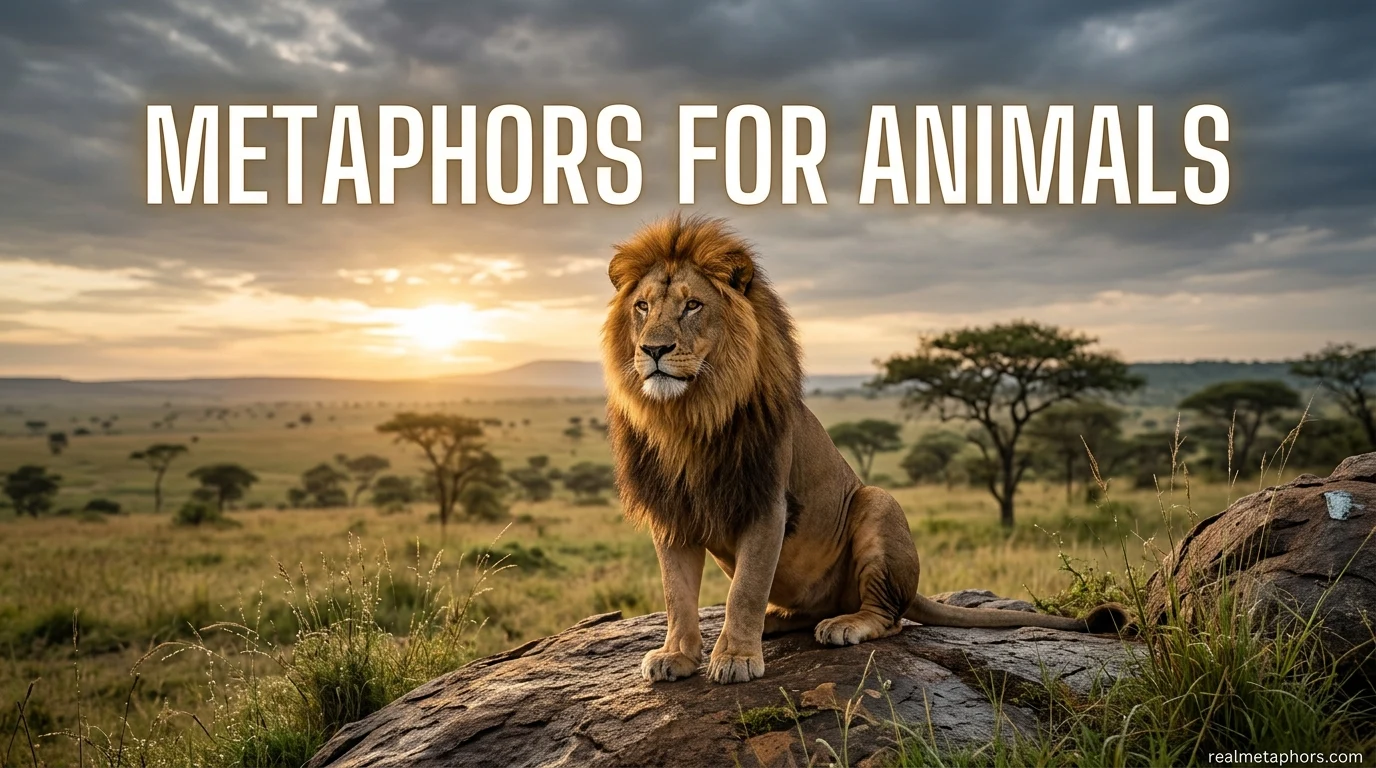
When Sara walked into her new classroom, she felt like a lost kitten in a thunderstorm. Everyone else seemed confident. Some students were laughing like playful puppies, while one boy in the back sat quiet as a sleeping bear.
Animals are everywhere in our language. We use them to describe people, feelings, and situations. That’s what metaphors for animals do. They compare a person or thing to an animal to explain qualities in a simple, colorful way.
Instead of saying, “He is very brave,” we might say, “He is a lion.” Instead of saying, “She works hard,” we might say, “She is a busy bee.”
Let’s explore 25+ easy animal metaphors, understand what they mean, and learn how to use them in everyday life.
1. Lion
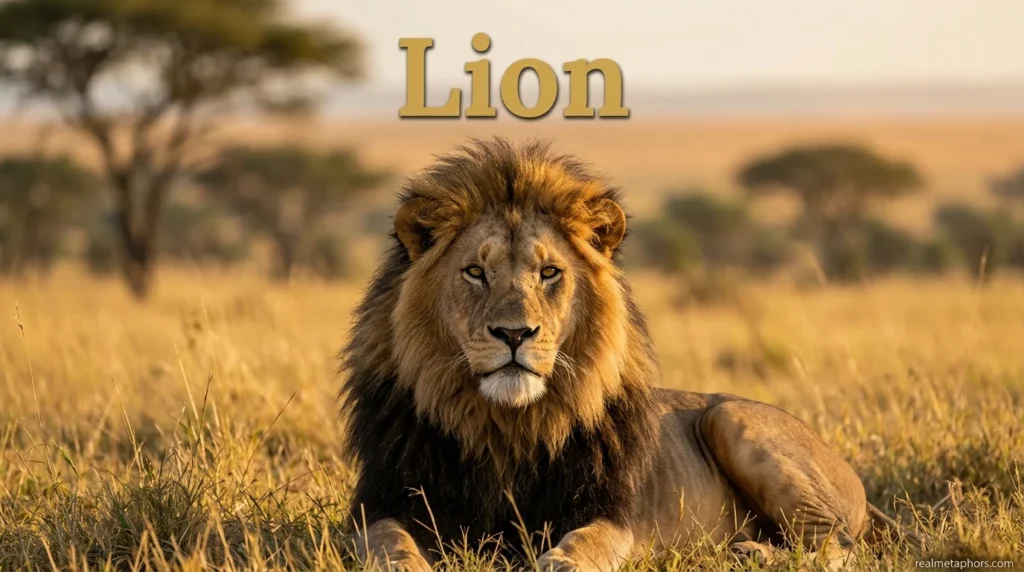
Meaning: Brave, strong, fearless leader.
Example: The firefighter was a lion in the face of danger.
Another way to say it: Very courageous.
Imagine: A lion standing tall in the savannah, wind blowing through its mane.
2. Busy Bee
Meaning: Very hardworking and active.
Example: My mother is a busy bee in the kitchen before Eid.
Another way to say it: Always working.
Imagine: A tiny bee flying quickly from flower to flower.
3. Night Owl
Meaning: Someone who stays up late.
Example: I’m a night owl during exam week.
Another way to say it: I stay up late.
Imagine: An owl wide awake while the world sleeps.
4. Early Bird
Meaning: Someone who wakes up early or starts early.
Example: Ali is an early bird; he reaches school before everyone.
Another way to say it: Morning person.
Imagine: A bird catching the first worm at sunrise.
5. Social Butterfly
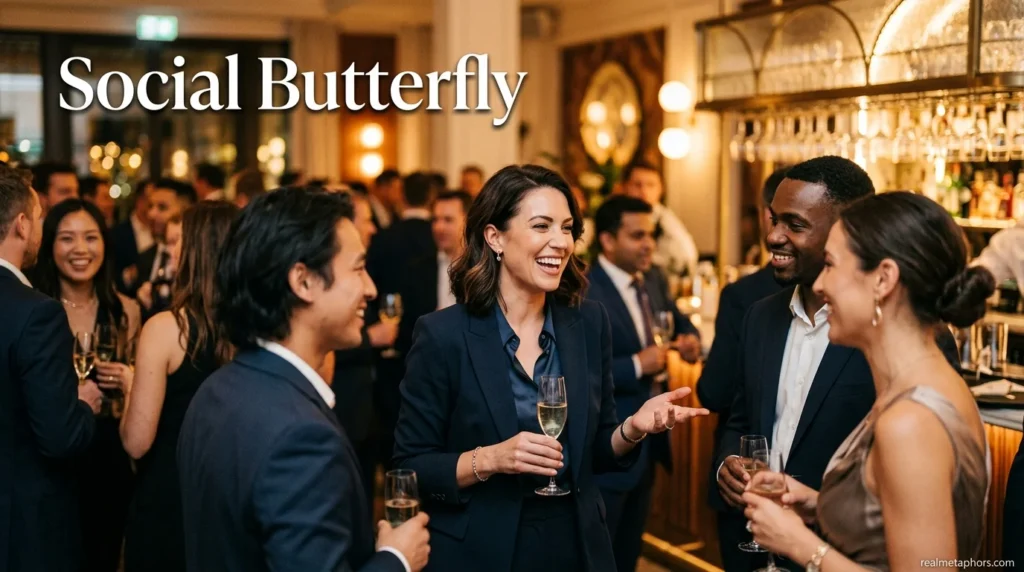
Meaning: A friendly, talkative person.
Example: She’s a social butterfly at weddings.
Another way to say it: Very outgoing.
Imagine: A colorful butterfly moving from one group to another.
6. Dark Horse
Meaning: A surprising winner.
Example: No one expected him to win—he was the dark horse of the competition.
Another way to say it: Unexpected success.
Imagine: A quiet horse racing ahead at the last moment.
7. Copycat
Meaning: Someone who copies others.
Example: Stop being a copycat and do your own work.
Another way to say it: Imitator.
Imagine: A cat silently copying every move.
8. Snake in the Grass
Meaning: A hidden traitor.
Example: He pretended to be my friend but was a snake in the grass.
Another way to say it: Secretly dishonest person.
Imagine: A snake hiding quietly, waiting.
9. Fish Out of Water
Meaning: Feeling uncomfortable or out of place.
Example: I felt like a fish out of water at the office party.
Another way to say it: Uncomfortable.
Imagine: A fish flopping on dry land.
10. Eager Beaver
Meaning: Very excited and hardworking.
Example: The eager beaver finished the project early.
Another way to say it: Overachiever.
Imagine: A beaver building its dam quickly and proudly.
11. Couch Potato
Meaning: A lazy person who watches too much TV.
Example: He turned into a couch potato during winter break.
Another way to say it: Very inactive.
Imagine: Someone sitting like a sleepy house cat all day.
12. Wolf in Sheep’s Clothing
Meaning: Someone dangerous pretending to be kind.
Example: He seemed friendly but was a wolf in sheep’s clothing.
Another way to say it: Fake kindness.
Imagine: A wolf hiding under soft wool.
13. Stubborn Mule
Meaning: Very stubborn person.
Example: My brother is a stubborn mule about his hairstyle.
Another way to say it: Extremely stubborn.
Imagine: A mule refusing to move.
14. Proud Peacock
Meaning: Someone who shows off.
Example: He walked in like a proud peacock after winning.
Another way to say it: Showing off.
Imagine: A peacock spreading its bright feathers.
15. Gentle Lamb
Meaning: Very kind and calm person.
Example: She is a gentle lamb with children.
Another way to say it: Soft-hearted.
Imagine: A lamb quietly resting in green grass.
16. Hungry Wolf
Meaning: Extremely hungry or ambitious.
Example: After fasting all day, I was a hungry wolf at iftar.
Another way to say it: Very hungry.
Imagine: A wolf sniffing the air for food.
17. Blind Bat
Meaning: Can’t see well in the dark.
Example: Without my glasses, I’m a blind bat.
Another way to say it: Poor eyesight.
Imagine: Squinting in dim light.
18. Lucky Dog
Meaning: Very lucky person.
Example: You got free tickets? Lucky dog!
Another way to say it: Very fortunate.
Imagine: A happy dog wagging its tail.
19. Clever Fox
Meaning: Smart and tricky person.
Example: She solved the problem like a clever fox.
Another way to say it: Very clever.
Imagine: A fox planning its next move.
20. Brave as a Tiger
Meaning: Extremely brave.
Example: The child was brave as a tiger during the injection.
Another way to say it: Very courageous.
Imagine: A tiger walking boldly through the jungle.
21. Memory of an Elephant
Meaning: Excellent memory.
Example: My grandmother has the memory of an elephant.
Another way to say it: Never forgets.
Imagine: An elephant remembering old paths.
22. Quiet as a Mouse
Meaning: Very quiet.
Example: The baby was quiet as a mouse.
Another way to say it: Completely silent.
Imagine: A tiny mouse tiptoeing.
23. Wild Goose Chase
Meaning: A pointless search.
Example: Looking for my keys was a wild goose chase.
Another way to say it: Waste of time.
Imagine: Running after a goose that keeps flying away.
24. Strong as an Ox
Meaning: Very strong.
Example: He lifted the table—strong as an ox.
Another way to say it: Extremely strong.
Imagine: An ox pulling a heavy cart.
25. Free as a Bird
Meaning: Feeling completely free.
Example: After exams, I felt free as a bird.
Another way to say it: Totally free.
Imagine: A bird flying high in a clear sky.
26. Pigheaded
Meaning: Very stubborn.
Example: He was too pigheaded to admit his mistake.
Another way to say it: Hard-headed.
Imagine: A pig refusing to move.
Fun Exercises and Writing Challenges
Exercise 1: Match the Metaphor
Match these traits: brave, lazy, talkative, stubborn With: lion, couch potato, social butterfly, mule
Exercise 2: Create Your Own
Think of an animal. What is special about it? Example: A chameleon → changes colors → someone who adapts easily.
Write 3 new metaphors like this.
Social Media Challenge
Write a caption using one animal metaphor:
- “Monday mood: ______.”
- “Exam week got me feeling like a ______.”
Story Prompt
Write a short story about a classroom where every student is described as a different animal metaphor.
Extra Tips for Using Animal Metaphors
- Use simple, well-known animals.
- Match the animal’s real trait to the person.
- Don’t overuse too many metaphors in one sentence.
- Make sure the metaphor fits the tone (funny, serious, dramatic).
- Use them in essays, speeches, Instagram captions, and daily conversations.
FAQs
1. What are animal metaphors?
Animal metaphors compare people or situations to animals to explain traits clearly and creatively.
2. Why are metaphors useful?
They make writing interesting, emotional, and easier to understand.
3. How do I create my own animal metaphor?
Think about an animal’s main trait. Then match it with a human quality.
4. What is the difference between a simile and a metaphor?
A simile uses “like” or “as.” A metaphor says something is something else.
5. Can I use animal metaphors in formal writing?
Yes, but choose respectful and clear ones.
6. What mistakes should I avoid?
Don’t mix too many animals at once. Don’t use confusing or offensive comparisons.
7. Are animal metaphors used in daily life?
Yes! In conversations, movies, books, speeches, and social media.
Conclusion
Animal metaphors make language colorful and alive. They help us describe people as brave lions, clever foxes, or social butterflies.