
It was a dark Monday morning. Ali woke up feeling like a cloud was sitting on his chest. His phone showed bad news, his work was behind, and everything felt heavy. He thought, “Why does today feel like a storm inside my life?”
That is what metaphors for bad things do. They help describe problems, sadness, trouble, or negative experiences in a simple and colorful way. Instead of saying “I feel bad,” you can say something more interesting.
Let’s explore 25+ easy metaphors for bad things.
1. Dark Cloud Over My Head
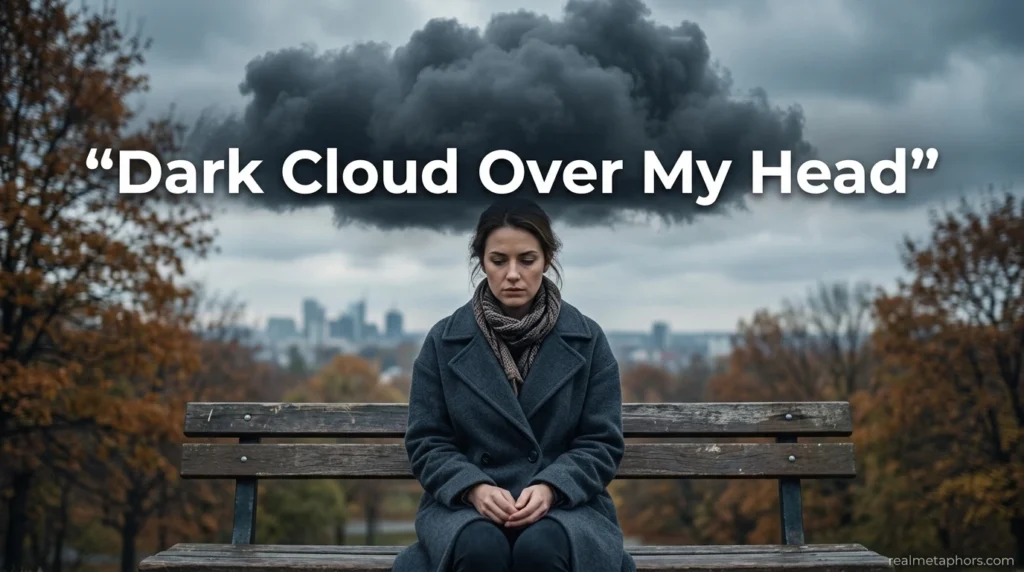
Meaning: Feeling sad, worried, or unlucky.
Example: “Ever since the argument, there has been a dark cloud over my head.”
Another way to say it: Shadow of sadness
Imagine: Like walking under a gray cloud that follows you everywhere.
2. Storm in My Life
Meaning: A period of big problems or emotional trouble.
Example: “That financial loss was a storm in my life.”
Another way to say it: Life earthquake
Imagine: Strong winds and heavy rain shaking your world.
3. Heavy Stone on My Heart
Meaning: Deep sadness or emotional pressure.
Example: “His words left a heavy stone on my heart.”
Another way to say it: Burden inside chest
Imagine: Carrying a cold, hard rock in your chest.
4. Walking Through Fire
Meaning: Facing very difficult situations.
Example: “Recovering from the accident felt like walking through fire.”
Another way to say it: Surviving flames of trouble
Imagine: Heat and danger surrounding every step.
5. Black Hole of Problems
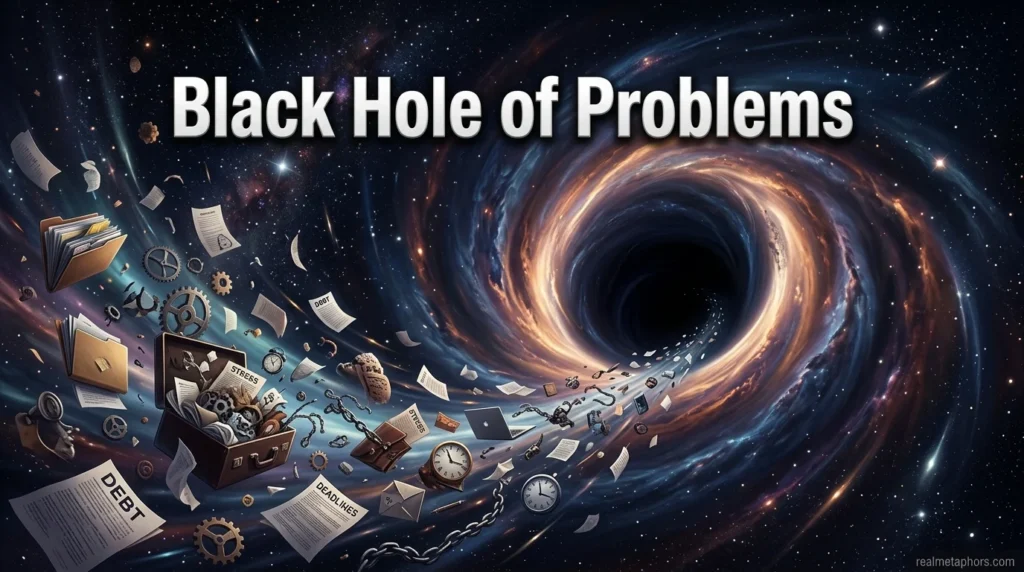
Meaning: Situation where problems keep getting worse.
Example: “Debt turned into a black hole of problems.”
Another way to say it: Endless pit of trouble
Imagine: Falling into darkness with no bottom.
6. Bitter Taste of Life
Meaning: Experience that feels painful or disappointing.
Example: “Failure left a bitter taste of life.”
Another way to say it: Sour life moment
Imagine: Eating something sour and unpleasant.
7. Broken Mirror World
Meaning: Life feeling confusing or damaged.
Example: “After the accident, everything felt like a broken mirror world.”
Another way to say it: Shattered reality
Imagine: Looking at yourself through cracked glass.
8. Cold Wind in the Soul
Meaning: Emotional loneliness.
Example: “Her silence felt like a cold wind in my soul.”
Another way to say it: Heart frost
Imagine: A freezing wind passing through your feelings.
9. Dark Tunnel of Life
Meaning: Difficult life period with no clear hope.
Example: “Depression felt like walking in a dark tunnel.”
Another way to say it: Long night road
Imagine: Walking inside a long, lightless tunnel.
10. Poisoned Apple
Meaning: Something that looks good but is actually harmful.
Example: “That opportunity was a poisoned apple.”
Another way to say it: Hidden danger gift
Imagine: A shiny red apple hiding poison inside.
11. Snake in the Grass
Meaning: A hidden enemy or betrayal.
Example: “Be careful; he is a snake in the grass.”
Another way to say it: Silent attacker
Imagine: A snake hiding under green grass.
12. Burning Bridge
Meaning: Destroying relationships or future opportunities.
Example: “Leaving angrily burned many bridges.”
Another way to say it: Broken connection fire
Imagine: A wooden bridge burning behind you.
13. Weight of the World
Meaning: Feeling responsible for too many problems.
Example: “She carried the weight of the world on her shoulders.”
Another way to say it: Universe burden
Imagine: The whole earth pressing down slowly.
14. Dead End Road
Meaning: Situation with no solution.
Example: “His career felt like a dead end road.”
Another way to say it: Stop point life
Imagine: Driving until the road suddenly stops.
15. Rusty Chain Around Dreams
Meaning: Things that stop personal growth.
Example: “Fear became a rusty chain around his dreams.”
Another way to say it: Old prison of hope
Imagine: Old metal chains locking dreams.
16. Broken Wings
Meaning: Losing freedom or confidence.
Example: “After the criticism, he felt like he had broken wings.”
Another way to say it: Flight failure
Imagine: A bird unable to fly.
17. Empty Room Inside Me
Meaning: Emotional loneliness.
Example: “After she left, there was an empty room inside me.”
Another way to say it: Hollow heart
Imagine: A quiet, empty house inside your chest.
18. Shadow Following Me
Meaning: Past mistakes or fear that keeps returning.
Example: “Guilt was like a shadow following me.”
Another way to say it: Dark companion
Imagine: A silent shadow walking behind you.
19. Thorn in My Mind
Meaning: Constant worry or annoying thought.
Example: “That memory is a thorn in my mind.”
Another way to say it: Mental needle
Imagine: A sharp thorn stuck in your thinking.
20. Dusty Road of Life
Meaning: Hard and tiring life journey.
Example: “His childhood was a dusty road of life.”
Another way to say it: Dry journey
Imagine: Walking on a hot, dusty path.
21. Broken Clock of Happiness
Meaning: Happiness that stops or doesn’t last.
Example: “The party felt like a broken clock of happiness.”
Another way to say it: Stopped joy time
Imagine: A clock frozen at one moment.
22. Falling Star of Dreams
Meaning: Failed hopes or lost opportunities.
Example: “The business was a falling star of dreams.”
Another way to say it: Dying hope light
Imagine: A star falling from the sky.
23. Cold Stone Silence
Meaning: Very unfriendly or harsh atmosphere.
Example: “His reply was cold stone silence.”
Another way to say it: Ice wall talk
Imagine: Speaking to a wall made of stone.
24. Tired Ocean of Thoughts
Meaning: Overthinking and mental stress.
Example: “My mind was a tired ocean of thoughts.”
Another way to say it: Stormy thinking sea
Imagine: Waves moving endlessly inside your head.
25. Black Smoke of Fear
Meaning: Fear spreading inside the mind.
Example: “Fear rose like black smoke.”
Another way to say it: Dark fear cloud
Imagine: Smoke slowly covering light.
26. Locked Door of Tomorrow
Meaning: Feeling uncertain about the future.
Example: “After losing the job, the future felt like a locked door.”
Another way to say it: Closed destiny gate
Imagine: Standing in front of a locked wooden door.
Fun Exercises to Practice Metaphors
Try these simple challenges:
- Write 3 metaphors for your bad day today.
- Describe anger using weather metaphors.
- Turn a problem into a “place” in your imagination.
- Create a metaphor for fear using animals.
- Rewrite “I am sad” using a metaphor.
Tips for Using Metaphors
- Use simple images people can understand.
- Avoid mixing too many metaphors in one sentence.
- Think about feelings, nature, or objects.
- Use metaphors in stories, social media captions, and poetry.
- Keep them natural, not forced.
FAQs
1. What is a metaphor?
A metaphor is a way of describing something by comparing it to another thing without using “like” or “as”.
2. Why are metaphors useful?
They make writing more interesting, emotional, and creative.
3. How can I create my own metaphors?
Think about the feeling you want to describe, then imagine an object or situation that feels similar.
4. What are common mistakes in metaphors?
Using too many metaphors together, choosing confusing images, or forcing comparisons.
5. Can metaphors be used in daily life?
Yes. People use them in conversations, stories, songs, and posts.
6. Are metaphors only for writing?
No. They are also used in speaking and thinking creatively.
7. How many metaphors should I use?
A few strong metaphors are better than many weak ones.
Conclusion
Metaphors for bad things help us express negative feelings, problems, and hard experiences in a more beautiful and understandable way. Instead of using simple words like sad, worried, or troubled, metaphors add color, emotion, and imagination to our language.
Whether you are writing a story, making a social media caption, or trying to explain your feelings, these metaphors can help you communicate better. Remember, the best metaphor is the one that feels natural and easy to understand.