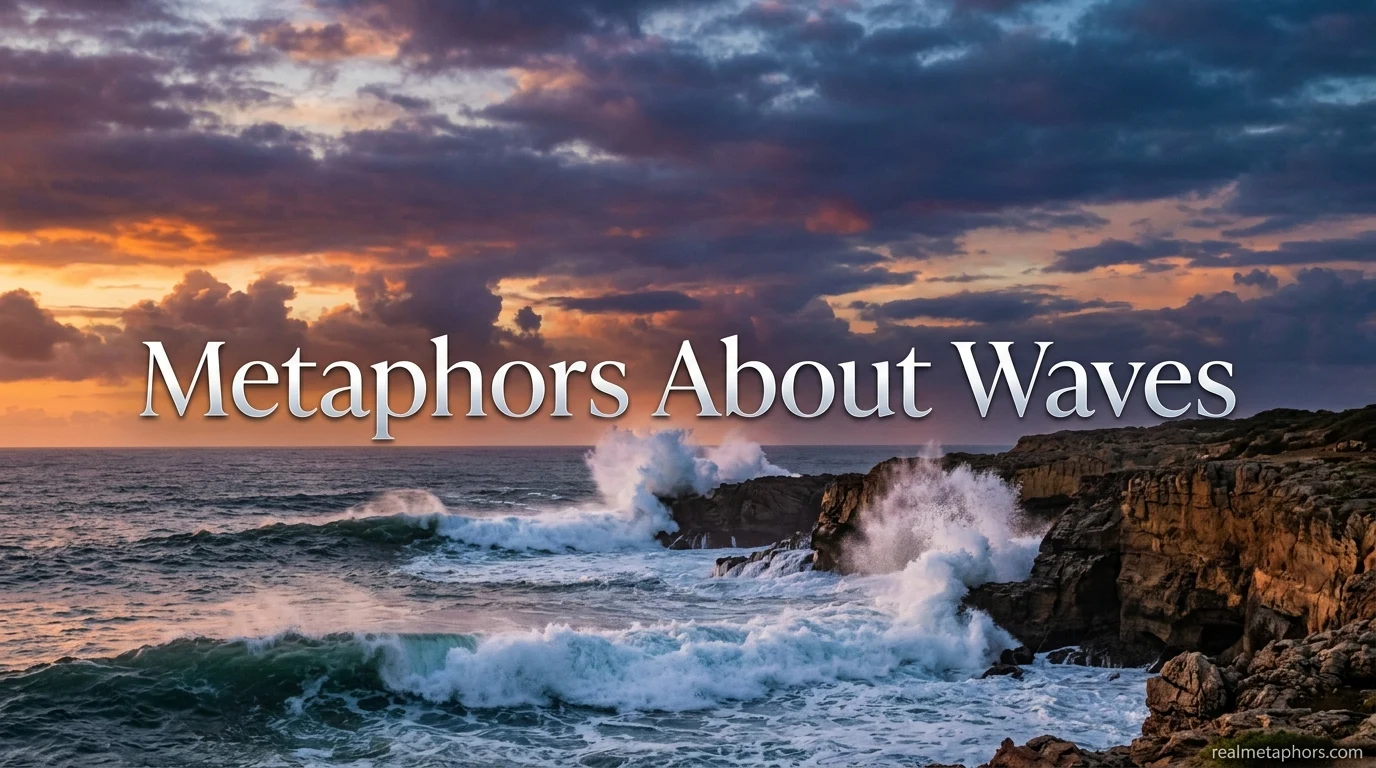
Early in the morning, a boy stood at the edge of the sea. The water rolled in and out, never stopping. Some waves were small and gentle. Others rose tall and crashed loudly.
He noticed something simple but powerful: waves are always moving. They rise, they fall, they return.
That’s why waves make such strong metaphors. A wave is not just water in the ocean. It can describe emotions, change, sound, crowds, ideas, and even life itself. When we use metaphors about waves, we compare something to a wave to show motion, energy, repetition, or power.
Let’s explore 25+ easy wave metaphors you can understand and use in daily life, stories, and social media posts.
1. A Wave of Emotions
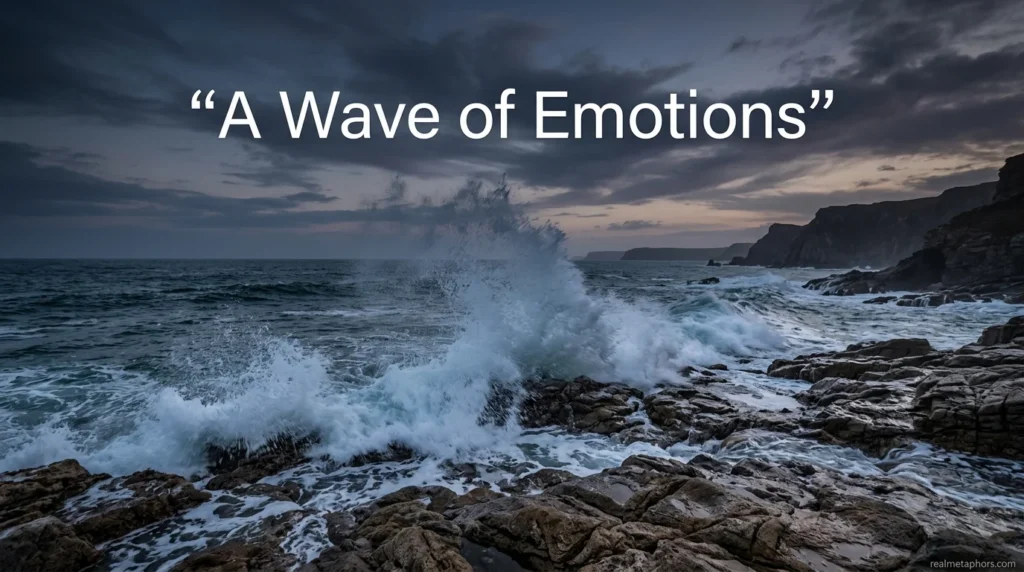
Meaning: A sudden, strong feeling that comes all at once.
Example: A wave of sadness washed over her when she heard the news.
Another Way to Say It: A rush of emotion.
Imagine: Standing still, and suddenly water splashes over your feet. That’s how emotions sometimes arrive—quick and unexpected.
2. Waves of Laughter
Meaning: Laughter spreading through a group of people.
Example: Waves of laughter filled the classroom after the joke.
Another Way to Say It: Everyone burst out laughing.
Picture It: Like ripples spreading across water after you toss in a pebble.
3. A Wave of Change
Meaning: A period when many changes happen quickly.
Example: The company experienced a wave of change after the new manager arrived.
Another Way: A time of transformation.
Imagine: The sea shifting direction after a strong wind.
4. Riding the Wave
Meaning: Taking advantage of success or opportunity.
Example: She is riding the wave of her recent popularity.
Another Way: Making the most of the moment.
Visual: A surfer balancing perfectly on moving water.
5. Making Waves
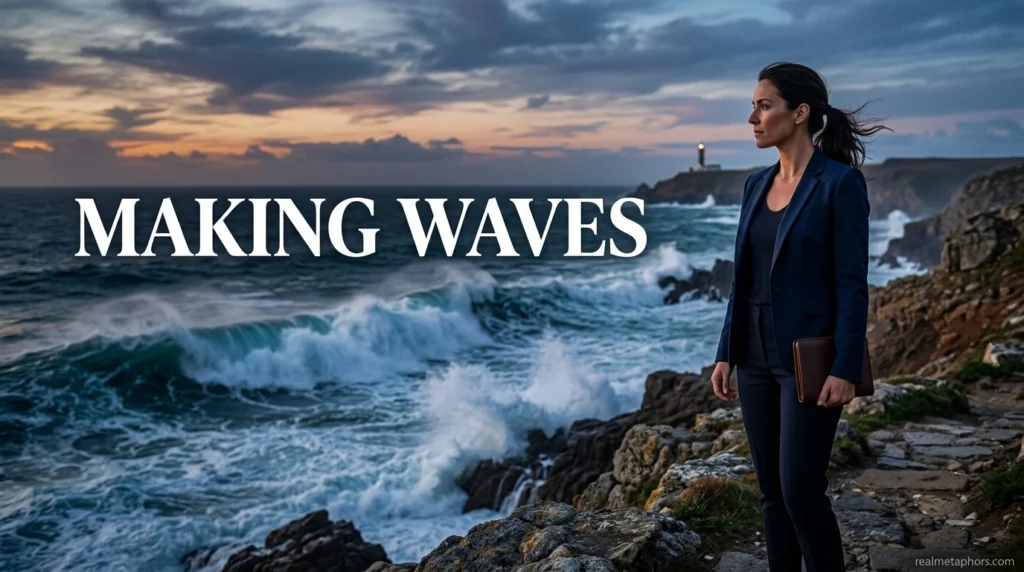
Meaning: Causing trouble or drawing attention.
Example: The new student is making waves with her bold ideas.
Another Way: Stirring things up.
Imagine: Throwing a stone into calm water and watching the surface react.
6. A Wave of Relief
Meaning: A sudden feeling of comfort after worry.
Example: A wave of relief came when he saw his exam results.
Another Way: He finally relaxed.
Feel It: Like cool water on a hot day.
7. Waves of Fear
Meaning: Fear coming again and again.
Example: Waves of fear hit him before the speech.
Another Way: He felt repeated bursts of fear.
Picture: Water crashing repeatedly against rocks.
8. A Wave of Inspiration
Meaning: Sudden creative energy.
Example: A wave of inspiration struck her at midnight.
Another Way: She felt creatively energized.
Imagine: Ideas flowing like the tide rushing in.
9. The First Wave
Meaning: The beginning of something new.
Example: The first wave of guests arrived early.
Another Way: The initial group.
Visual: The first ripple before bigger waves follow.
10. A Wave of Support
Meaning: Many people showing encouragement.
Example: He received a wave of support online.
Another Way: Strong public backing.
Picture: A crowd lifting someone up like a rising tide.
11. A Shockwave
Meaning: Sudden powerful impact.
Example: The news sent a shockwave through the community.
Another Way: It deeply affected everyone.
Imagine: A powerful wave spreading in all directions.
12. Waves of Nostalgia
Meaning: Repeated memories of the past.
Example: Old songs bring waves of nostalgia.
Another Way: Memories keep returning.
Visual: Gentle waves touching the shore again and again.
13. A Wave of Energy
Meaning: A sudden boost of strength.
Example: After coffee, a wave of energy hit him.
Another Way: He felt recharged.
Imagine: Electricity flowing like fast-moving water.
14. Waves of Protest
Meaning: Repeated public demonstrations.
Example: Waves of protest spread across the city.
Another Way: Ongoing demonstrations.
Picture: One wave following another along the shore.
15. A Brainwave
Meaning: A sudden smart idea.
Example: She had a brainwave during the meeting.
Another Way: A flash of insight.
Imagine: A bright ripple forming in still water.
16. A Wave of Kindness
Meaning: Many small acts of goodness.
Example: After the storm, a wave of kindness spread through the town.
Another Way: People helped generously.
Visual: Warm water gently covering cold sand.
17. Waves of Pain
Meaning: Pain that comes and goes.
Example: Waves of pain made it hard to sleep.
Another Way: Pain in cycles.
Picture: Strong surf hitting the shore repeatedly.
18. A Wave of Excitement
Meaning: Shared joy spreading quickly.
Example: A wave of excitement ran through the crowd.
Another Way: Everyone felt thrilled.
Imagine: A stadium crowd rising together.
19. The Next Wave
Meaning: The next stage or trend.
Example: AI is the next wave of technology.
Another Way: The upcoming phase.
Visual: Watching the horizon for what’s coming next.
20. A Ripple Effect
Meaning: One action causing many results.
Example: Her kindness created a ripple effect.
Another Way: A chain reaction.
Picture: Circles spreading after a single drop.
21. Waves of Doubt
Meaning: Uncertainty returning repeatedly.
Example: Waves of doubt filled his mind.
Another Way: He kept second-guessing himself.
Imagine: Cloudy water moving back and forth.
22. A Wave of Gratitude
Meaning: Strong appreciation felt suddenly.
Example: She felt a wave of gratitude toward her parents.
Another Way: Deep thankfulness.
Picture: Warm sunlight reflecting off gentle waves.
23. A Wave of Anger
Meaning: Sudden strong anger.
Example: A wave of anger rose inside him.
Another Way: He felt furious instantly.
Imagine: A storm wave building quickly.
24. Waves of Success
Meaning: Repeated achievements.
Example: The brand enjoyed waves of success over the years.
Another Way: Ongoing victories.
Picture: Tide after tide reaching higher up the beach.
25. A Wave Goodbye
Meaning: A simple hand gesture.
Example: She gave a wave goodbye at the station.
Another Way: She waved farewell.
Visual: A hand moving like a small, friendly wave.
26. A Digital Wave
Meaning: A fast-spreading online trend.
Example: The video started a digital wave across social media.
Another Way: It went viral.
Picture: Information flowing like water through screens.
Fun Exercises and Writing Prompts
1. Emotion Surfing Challenge
Write about a day using at least three wave metaphors. Example: “Waves of stress hit me before the exam, but a wave of relief followed.”
2. Create Your Own Wave Metaphor
Ask yourself:
- What rises and falls?
- What spreads quickly?
- What moves in cycles?
Try: “Homework is a tide that never stops.”
3. Social Media Practice
Write a short post: “Riding the wave of motivation today 🌊”
Keep it short and visual.
4. Story Starter
“The first wave came quietly. Nobody noticed it at first…” Finish the story.
Extra Tips for Using Wave Metaphors
- Use wave metaphors for emotions, change, and crowds.
- Keep them simple and clear.
- Avoid mixing too many water images in one sentence.
- Match the type of wave (gentle, stormy, rising) with the feeling.
Wave metaphors work well in speeches, poetry, blogs, captions, and storytelling.
FAQs
1. What is a wave metaphor?
A wave metaphor compares something (like emotion or change) to a wave to show movement, power, or repetition.
2. Why are metaphors about waves so popular?
Because waves are easy to imagine. Everyone understands how waves rise, fall, and return.
3. How can I create my own wave metaphor?
Think about something that spreads, repeats, or moves strongly. Then compare it to a wave.
4. What is the difference between a metaphor and a simile?
A metaphor says something is a wave. A simile says something is like a wave.
5. Can wave metaphors be used in daily life?
Yes. You can use them in conversations, writing, speeches, and social media posts.
6. What mistakes should I avoid?
Don’t mix too many ocean images together. Keep the comparison clear and natural.
7. Are wave metaphors good for storytelling?
Absolutely. They add movement, emotion, and visual power to your writing.
Final Thoughts
Waves never stop moving. They rise, they fall, they return.
Just like life.
When you use metaphors about waves, you bring energy and motion into your words. Whether it’s a wave of happiness, a ripple of change, or riding the next big wave, these metaphors help your ideas flow naturally and powerfully.