
The first cool breeze of autumn slipped through the open window like a quiet visitor. Ahmed looked outside and saw leaves falling gently, painting the ground in shades of gold and red. It felt like the world was slowly exhaling after a long summer.
Autumn isn’t just a season—it’s a feeling. It represents change, letting go, calmness, and quiet beauty. And metaphors help us describe those feelings in a creative, memorable way.
1. Autumn is a golden blanket
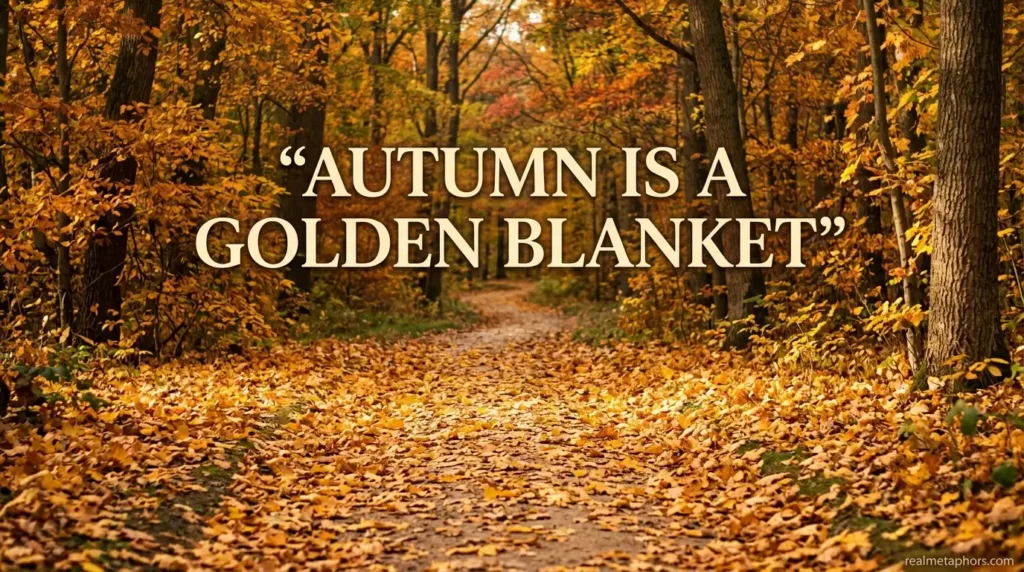
Meaning: It covers everything in warm colors.
Example: The park looked like it was wrapped in a golden blanket.
Another way: A warm covering of beauty
Detail: Imagine leaves softly covering the ground like a cozy quilt.
2. Autumn is nature’s goodbye kiss
Meaning: A gentle farewell before winter.
Example: The falling leaves felt like nature’s goodbye kiss.
Another way: A soft farewell
Detail: Like a loving goodbye before a long silence.
3. Autumn is a painter
Meaning: It colors the world beautifully.
Example: Autumn painted the trees in shades of fire.
Another way: Nature’s artist
Detail: Think of trees as a canvas full of reds, oranges, and yellows.
4. Autumn is a slow dance
Meaning: Calm, gentle movement.
Example: Leaves fell in a slow dance to the ground.
Another way: A peaceful rhythm
Detail: Like dancers moving softly in the wind.
5. Autumn is a whisper
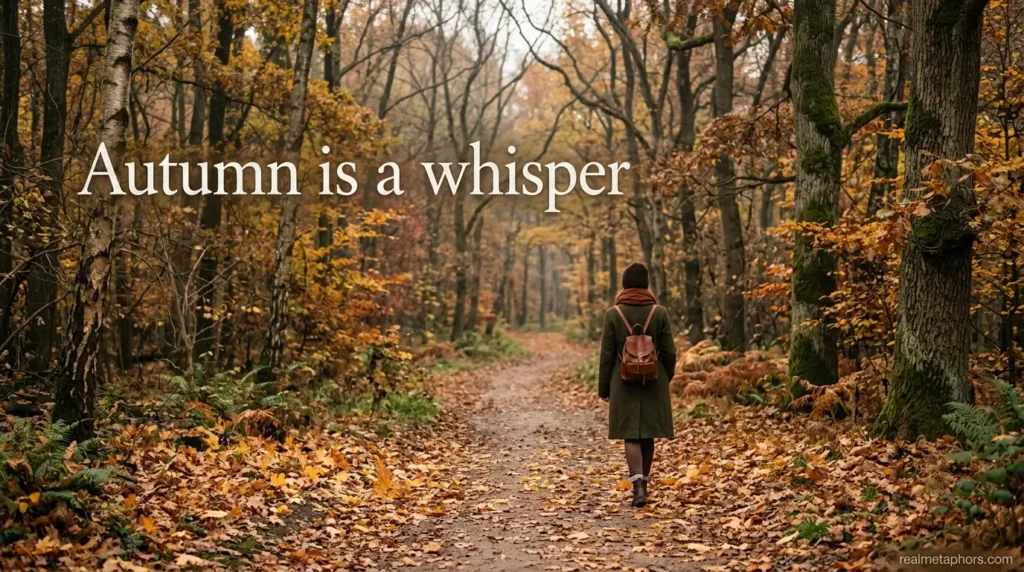
Meaning: Quiet and peaceful.
Example: The breeze felt like autumn whispering secrets.
Another way: A soft voice
Detail: Almost silent, but deeply felt.
6. Autumn is a fading song
Meaning: The end of something beautiful.
Example: Summer ended like a fading autumn song.
Another way: A gentle ending
Detail: Like music slowly disappearing.
7. Autumn is a cozy sweater
Meaning: Warm and comforting.
Example: The cool air felt like a cozy sweater.
Another way: A warm hug
Detail: Soft, safe, and comforting.
8. Autumn is a storyteller
Meaning: It tells stories of change.
Example: Each leaf was part of autumn’s story.
Another way: A narrator of change
Detail: Every falling leaf holds a story.
9. Autumn is a sunset season
Meaning: A time of endings and beauty.
Example: Life felt like an autumn sunset.
Another way: A beautiful ending
Detail: Bright, warm, but temporary.
10. Autumn is a quiet teacher
Meaning: It teaches letting go.
Example: Autumn showed me how to release what I don’t need.
Another way: A lesson in change
Detail: Trees let go of leaves without fear.
11. Autumn is a falling memory
Meaning: Reminds us of the past.
Example: Each leaf felt like a falling memory.
Another way: A drifting past
Detail: Memories gently fading away.
12. Autumn is a soft goodbye
Meaning: Gentle ending.
Example: The breeze carried a soft goodbye.
Another way: A kind farewell
Detail: Not sudden, but peaceful.
13. Autumn is a golden fire
Meaning: Bright, warm beauty.
Example: The trees burned like a golden fire.
Another way: A glowing flame
Detail: Bright colors that feel alive.
14. Autumn is a sleepy afternoon
Meaning: Calm and relaxed.
Example: The day felt like a sleepy autumn afternoon.
Another way: A lazy moment
Detail: Slow, quiet, peaceful.
15. Autumn is a bridge
Meaning: A transition between seasons.
Example: Autumn is a bridge from warmth to cold.
Another way: A connection
Detail: Linking summer to winter.
16. Autumn is a falling clock
Meaning: Time passing quickly.
Example: Leaves fell like a ticking clock.
Another way: Time slipping away
Detail: Every leaf marks a moment gone.
17. Autumn is a cup of tea
Meaning: Comfort and calm.
Example: The evening felt like a warm cup of tea.
Another way: A soothing moment
Detail: Warm, relaxing, and peaceful.
18. Autumn is a soft blanket of silence
Meaning: Quietness and peace.
Example: The forest rested in silence.
Another way: Calm stillness
Detail: No noise, just gentle quiet.
19. Autumn is a drifting dream
Meaning: Dreamy and unreal.
Example: The fog made it feel like a dream.
Another way: A soft illusion
Detail: Everything feels magical.
20. Autumn is a page turning
Meaning: Starting a new chapter.
Example: Life felt like turning a page in autumn.
Another way: A fresh start
Detail: Ending one story, beginning another.
21. Autumn is a sigh
Meaning: Relief or tiredness.
Example: The wind sounded like a deep sigh.
Another way: A release
Detail: Letting go of stress.
22. Autumn is a mirror
Meaning: Reflection and thinking.
Example: Autumn made me reflect on life.
Another way: A time to think
Detail: Looking inward.
23. Autumn is a fading flame
Meaning: Energy slowly ending.
Example: The warmth faded like a flame.
Another way: A dimming light
Detail: Slowly disappearing.
24. Autumn is a harvest of emotions
Meaning: Gathering feelings and experiences.
Example: The season brought a harvest of emotions.
Another way: Emotional collection
Detail: Like collecting fruits of life.
25. Autumn is a gentle pause
Meaning: A break before something new.
Example: Life slowed into a gentle pause.
Another way: A quiet moment
Detail: Rest before change.
26. Autumn is a falling curtain
Meaning: Ending of a chapter.
Example: The year felt like a closing curtain.
Another way: A final scene
Detail: Like the end of a play.
Practice Section: Fun Exercises & Writing Prompts
Try These Exercises
- Fill in the blank: Autumn is like __________ because __________.
- Create your own metaphor: Think about how autumn feels to you. Is it happy? Sad? Calm?
- Describe a scene: Write 3 sentences about an autumn day using at least 2 metaphors.
Writing Prompts
- “The first leaf fell, and I realized…”
- “Autumn walked into my life like…”
- “The wind whispered something I couldn’t forget…”
Tips for Using Metaphors
- Keep them simple and clear
- Use feelings and senses (what you see, hear, feel)
- Avoid mixing too many metaphors in one sentence
- Use them in:
- Stories
- Social media captions
- Daily conversations
FAQs
1. What is a metaphor about autumn?
A metaphor compares autumn to something else to explain its feeling or meaning in a creative way.
2. Why are metaphors useful?
They make writing more interesting, emotional, and easier to imagine.
3. How can I create my own metaphor?
Think about how autumn feels, then compare it to something similar (like a hug, song, or story).
4. Can I use metaphors in daily life?
Yes! You can use them in conversations, captions, and storytelling.
5. What are common mistakes?
- Making metaphors too complicated
- Mixing different ideas
- Using unclear comparisons
6. Are metaphors only for writing?
No. They are used in speaking, poetry, songs, and even social media.
7. How many metaphors should I use?
Use a few strong ones instead of too many. Keep it simple.
Final Thought
Autumn teaches us that change can be beautiful. Through metaphors, we can express that beauty in words that feel alive. Next time you see a falling leaf, try turning it into a story.