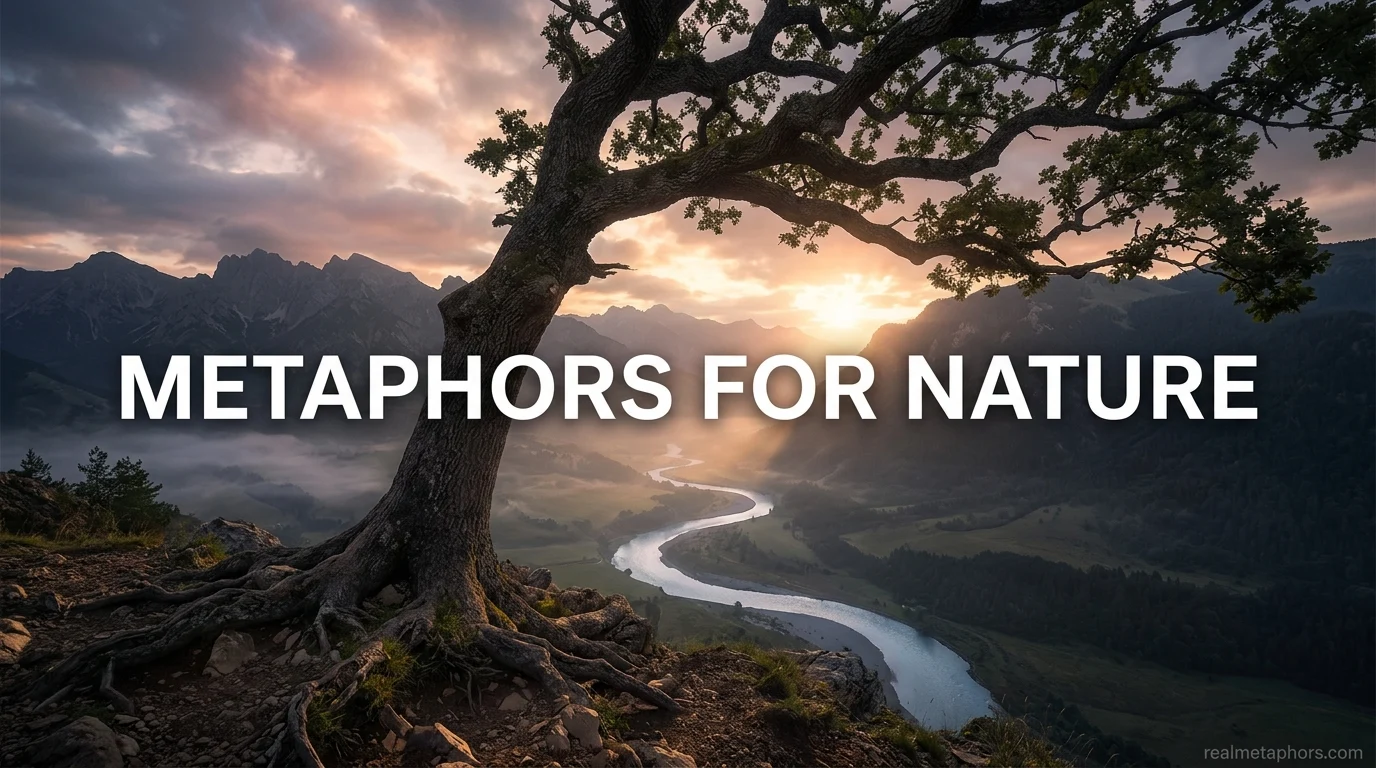
The sun dipped below the horizon, painting the sky in soft shades of orange and purple. A gentle breeze brushed past, whispering through the trees like a secret. Standing there, you might feel something you can’t fully explain—calm, wonder, maybe even a little magic. That feeling is what we call nature. But sometimes, simple words aren’t enough to describe it.
That’s where metaphors for nature come in. They help us turn feelings into pictures, ideas into emotions, and ordinary descriptions into something unforgettable. In this article, you’ll explore 25+ easy and creative metaphors for nature, each explained in a way that’s simple, relatable, and fun to use.
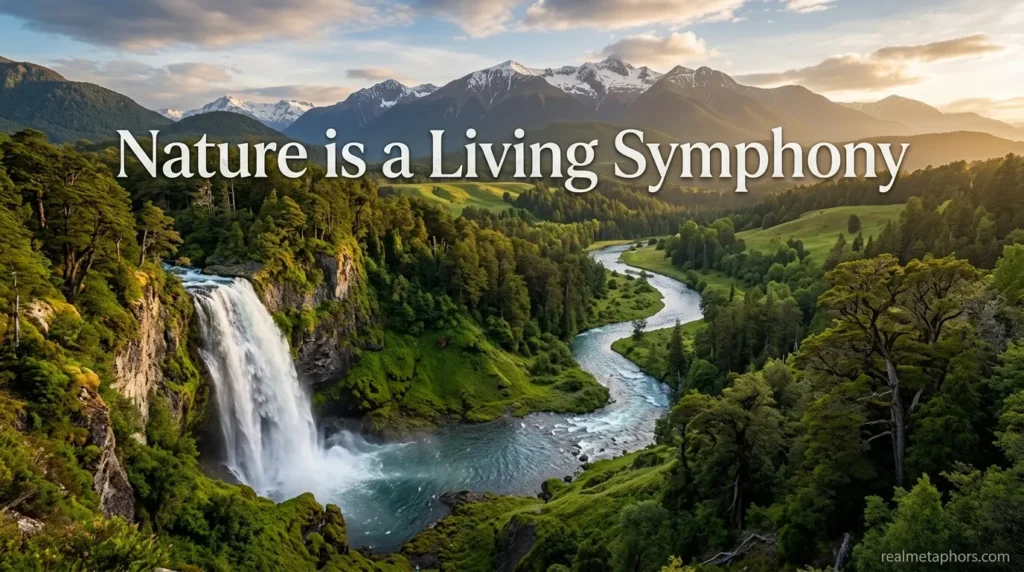
Nature is a Living Symphony
Meaning
Nature works like a symphony where every element—birds, wind, water—plays its own part in harmony.
Example
“The forest came alive at dawn, a living symphony of chirping birds and rustling leaves.”
Another Way to Say It
Nature is like an orchestra.
Tone / When to Use It
Peaceful, poetic; great for describing calm outdoor scenes.
Visualization Tip
Imagine standing in a forest where every sound blends together like music.
Nature is a Painter
Meaning
Nature creates beauty just like an artist paints on a canvas.
Example
“The sunset proved that nature is the greatest painter of all.”
Another Way to Say It
Nature is an artist.
Tone / When to Use It
Creative, admiring; perfect for landscapes and sunsets.
Visualization Tip
Picture the sky as a canvas filled with bright colors.
Nature is a Mother
Meaning
Nature nurtures, protects, and provides for all living things.
Example
“Nature is a mother who feeds every creature without asking for anything in return.”
Another Way to Say It
Mother Earth.
Tone / When to Use It
Warm, caring; used in emotional or environmental writing.
Visualization Tip
Imagine the earth gently holding plants, animals, and people.
Nature is a Classroom
Meaning
Nature teaches us lessons about life, patience, and balance.
Example
“The mountains showed him that nature is the best classroom.”
Another Way to Say It
Nature is a teacher.
Tone / When to Use It
Reflective, thoughtful.
Visualization Tip
Picture learning by watching rivers flow or trees grow.
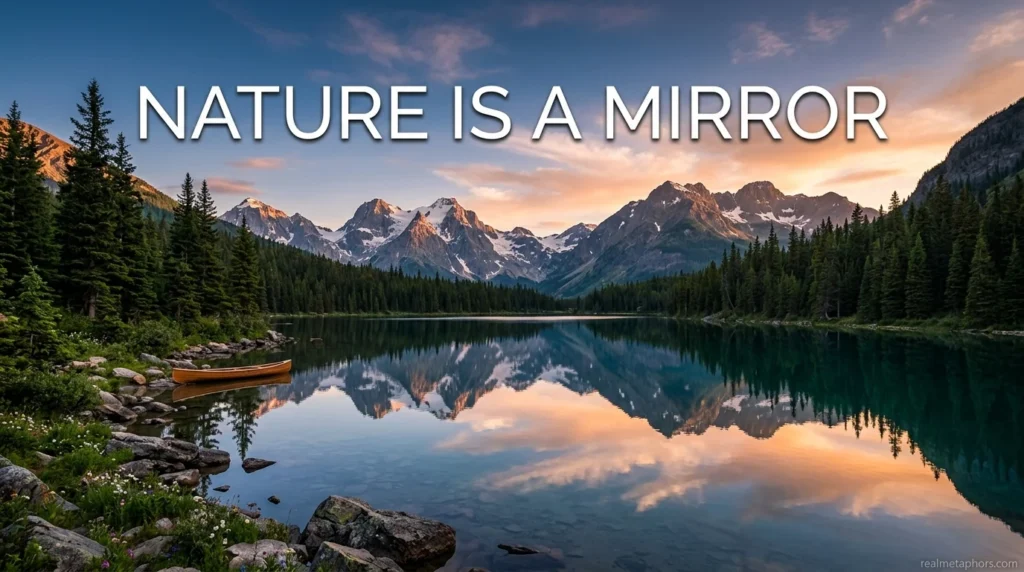
Nature is a Mirror
Meaning
Nature reflects our emotions and inner thoughts.
Example
“The calm lake acted like a mirror to her peaceful mind.”
Another Way to Say It
Nature reflects feelings.
Tone / When to Use It
Emotional, introspective.
Visualization Tip
Imagine your mood matching the weather around you.
Nature is a Blanket
Meaning
Nature provides comfort and warmth.
Example
“The fog wrapped around the hills like a soft blanket.”
Another Way to Say It
Nature is comforting.
Tone / When to Use It
Cozy, gentle.
Visualization Tip
Picture mist covering everything softly.
Nature is a Playground
Meaning
Nature is a place for fun, adventure, and exploration.
Example
“The beach became their playground for the entire day.”
Another Way to Say It
Nature is a place to explore.
Tone / When to Use It
Fun, energetic.
Visualization Tip
Imagine running freely through fields or splashing in water.
Nature is a Healer
Meaning
Nature helps reduce stress and brings peace.
Example
“A walk in the park reminded him that nature is a healer.”
Another Way to Say It
Nature brings peace.
Tone / When to Use It
Calm, soothing.
Visualization Tip
Picture stress melting away in fresh air.
Nature is a Storybook
Meaning
Nature is full of stories waiting to be discovered.
Example
“Every tree in the forest felt like a page in a storybook.”
Another Way to Say It
Nature tells stories.
Tone / When to Use It
Imaginative, creative.
Visualization Tip
Imagine each path leading to a new story.
Nature is a Clock
Meaning
Nature follows its own timing and cycles.
Example
“The changing seasons reminded them that nature is a clock.”
Another Way to Say It
Nature keeps time.
Tone / When to Use It
Philosophical.
Visualization Tip
Think of seasons as ticking moments.
Nature is a Treasure Chest
Meaning
Nature holds valuable and beautiful things.
Example
“The ocean is a treasure chest full of hidden wonders.”
Another Way to Say It
Nature is full of treasures.
Tone / When to Use It
Exciting, curious.
Visualization Tip
Picture hidden gems in forests and oceans.
Nature is a Giant
Meaning
Nature is powerful and massive.
Example
“The towering mountains showed that nature is a giant.”
Another Way to Say It
Nature is powerful.
Tone / When to Use It
Strong, dramatic.
Visualization Tip
Imagine huge mountains touching the sky.
Nature is a Whisper
Meaning
Nature communicates softly and gently.
Example
“The wind felt like nature whispering secrets.”
Another Way to Say It
Nature speaks softly.
Tone / When to Use It
Gentle, poetic.
Visualization Tip
Hear leaves softly rustling.
Nature is a Dance
Meaning
Nature is always moving in rhythm.
Example
“The waves danced along the shore.”
Another Way to Say It
Nature moves gracefully.
Tone / When to Use It
Elegant, lively.
Visualization Tip
Picture waves swaying like dancers.
Nature is a Canvas
Meaning
Nature displays beauty like artwork.
Example
“The valley looked like a perfect canvas.”
Another Way to Say It
Nature is art.
Tone / When to Use It
Creative.
Visualization Tip
Imagine painting-like scenery.
Nature is a Breath
Meaning
Nature gives life and freshness.
Example
“The forest air felt like a deep breath of life.”
Another Way to Say It
Nature is refreshing.
Tone / When to Use It
Calm, revitalizing.
Visualization Tip
Imagine breathing in fresh air deeply.
Nature is a Puzzle
Meaning
Nature has mysteries to solve.
Example
“The jungle felt like a puzzle waiting to be understood.”
Another Way to Say It
Nature is mysterious.
Tone / When to Use It
Curious, thoughtful.
Visualization Tip
Picture hidden patterns everywhere.
Nature is a Guardian
Meaning
Nature protects life.
Example
“The trees stood like guardians of the land.”
Another Way to Say It
Nature protects.
Tone / When to Use It
Strong, protective.
Visualization Tip
Imagine trees standing like soldiers.
Nature is a River of Time
Meaning
Nature constantly flows and changes.
Example
“Life moves like nature’s river of time.”
Another Way to Say It
Nature is always changing.
Tone / When to Use It
Philosophical.
Visualization Tip
Picture a river flowing endlessly.
Nature is a Gift
Meaning
Nature is something valuable and precious.
Example
“Clean air is a gift from nature.”
Another Way to Say It
Nature is precious.
Tone / When to Use It
Grateful.
Visualization Tip
Imagine opening a beautiful gift.
Nature is a Flame
Meaning
Nature has energy and power.
Example
“The wildfire showed that nature is a flame.”
Another Way to Say It
Nature is powerful energy.
Tone / When to Use It
Intense.
Visualization Tip
Picture fire spreading quickly.
Nature is a Bridge
Meaning
Nature connects humans with the world.
Example
“The mountains felt like a bridge to peace.”
Another Way to Say It
Nature connects us.
Tone / When to Use It
Spiritual.
Visualization Tip
Imagine crossing into calmness.
Nature is a Song
Meaning
Nature creates pleasant sounds.
Example
“The rain sounded like nature’s song.”
Another Way to Say It
Nature is musical.
Tone / When to Use It
Soft, poetic.
Visualization Tip
Hear rain tapping like music.
Nature is a Dream
Meaning
Nature feels unreal and magical.
Example
“The snowy landscape looked like a dream.”
Another Way to Say It
Nature is magical.
Tone / When to Use It
Dreamy.
Visualization Tip
Imagine a surreal scene.
Nature is a Garden of Life
Meaning
Nature supports all living things.
Example
“The earth is a garden of life.”
Another Way to Say It
Nature supports life.
Tone / When to Use It
Hopeful.
Visualization Tip
Picture life growing everywhere.
Nature is a Silent Teacher
Meaning
Nature teaches without words.
Example
“The mountains taught patience as a silent teacher.”
Another Way to Say It
Nature teaches quietly.
Tone / When to Use It
Calm, wise.
Visualization Tip
Imagine learning just by observing.
Fun Exercises and Practice Ideas
Try these fun ways to use metaphors for nature:
- Create Your Own Metaphor: Pick something like rain or wind and compare it to something unexpected.
- Daily Observation Challenge: Spend 5 minutes outside and write one metaphor.
- Social Media Practice: Post a nature photo with a creative metaphor caption.
- Story Starter: Begin a story with “Nature is…” and continue from there.
- Mix Emotions: Connect feelings like happiness or sadness with nature metaphors.
Extra Tips
- Keep metaphors simple and clear
- Use familiar objects for comparison
- Avoid overcomplicating ideas
- Practice regularly for improvement
FAQs
What are metaphors for nature?
They are comparisons that describe nature by linking it to something else, making it easier to imagine or feel.
Why are metaphors useful?
They make writing more vivid, emotional, and engaging.
How can I create my own metaphor?
Think of a feature (like calm water) and compare it to something similar (like glass).
Can metaphors be used in daily life?
Yes! You can use them in conversations, captions, or storytelling.
What are common mistakes?
Making metaphors too complicated or unclear.
How do metaphors improve writing?
They add creativity and help readers visualize ideas better.
Are metaphors only for poetry?
No, they are used in everyday speech, stories, and even social media.