
Imagine walking through a quiet garden at sunrise. The dew is still fresh on the petals, and the scent of roses drifts in the cool morning air. Each rose seems to tell a story—of love, of beauty, of mystery. Roses are more than flowers; they are symbols that writers, poets, and storytellers have used for centuries to express emotions. One of the most fun ways to make your writing or speech more vivid is by using 25+metaphors for roses. These are phrases where a rose represents something else—love, hope, challenge, or beauty. Let’s explore 25+ easy metaphors for roses and see how you can use them in everyday life, social media, or creative writing.
1. Rose as a Symbol of Love
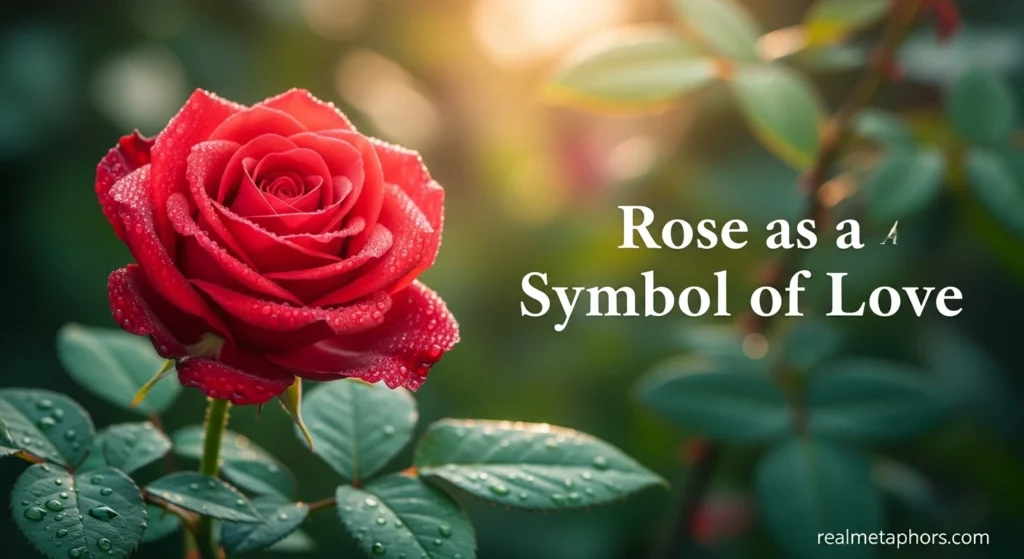
Meaning: Roses often represent romantic love.
Example: “Her smile was a rose in the gloom of his day.”
Alternative: “She was the bloom that brightened his world.”
Detail: Imagine the warmth of love like the soft glow of a red rose in a dark room.
2. Rose as Beauty
Meaning: A rose can symbolize pure beauty.
Example: “She walked in, a rose among thorns.”
Alternative: “A jewel in a garden of stones.”
Detail: Picture someone graceful standing out in a crowd like a rare flower.
3. Rose as Fragility
Meaning: Roses are delicate, showing vulnerability.
Example: “His hope was a rose, easily crushed by disappointment.”
Alternative: “A fragile bloom in a stormy world.”
Detail: Imagine a single petal fluttering in the wind, easily torn.
4. Rose as Passion
Meaning: Deep emotions, often fiery, can be compared to a rose.
Example: “Her anger was a red rose, burning bright but fading fast.”
Alternative: “Flame of a flower.”
Detail: Think of hot red petals radiating intense energy.
5. Rose as Mystery
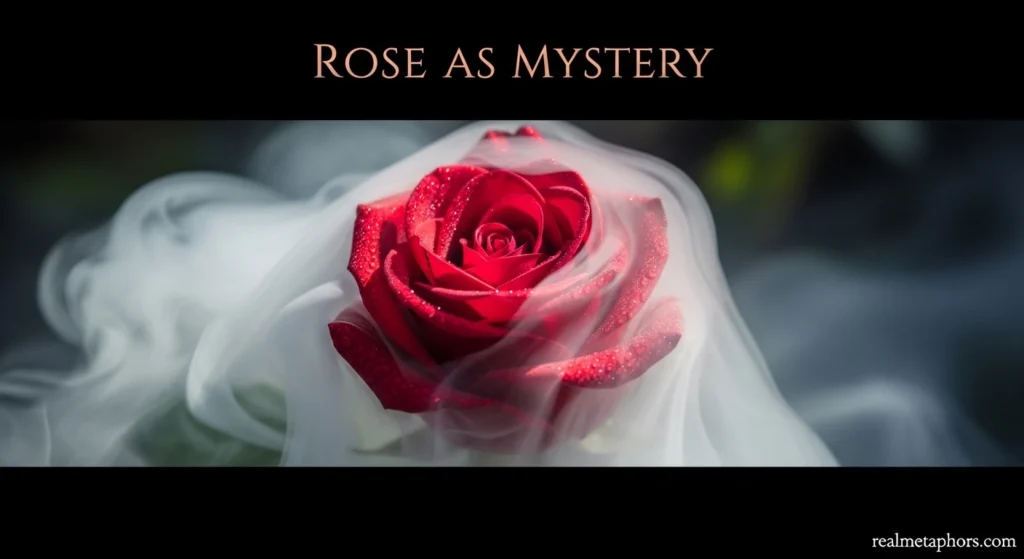
Meaning: Roses can hint at secrets or hidden meanings.
Example: “He carried a rose behind his back, a mystery yet to unfold.”
Alternative: “A flower with secrets in its petals.”
Detail: Like a hidden note tucked inside a beautiful blossom.
6. Rose as Growth
Meaning: A rose represents personal growth or development.
Example: “She bloomed like a rose after years of struggle.”
Alternative: “From bud to blossom, she found her strength.”
Detail: Think of a tiny bud slowly opening under sunlight.
7. Rose as Joy
Meaning: Roses symbolize happiness or delight.
Example: “Laughter was a rose in the garden of their friendship.”
Alternative: “A bloom of joy.”
Detail: Imagine bright petals spreading warmth and cheer.
8. Rose as Elegance
Meaning: Roses convey grace and sophistication.
Example: “The ballroom shimmered with roses of elegance.”
Alternative: “Petals of refinement.”
Detail: Picture flowing gowns and sparkling chandeliers, with roses in every centerpiece.
9. Rose as Love Lost
Meaning: A wilted rose can symbolize heartbreak or loss.
Example: “His memories of her were a withered rose on the table.”
Alternative: “A fallen bloom of love.”
Detail: Visualize dry petals curling slowly, hinting at sadness.
10. Rose as Time
Meaning: Roses can represent the passing of time.
Example: “Life is a rose; each petal marks a fleeting moment.”
Alternative: “Blooms of days gone by.”
Detail: A rose slowly blooming and wilting mirrors life’s journey.
11. Rose as Hope
Meaning: Roses can show optimism or bright possibilities.
Example: “Even in the darkness, a rose of hope grew.”
Alternative: “Petals of promise.”
Detail: Think of a single flower pushing through cracked concrete.
12. Rose as Secret Desire
Meaning: A rose can represent hidden longing or attraction.
Example: “He offered a rose, unspoken words tucked within.”
Alternative: “A silent wish in petals.”
Detail: Imagine the thrill of sending love without saying a word.
13. Rose as Peace
Meaning: Roses can reflect calm or harmony.
Example: “The garden, filled with roses, brought peace to her mind.”
Alternative: “Blossoms of serenity.”
Detail: Picture sitting quietly among soft, fragrant flowers.
14. Rose as Friendship
Meaning: Roses can symbolize loyalty or connection.
Example: “Their laughter was a bouquet of roses in the afternoon sun.”
Alternative: “Petals of companionship.”
Detail: Imagine sharing a moment as bright as fresh blooms.
15. Rose as Inspiration
Meaning: Roses can ignite creativity.
Example: “The poet found a rose in every corner of the city.”
Alternative: “Flowers of imagination.”
Detail: Picture walking past a rose and suddenly feeling an idea bloom.
16. Rose as Memory
Meaning: Roses evoke nostalgia or past experiences.
Example: “The smell of roses reminded her of childhood summers.”
Alternative: “Fragrant echoes.”
Detail: Imagine scents that instantly transport you to another time.
17. Rose as Elegy
Meaning: Roses can honor or mourn.
Example: “He laid a single rose on the old gravestone.”
Alternative: “A bloom of remembrance.”
Detail: Think of a gentle gesture of respect or sorrow.
18. Rose as Courage
Meaning: A rose in adversity represents bravery.
Example: “She faced the storm, a rose standing tall against the wind.”
Alternative: “A brave bloom.”
Detail: Visualize a delicate flower resisting harsh weather.
19. Rose as Desire
Meaning: Roses can show intense yearning or attraction.
Example: “His glance was a rose burning in the night.”
Alternative: “Flame of longing.”
Detail: Imagine passion hidden in the petals’ deep red tones.
20. Rose as Success
Meaning: Roses symbolize achievement or reward.
Example: “Graduation day was a garden of roses for her hard work.”
Alternative: “Blooms of victory.”
Detail: Picture a celebration surrounded by flowers and smiles.
21. Rose as Transformation
Meaning: Roses can represent change and evolution.
Example: “From thorny seed to radiant bloom, she was a rose transformed.”
Alternative: “Metamorphosis in petals.”
Detail: Imagine a caterpillar becoming a butterfly—but in flower form.
22. Rose as Sensuality
Meaning: Roses often evoke romance and physical attraction.
Example: “Her perfume was a rose that lingered on the air.”
Alternative: “Scent of desire.”
Detail: Picture the soft touch and smell of petals close to the skin.
23. Rose as Mystery of Life
Meaning: Roses can symbolize life’s unknown paths.
Example: “Life is a rose: beautiful, but filled with hidden thorns.”
Alternative: “Petals of the unknown.”
Detail: Think of walking through a garden blindfolded, discovering beauty and pain alike.
24. Rose as Celebration
Meaning: Roses symbolize joy and festivity.
Example: “The wedding aisle was lined with roses, celebrating love.”
Alternative: “Blooms of festivity.”
Detail: Imagine petals thrown in the air as people cheer.
25. Rose as Comfort
Meaning: Roses can soothe or heal.
Example: “She held the rose close, feeling comfort in its soft petals.”
Alternative: “Floral embrace.”
Detail: Picture the calm warmth of holding a flower after a hard day.
Fun Exercises and Writing Prompts
- Metaphor Hunt:
- Go outside and pick a flower or notice something beautiful. Write 5 metaphors comparing it to feelings or ideas.
- Social Media Challenge:
- Take a photo of a rose or flower and write a creative metaphor for it in the caption.
- Story Starter:
- “In the middle of the storm, a single rose appeared…” Write a short story inspired by this metaphor.
- Thorns and Petals Exercise:
- List 3 roses in your life (people, memories, or dreams) and describe their beauty and challenges using metaphors.
- Daily Practice:
- Try using a new rose metaphor in conversation or journal every day for a week.
Extra Tips:
- Use metaphors sparingly for impact.
- Mix sensory details (smell, touch, color) with emotions.
- Observe real roses to make your writing more vivid.
FAQs
Q1: What is a metaphor?
A metaphor compares one thing to another to show meaning or emotion without using “like” or “as.”
Q2: Why are roses commonly used in metaphors?
Roses are familiar, beautiful, and symbolic of emotions like love, beauty, and hope.
Q3: How can I create my own rose metaphors?
Think about what a rose reminds you of—love, growth, fragility—and connect it to a feeling, person, or situation.
Q4: Can metaphors be used in social media?
Yes! They make captions, posts, and stories more vivid and emotionally engaging.
Q5: What are common mistakes with metaphors?
Overusing them, making them unclear, or mixing too many ideas can confuse readers. Keep them simple and relatable.
Q6: How can metaphors improve writing?
They make descriptions stronger, evoke emotions, and make your writing memorable.
Q7: Are rose metaphors only for romantic writing?
Not at all! They can be used for friendship, courage, hope, inspiration, or any topic.
Conclusion
Roses are everywhere—in gardens, stories, and our hearts. By using these metaphors, you can bring your writing and everyday expressions to life, making people see, feel, and imagine more vividly. Next time you notice a rose, think of the story it can tell.