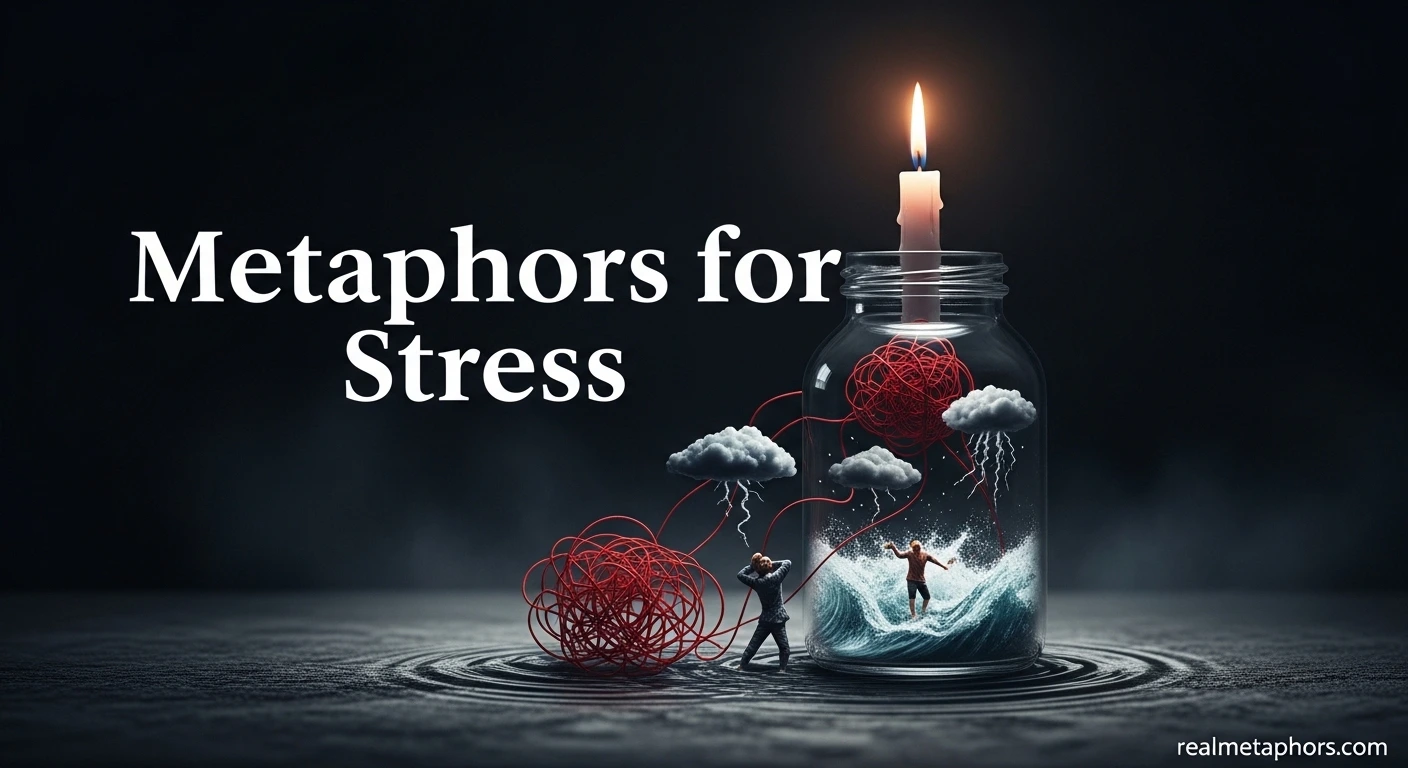
It was 2 a.m. The room was quiet, but my mind was not. Thoughts kept running in circles. My chest felt tight. My to-do list seemed longer than the night itself. That heavy, restless feeling is called stress.
Stress is the pressure we feel when life demands too much from us. It can come from school, work, family, money, or even our own expectations. Sometimes it pushes us to do better. Other times, it feels like it might crush us.
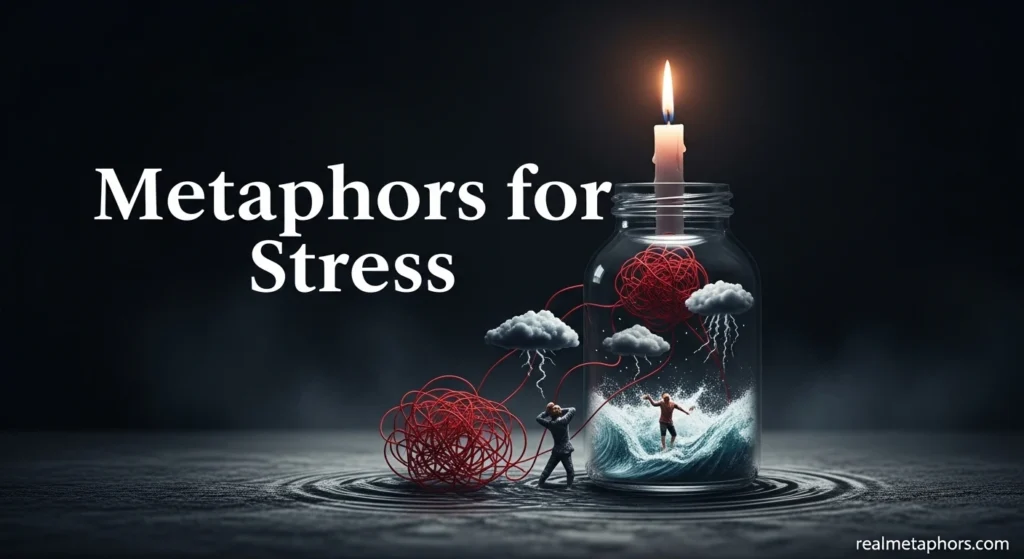
One powerful way to understand this feeling is by using 25+metaphors for stress. Metaphors turn emotions into images. They help us see, feel, and explain what is happening inside us. Below are 25+ easy metaphors for stress, each with meaning, examples, and simple alternatives you can use in daily life or writing.
1. Stress Is a Heavy Backpack
Meaning: Stress feels like carrying extra weight everywhere you go.
Example: “This week’s deadlines are a heavy backpack on my shoulders.”
Another way to say it: I feel weighed down.
Details: Imagine walking uphill with books pressing into your back. Your steps feel slower.
2. Stress Is a Pressure Cooker
Meaning: Stress builds up inside until it feels like you might explode.
Example: “With exams coming, I’m a pressure cooker ready to burst.”
Another way: I’m about to blow up.
Details: The lid rattles. Steam hisses. One more spark could cause an explosion.
3. Stress Is a Storm
Meaning: Stress feels wild, loud, and out of control.
Example: “Work problems created a storm in my mind.”
Another way: My thoughts are chaotic.
Details: Thunder crashes. Rain pours. You just want shelter.
4. Stress Is a Ticking Time Bomb
Meaning: Stress builds quietly and may explode suddenly.
Example: “He’s been so stressed lately, like a ticking time bomb.”
Another way: He’s ready to snap.
Details: Tick. Tick. Tick. The sound makes everyone nervous.
5. Stress Is a Tight Rope Around the Chest
Meaning: Stress causes physical tension.
Example: “Before my speech, it felt like a rope was tightening around my chest.”
Another way: I couldn’t breathe easily.
Details: Each breath feels smaller than the last.
6. Stress Is a Dark Cloud
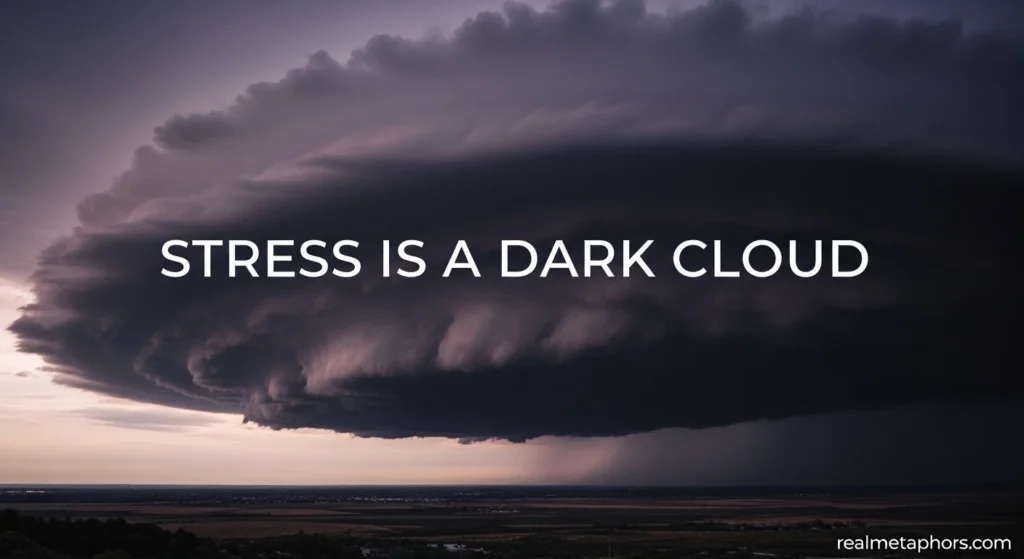
Meaning: Stress follows you and blocks happiness.
Example: “A dark cloud of stress followed me all day.”
Another way: I couldn’t enjoy anything.
Details: Even sunshine feels dim under that cloud.
7. Stress Is a Broken Record
Meaning: Stress repeats the same worries again and again.
Example: “My mind is a broken record, replaying my mistakes.”
Another way: I can’t stop thinking about it.
Details: The same line plays over and over.
8. Stress Is a Fast-Running Hamster Wheel
Meaning: You are busy but not moving forward.
Example: “I feel like I’m on a hamster wheel at work.”
Another way: I’m stuck in a cycle.
Details: Your legs move quickly, but you stay in the same place.
9. Stress Is a Fire
Meaning: Stress can burn and spread.
Example: “Anger and stress were like a fire inside me.”
Another way: I felt heated and restless.
Details: A small spark can turn into flames.
10. Stress Is a Giant Shadow
Meaning: Stress feels bigger than it really is.
Example: “The project deadline cast a giant shadow over my weekend.”
Another way: It scared me more than it should.
Details: Shadows look huge in the dark.
11. Stress Is a Knotted Rope
Meaning: Problems feel tangled and hard to solve.
Example: “My thoughts are a knotted rope.”
Another way: I’m confused and tense.
Details: The harder you pull, the tighter it gets.
12. Stress Is a Loud Alarm
Meaning: Stress keeps you alert and uneasy.
Example: “My mind is a loud alarm that won’t turn off.”
Another way: I can’t relax.
Details: Beep! Beep! Even in silence, it rings.
13. Stress Is a Mountain
Meaning: Responsibilities feel huge and hard to climb.
Example: “I have a mountain of work to finish.”
Another way: There’s too much to do.
Details: The top seems far away.
14. Stress Is a Tight Knot in the Stomach
Meaning: Stress creates physical discomfort.
Example: “I had a knot in my stomach before the interview.”
Another way: I felt nervous and uneasy.
Details: It twists and pulls inside you.
15. Stress Is a Leaking Balloon
Meaning: Stress slowly drains your energy.
Example: “After that argument, I felt like a leaking balloon.”
Another way: I felt empty and tired.
Details: The air slowly slips away.
16. Stress Is a Traffic Jam
Meaning: Thoughts get stuck and crowded.
Example: “There’s a traffic jam in my brain.”
Another way: I can’t think clearly.
Details: Horns honk. Nothing moves.
17. Stress Is a Cage
Meaning: You feel trapped by responsibilities.
Example: “Debt feels like a cage around me.”
Another way: I feel stuck.
Details: The bars block every direction.
18. Stress Is a Spinning Tornado
Meaning: Everything feels out of control.
Example: “My week has been a tornado of stress.”
Another way: Everything is chaotic.
Details: Papers fly. Noise fills the air.
19. Stress Is a Cracked Mirror
Meaning: Stress changes how you see things.
Example: “When I’m stressed, the world looks like a cracked mirror.”
Another way: My thinking becomes negative.
Details: The reflection looks broken.
20. Stress Is a Loud Crowd
Meaning: Too many thoughts shout at once.
Example: “My worries are a loud crowd in my head.”
Another way: My mind is noisy.
Details: Everyone talks at the same time.
21. Stress Is a Tight Shoe
Meaning: Stress feels uncomfortable and constant.
Example: “This job feels like a tight shoe.”
Another way: It doesn’t fit me well.
Details: Every step hurts a little.
22. Stress Is a Battery Running Low
Meaning: Stress drains your energy.
Example: “After finals, my battery is running low.”
Another way: I’m exhausted.
Details: The red warning sign blinks.
23. Stress Is a Roller Coaster
Meaning: Emotions go up and down quickly.
Example: “This week has been a roller coaster of stress.”
Another way: My feelings keep changing.
Details: One moment high, the next moment dropping fast.
24. Stress Is a Wall Closing In
Meaning: Stress makes you feel trapped.
Example: “The walls are closing in on me.”
Another way: I feel overwhelmed.
Details: The space feels smaller and smaller.
25. Stress Is a Buzzing Mosquito
Meaning: Small stress can still annoy you constantly.
Example: “That small problem is like a buzzing mosquito.”
Another way: It keeps bothering me.
Details: Buzz. Buzz. You can’t ignore it.
26. Stress Is a Tug-of-War
Meaning: You feel pulled in different directions.
Example: “I’m in a tug-of-war between work and family.”
Another way: I’m torn between two choices.
Details: Each side pulls harder.
Fun Exercises to Practice Metaphors for Stress
1. Finish the Sentence
Complete this line:
- “Stress is like ______ because ______.”
Example: Stress is like a messy room because everything feels out of place.
2. Draw Your Stress
Sketch your stress as an object or weather scene. Is it a storm? A mountain? A ticking clock?
3. Social Media Challenge
Post one creative metaphor for stress and explain it in one short sentence. Keep it simple and relatable.
4. Story Starter
Write a short story where stress appears as a character. Is it a giant? A buzzing mosquito? A strict teacher?
Extra Tips for Using Metaphors
- Keep them simple and clear.
- Use images people know from daily life.
- Don’t mix too many metaphors at once.
- Match the metaphor to the feeling.
- Use them in essays, captions, speeches, or journaling.
Metaphors for stress help people understand feelings quickly. They make writing stronger and more emotional.
FAQs
1. What is a metaphor for stress?
A metaphor for stress compares stress to something else, like a storm or heavy backpack, to explain the feeling clearly.
2. Why are metaphors useful?
They turn invisible emotions into pictures. This makes ideas easier to understand and remember.
3. How can I create my own metaphor?
Think about how stress feels in your body or mind. Then compare it to something with the same feeling, like weight, heat, or noise.
4. Can metaphors help reduce stress?
Yes. Describing stress creatively can help you understand and manage it better.
5. What mistakes should I avoid?
Do not mix too many images. Keep your metaphor simple and consistent.
6. Where can I use metaphors for stress?
In stories, essays, poetry, speeches, social media posts, or even when talking to friends.
7. Are metaphors good for students?
Yes. They improve writing skills and make communication clearer and more powerful.
Conclusion
Stress is part of life. But when you describe it as a storm, a mountain, or a buzzing mosquito, it becomes easier to face. Words have power. And the right metaphor can turn a heavy feeling into something you can understand—and handle.