
The sky had been gray all morning. By noon, a sudden downpour drenched the streets, sending people running for cover. Children laughed as puddles splashed around their boots, and the aroma of wet earth filled the air. Weather affects our lives every day, but it also provides a rich source of metaphors. Metaphors are comparisons that make abstract ideas more vivid, helping us describe emotions, events, and even people in creative ways. Using weather metaphors is especially powerful because almost everyone can relate to rain, sun, storms, or wind.
In this article, we’ll explore 25+ metaphors for weather, explain what they mean, give examples, and provide alternative ways to express them. You’ll also find fun exercises and tips for using these metaphors in stories, social media, or daily life.
1. A Storm is Brewing
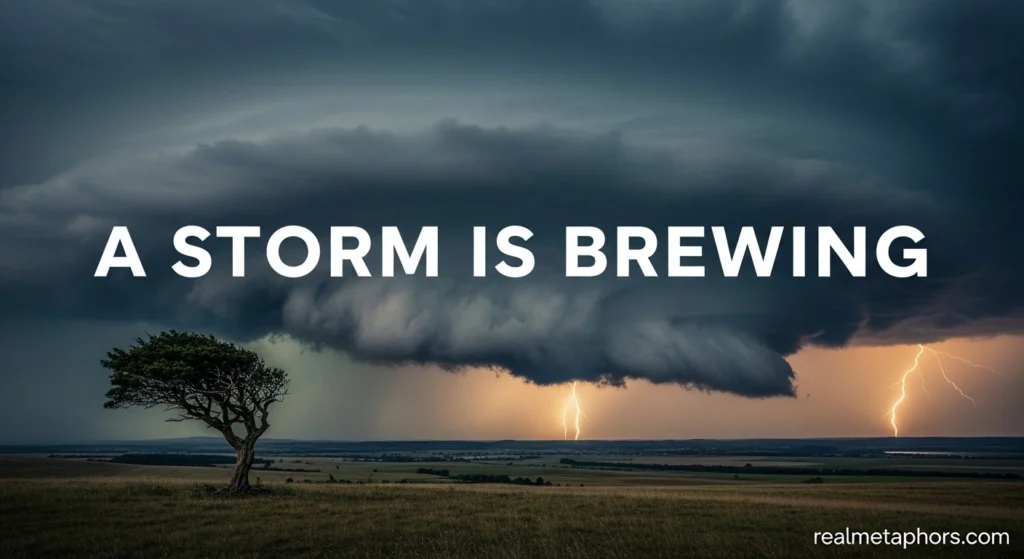
Meaning: Trouble or tension is approaching.
Example: “I could tell a storm was brewing when the team started arguing.”
Alternative: “Trouble is on the horizon.”
Details: Imagine dark clouds gathering slowly, signaling a rainstorm—just like tension building in a room.
2. Sunshine After Rain
Meaning: Happiness or relief after a difficult time.
Example: “After months of unemployment, getting the job felt like sunshine after rain.”
Alternative: “Light at the end of the tunnel.”
Details: Picture the first warm rays breaking through gray clouds.
3. Winds of Change
Meaning: Significant changes are coming.
Example: “The new manager brought winds of change to the office.”
Alternative: “A shift in the air.”
Details: Feel the breeze picking up, signaling that nothing will stay the same.
4. Under a Cloud
Meaning: Feeling sad or troubled.
Example: “She’s been under a cloud ever since her dog ran away.”
Alternative: “Carrying a heavy heart.”
Details: Visualize a small gray cloud hovering over someone’s head.
5. Calm Before the Storm
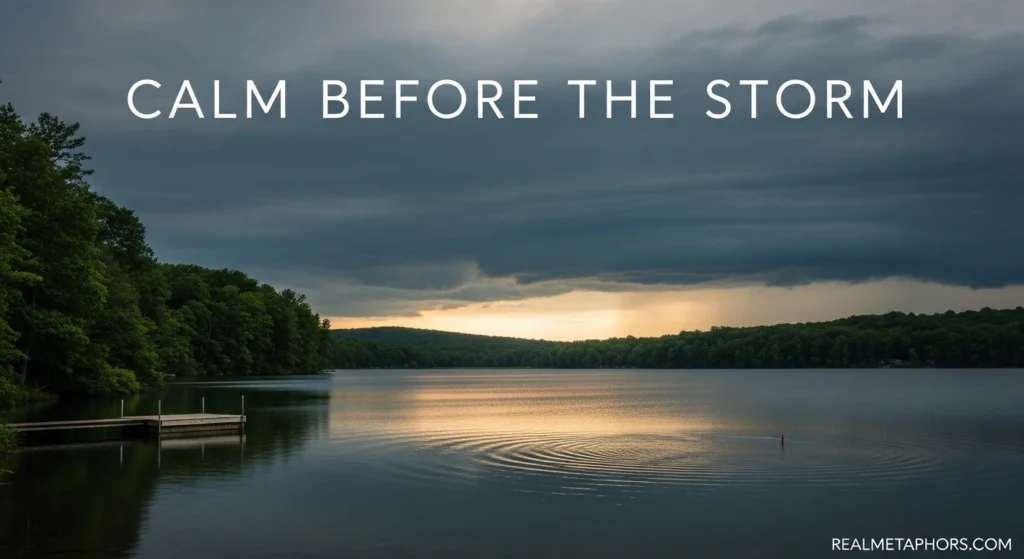
Meaning: A quiet period before chaos or trouble.
Example: “The team enjoyed a calm before the storm before the busy season began.”
Alternative: “Peace before the chaos.”
Details: Think of eerily still air right before thunder begins.
6. Lightning Fast
Meaning: Extremely fast or sudden.
Example: “His response to the email was lightning fast.”
Alternative: “As quick as a flash.”
Details: Imagine a flash of lightning illuminating the sky for a split second.
7. Snowed Under
Meaning: Overwhelmed with work or tasks.
Example: “I’m snowed under with assignments this week.”
Alternative: “Buried in work.”
Details: Picture a person struggling under a huge pile of snow.
8. A Ray of Hope
Meaning: A small sign of optimism in a difficult situation.
Example: “Finding a volunteer for the project was a ray of hope.”
Alternative: “A glimmer of light.”
Details: Picture sunlight piercing dark clouds.
9. Chasing Rainbows
Meaning: Pursuing unrealistic dreams.
Example: “He’s always chasing rainbows, trying to become a billionaire overnight.”
Alternative: “Following illusions.”
Details: Imagine someone running after a colorful rainbow that disappears when you get close.
10. Walking on Sunshine
Meaning: Feeling extremely happy.
Example: “She’s been walking on sunshine since her promotion.”
Alternative: “Full of joy.”
Details: Picture warm sunlight on your face, lifting your mood instantly.
11. A Bolt from the Blue
Meaning: Something unexpected and shocking.
Example: “The sudden resignation was a bolt from the blue.”
Alternative: “Out of nowhere.”
Details: Imagine lightning striking suddenly from a clear sky.
12. Blowing Hot and Cold
Meaning: Being inconsistent in behavior or feelings.
Example: “He keeps blowing hot and cold about moving to a new city.”
Alternative: “Mixed signals.”
Details: Visualize someone turning a stove knob from hot to cold repeatedly.
13. Frozen in Time
Meaning: Something seems unchanged or stuck.
Example: “The old town felt frozen in time, with cobblestone streets and vintage shops.”
Alternative: “Suspended in a moment.”
Details: Picture a landscape covered in frost, motionless and quiet.
14. Stormy Relationship
Meaning: A relationship with frequent arguments or tension.
Example: “Their stormy relationship finally ended.”
Alternative: “Turbulent connection.”
Details: Imagine clouds clashing with thunder above two people arguing.
15. Cloud Nine
Meaning: Feeling extremely happy or elated.
Example: “He was on cloud nine after winning the award.”
Alternative: “Over the moon.”
Details: Picture floating high above the world on a fluffy cloud.
16. Under the Weather
Meaning: Feeling sick or unwell.
Example: “I’m feeling a bit under the weather today, so I’ll stay home.”
Alternative: “Not feeling great.”
Details: Imagine gray clouds looming above, making you feel sluggish.
17. Snowball Effect
Meaning: A situation that grows bigger and bigger over time.
Example: “Small mistakes at work can have a snowball effect.”
Alternative: “Domino effect.”
Details: Picture a small snowball rolling down a hill, growing as it goes.
18. A Storm in a Teacup
Meaning: Making a big deal out of a small problem.
Example: “The argument over the meeting time was a storm in a teacup.”
Alternative: “Much ado about nothing.”
Details: Imagine tiny waves in a small teacup being treated like a hurricane.
19. Lightning in a Bottle
Meaning: Capturing something rare or extraordinary.
Example: “Their performance was lightning in a bottle—one-of-a-kind.”
Alternative: “A rare phenomenon.”
Details: Visualize energy crackling inside a glass bottle.
20. Heatwave
Meaning: Intense excitement, popularity, or pressure.
Example: “The new movie caused a heatwave in the city.”
Alternative: “Frenzy.”
Details: Imagine the city streets shimmering under an intense sun.
21. Winds of Fortune
Meaning: Sudden good luck or opportunity.
Example: “The lottery win brought winds of fortune.”
Alternative: “A lucky turn.”
Details: Picture a gentle breeze guiding a boat toward a hidden treasure.
22. Frozen Heart
Meaning: Someone who is emotionally cold or distant.
Example: “After the betrayal, she had a frozen heart.”
Alternative: “Cold-hearted.”
Details: Picture ice forming around someone’s chest, making warmth impossible.
23. Rain on One’s Parade
Meaning: Spoiling someone’s plans or joy.
Example: “Don’t rain on my parade—I finally got tickets to the concert!”
Alternative: “Spoil the fun.”
Details: Imagine a sudden drizzle ruining a joyful outdoor celebration.
24. Foggy Mind
Meaning: Confused or unclear thinking.
Example: “I have a foggy mind after staying up all night.”
Alternative: “Mental haze.”
Details: Picture walking through thick fog, struggling to see the path.
25. Thunderous Applause
Meaning: Very loud or enthusiastic approval.
Example: “The actor received thunderous applause after the performance.”
Alternative: “Deafening cheers.”
Details: Imagine the roar of applause shaking the room like thunder.
Fun Exercises and Challenges
- Weather Metaphor Journal: Each day, describe your mood using a weather metaphor. Example: “Feeling a little foggy this morning.”
- Story Challenge: Write a short story using at least five weather metaphors. Notice how it brings scenes to life.
- Social Media Practice: Share one weather metaphor as a caption for a photo. Example: “Chasing rainbows with my best friend .”
- Metaphor Swap: Take a common metaphor like “under the weather” and create your own variation using weather imagery.
Extra Tips:
- Use metaphors to show emotions instead of telling them.
- Combine senses: sight, sound, touch to make weather metaphors vivid.
- Avoid overloading: 2–3 metaphors per paragraph is enough for impact.
FAQs
Q1: What is a weather metaphor?
A weather metaphor compares weather phenomena to emotions, events, or people to make descriptions more vivid.
Q2: Why are weather metaphors useful?
They help readers relate instantly because everyone experiences weather. They make writing engaging and expressive.
Q3: How do I create my own weather metaphor?
Pick a weather type (storm, sun, wind), think of an emotion or situation it resembles, then describe it creatively.
Q4: Can metaphors be used in everyday life?
Yes! You can describe moods, situations, or even social media posts with weather metaphors.
Q5: What are common mistakes with metaphors?
Overusing them, mixing metaphors, or using ones your audience doesn’t understand.
Q6: How can writers use weather metaphors in stories?
Use them to set mood, reveal character emotions, or symbolize plot developments.
Q7: Can weather metaphors be humorous?
Absolutely! “It’s raining cats and dogs” is a classic funny metaphor. Playful exaggerations make metaphors memorable.