
Imagine a wide meadow under the warm sun. You walk barefoot, feeling tiny blades tickling your toes. Grass isn’t just green—it’s soft, alive, and full of stories. Writers often use grass as a metaphor to express ideas, emotions, and life itself. In this article, we’ll explore over 25 metaphors for grass, helping you understand them and use them in everyday writing, social media, or stories.
1. Grass as a Blanket
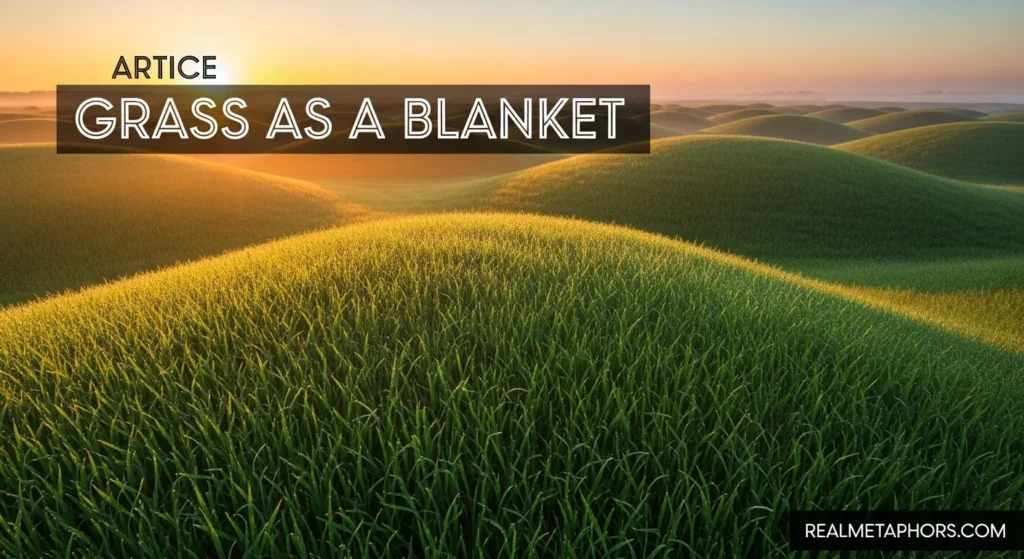
Meaning: Comfort, protection, or covering.
Example: “The morning dew made the meadow a soft, green blanket.”
Alternative: “The earth wore its green quilt.”
Visual Detail: Imagine lying down on a hill and the grass wrapping you like a cozy quilt.
2. Grass as Fingers
Meaning: Movement, touch, or delicacy.
Example: “The wind played with the grass fingers.”
Alternative: “The meadow waved its tiny hands.”
Visual Detail: Think of each blade of grass as a tiny finger swaying in the breeze.
3. Grass as a Sea
Meaning: Vastness, waves, or freedom.
Example: “The prairie rolled like a green sea beneath the sun.”
Alternative: “A verdant ocean stretched endlessly.”
Visual Detail: Picture walking across fields that ripple with the wind like ocean waves.
4. Grass as a Stage
Meaning: Life, performance, or drama.
Example: “The meadow was a stage where butterflies danced.”
Alternative: “Nature’s green theater came alive.”
Visual Detail: Grass is the stage, insects and animals are the actors.
5. Grass as a Carpet
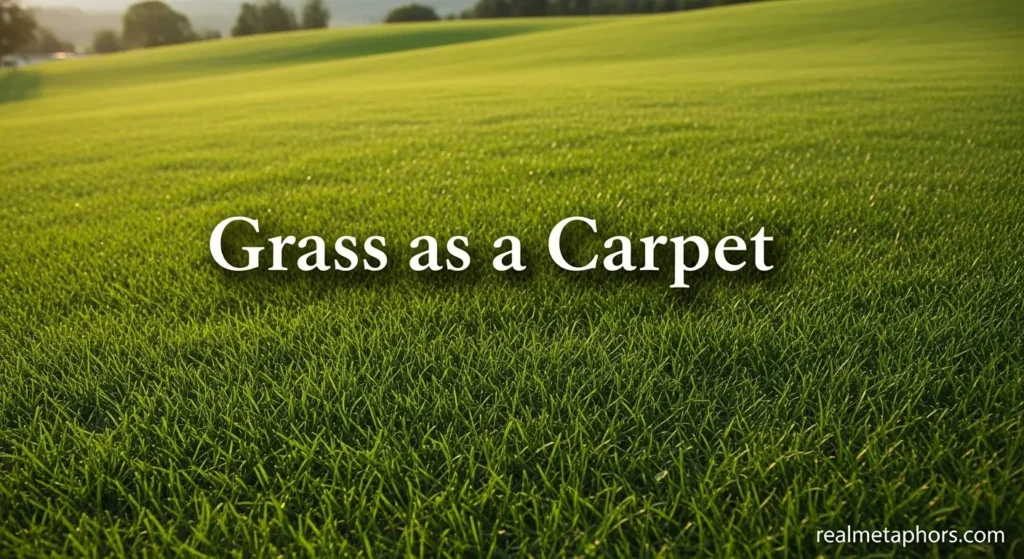
Meaning: Softness, welcome, or luxury.
Example: “She laid her picnic on the emerald carpet of grass.”
Alternative: “The lawn offered a natural carpet underfoot.”
Visual Detail: Feel the softness under bare feet, inviting and smooth.
6. Grass as Soldiers
Meaning: Discipline, alignment, or strength in numbers.
Example: “Each blade stood like a soldier in formation.”
Alternative: “The lawn stood in neat, green ranks.”
Visual Detail: Imagine a field of blades standing upright, disciplined yet flexible.
7. Grass as a Whisper
Meaning: Subtle communication, gentleness.
Example: “The grass whispered secrets to the passing wind.”
Alternative: “Soft murmurs rose from the meadow.”
Visual Detail: Hear the gentle rustle of leaves, almost like a conversation.
8. Grass as Hair
Meaning: Nature’s beauty, softness, or vitality.
Example: “The hillside had hair of emerald, shining in the sun.”
Alternative: “The meadow’s green tresses danced in the breeze.”
Visual Detail: Long, soft grass flowing like hair on the earth.
9. Grass as a Canvas
Meaning: Creativity, space for expression.
Example: “Children painted dreams on the grass canvas with chalk.”
Alternative: “The meadow became a green sheet for imagination.”
Visual Detail: Think of grass as a blank page waiting for stories or games.
10. Grass as a Kingdom
Meaning: Grandeur, territory, or community.
Example: “The meadow was a kingdom ruled by the wind.”
Alternative: “A tiny empire of green stretched as far as the eye could see.”
Visual Detail: Picture grass as citizens and the meadow as a bustling, living land.
11. Grass as a Mirror
Meaning: Reflection, clarity, or mimicry.
Example: “The morning dew made the grass a mirror of the sky.”
Alternative: “Tiny reflections shimmered on the green canvas.”
Visual Detail: Droplets on blades reflecting sunlight like miniature mirrors.
12. Grass as Fingers of Time
Meaning: Growth, change, and patience.
Example: “Seasons painted the grass fingers with gold and frost.”
Alternative: “Time reached out through the blades of the field.”
Visual Detail: Each blade tells a story of months and years passing.
13. Grass as a Crowd
Meaning: Multitude, movement, or energy.
Example: “The grass bowed to the wind like a cheering crowd.”
Alternative: “The field surged and swayed in unison.”
Visual Detail: Imagine a stadium, but the crowd is alive and green.
14. Grass as a Blanket of Dreams
Meaning: Imagination, comfort, or escape.
Example: “She lay on the meadow, wrapped in a blanket of dreams.”
Alternative: “The field cradled her like a soft lullaby.”
Visual Detail: A sense of peace and infinite possibilities beneath the sky.
15. Grass as a Highway
Meaning: Pathway, journey, or movement.
Example: “Deer trotted along the grass highway at dusk.”
Alternative: “The trail of green led into the forest.”
Visual Detail: Paths through grass where stories and journeys unfold.
16. Grass as Gold
Meaning: Value, beauty, or richness.
Example: “Sunlight turned the morning meadow into waves of gold.”
Alternative: “A treasure of green glimmered under the sun.”
Visual Detail: Green blades lit by golden sunlight, glowing like coins.
17. Grass as a Blanket of Tears
Meaning: Sadness, resilience, or renewal.
Example: “Raindrops on the lawn were tears of the sky.”
Alternative: “Nature wept quietly on the green field.”
Visual Detail: Picture fresh rain dripping from each blade, gentle and tender.
18. Grass as a Choir
Meaning: Harmony, sound, or collective beauty.
Example: “The wind made the grass sing a quiet, soothing hymn.”
Alternative: “The meadow hummed its gentle tune.”
Visual Detail: Hear the soft rustling, like nature’s orchestra.
19. Grass as a Blanket of Hope
Meaning: Renewal, optimism, or new beginnings.
Example: “Spring painted the fields with a green blanket of hope.”
Alternative: “Fresh shoots of green promised better days.”
Visual Detail: Young grass pushing through soil, bright and alive.
20. Grass as Lace
Meaning: Delicacy, elegance, or intricate beauty.
Example: “Morning frost turned the grass into sparkling lace.”
Alternative: “Tiny crystals made a delicate green pattern.”
Visual Detail: Frost or dew on grass creating fragile, beautiful designs.
21. Grass as a Jungle
Meaning: Wildness, mystery, or adventure.
Example: “Tall meadow grass hid secrets like a jungle.”
Alternative: “Each blade became a towering stalk in a green labyrinth.”
Visual Detail: Walking through tall grass feels like exploring a wild forest.
22. Grass as a Blanket of Memories
Meaning: Nostalgia, past experiences, or comfort.
Example: “The backyard’s green lawn held a blanket of childhood memories.”
Alternative: “Every blade whispered stories of summer days.”
Visual Detail: Visualize rolling in grass, playing, and feeling connected to your past.
23. Grass as a Sea of Emeralds
Meaning: Beauty, abundance, or luxury.
Example: “The valley stretched like a sea of emeralds beneath the sun.”
Alternative: “Green waves shimmered like jewels in the wind.”
Visual Detail: The sunlight makes the field sparkle, each blade a gem.
24. Grass as a Blanket of Peace
Meaning: Calm, relaxation, or refuge.
Example: “He lay on the meadow, embraced by a blanket of peace.”
Alternative: “The field offered a serene green haven.”
Visual Detail: Feel the quiet of nature, soft under your back.
25. Grass as a Curtain
Meaning: Privacy, secrecy, or barrier.
Example: “Tall grass acted as a curtain, hiding the fox from view.”
Alternative: “The meadow provided a green veil for hiding.”
Visual Detail: Grass sways gently, shielding what’s behind it.
Fun Exercises & Writing Prompts
- Describe Your Lawn: Pick one metaphor above and write a paragraph describing your garden or a park.
- Social Media Challenge: Use a grass metaphor in a short post or caption.
- Story Starter: “The grass whispered secrets that only I could hear…”
- Mix & Match: Combine two metaphors, e.g., “The grass was a choir and a blanket of dreams.”
- Photography Prompt: Take a photo of grass and caption it using one of the metaphors.
Extra Tips: Use metaphors to show emotion, not just describe objects. Be sensory—think about touch, sight, and sound. Short, vivid metaphors work well for social media.
FAQs
1. Why use metaphors for grass?
They make descriptions vivid, add emotion, and connect nature to human experiences.
2. How do I create a good grass metaphor?
Think about shape, movement, or feeling of grass and compare it to something relatable.
3. Can grass metaphors be used in stories?
Absolutely! They add depth to settings, emotions, and symbolism.
4. Are metaphors only for poetry? No, you can use them in stories, essays, captions, and daily writing.
5. What’s a common mistake with metaphors?
Mixing too many unrelated metaphors can confuse the reader. Stick to one or two strong images.
6. Can I use cultural references in grass metaphors?
Yes! For example, “The grass was like the emerald hills of Ireland” evokes place and emotion.
7. How do metaphors enhance writing?
They create imagination, emotion, and memorable imagery.
Conclusion
Grass is more than just green—it’s alive, expressive, and full of stories. Using metaphors transforms ordinary lawns into seas, blankets, kingdoms, and more. Practice, play, and let your imagination grow like a meadow in spring.