The room was silent before the argument began. Then a single sentence landed like a slammed door. Another followed, sharper, louder. Within seconds, the air felt charged — not with fists or weapons, but with something just as forceful. Words were flying. Emotions were colliding. The atmosphere itself seemed bruised.
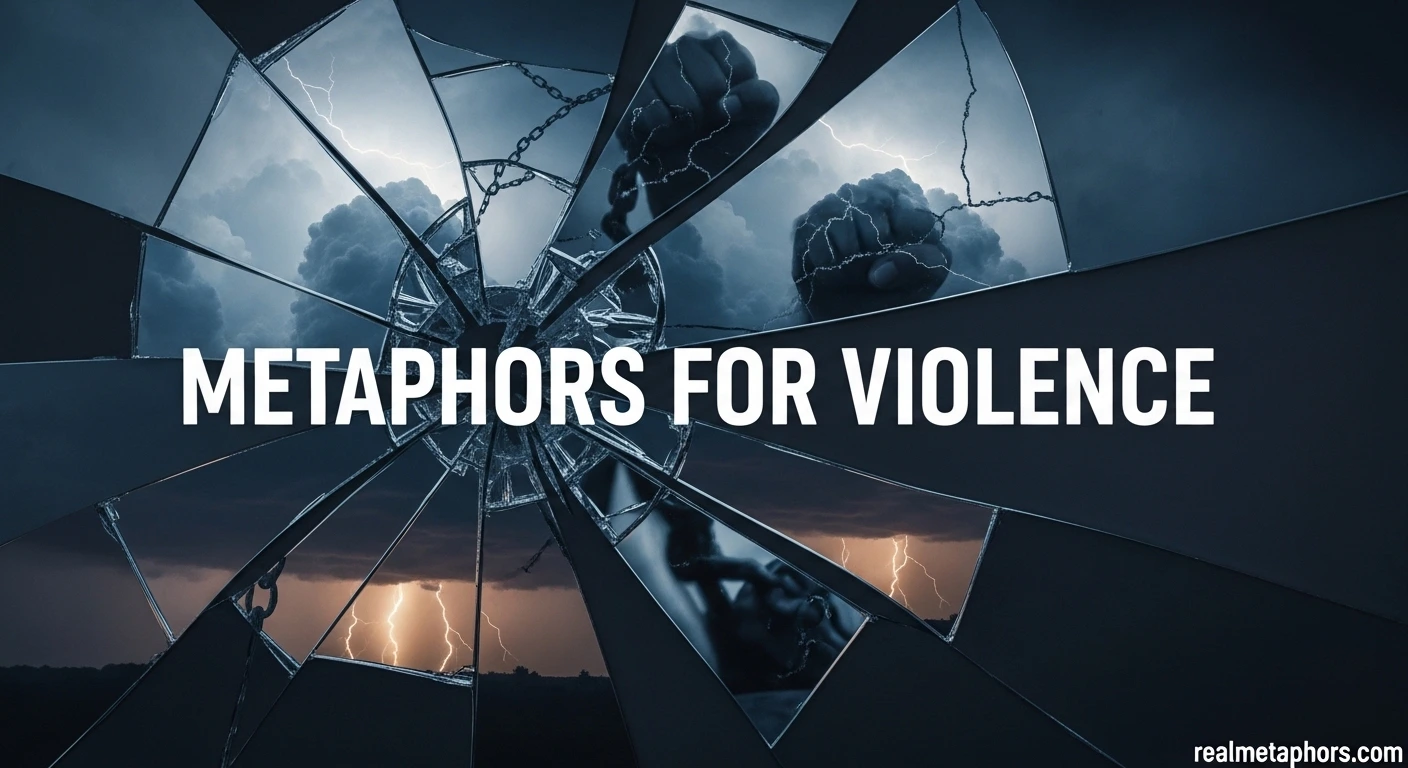
Violence is often imagined as physical force — crashing, breaking, tearing. But violence also lives in language, in silence, in systems, and even in nature. Because it is such an intense and complex concept, we often turn to metaphors for violence to understand and describe it. Metaphors help us process difficult realities. They soften what is harsh, clarify what is abstract, and give writers and speakers powerful creative tools.
Understanding violence through metaphor is valuable because it allows us to:
- Express emotional intensity without literal harm
- Explore psychological and social conflict creatively
- Add depth to storytelling, poetry, essays, and conversation
Below are 25+ powerful metaphors for violence, each explained with meaning, example usage, creative expansion ideas, and sensory or emotional detail to deepen connection.
1. Violence as a Storm
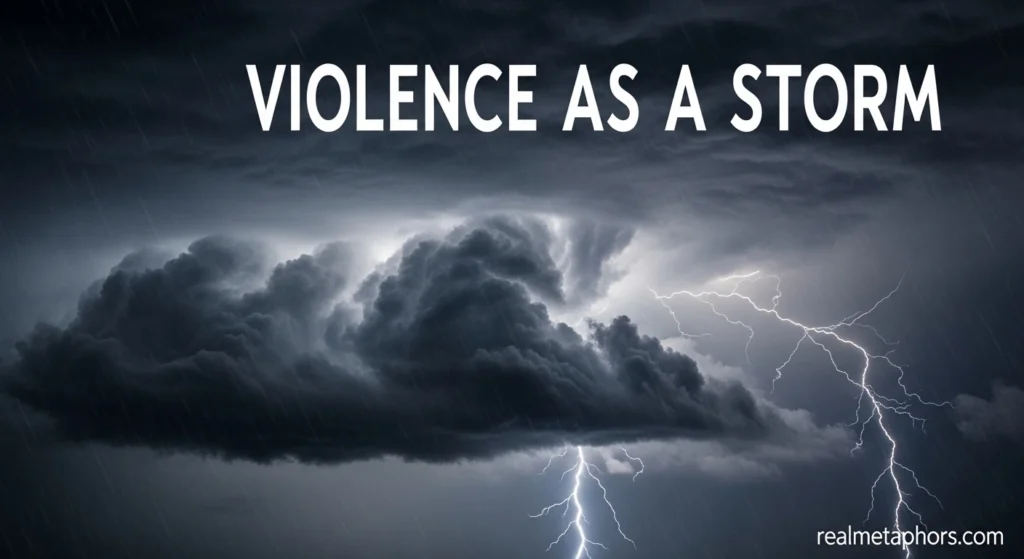
Meaning: Violence is sudden, overwhelming, and destructive — like a thunderstorm that tears through calm skies.
Example: “His anger rolled in like a storm, darkening the room.”
Creative Expansion:
- A hurricane of rage
- Thunder in her voice
- Lightning-fast retaliation
Sensory Detail: The crack of thunder mirrors shouting. The heavy air reflects tension before conflict.
2. Violence as a Wildfire
Meaning: It spreads quickly, consuming everything in its path.
Example: “Rumors sparked violence that spread like wildfire through the city.”
Alternative Expressions:
- Flames of fury
- A blaze of brutality
- Burning with vengeance
Mini Storytelling: One careless spark — a lie, a slap, a betrayal — and the flames climb higher than anyone expected.
3. Violence as an Earthquake
Meaning: Sudden, destabilizing, and life-altering.
Example: “The news hit her like an earthquake, shaking her sense of safety.”
Creative Twist:
- Fault lines of resentment
- Aftershocks of conflict
Emotional Detail: Even after it ends, tremors linger in memory.
4. Violence as a Poison
Meaning: Slow, corrosive, and toxic — especially emotional or systemic violence.
Example: “Cruel words are a poison that seeps into the heart.”
Alternative Forms:
- Toxic environment
- Venomous speech
Cultural Note: Literature often portrays betrayal as venom — subtle but deadly.
5. Violence as a Predator
Meaning: It stalks, hunts, and waits for vulnerability.
Example: “Violence lurked in the alley like a predator in the dark.”
Creative Variations:
- A wolf at the door
- Claws of cruelty
Imagery: The slow, deliberate steps before the strike.
6. Violence as a Volcano
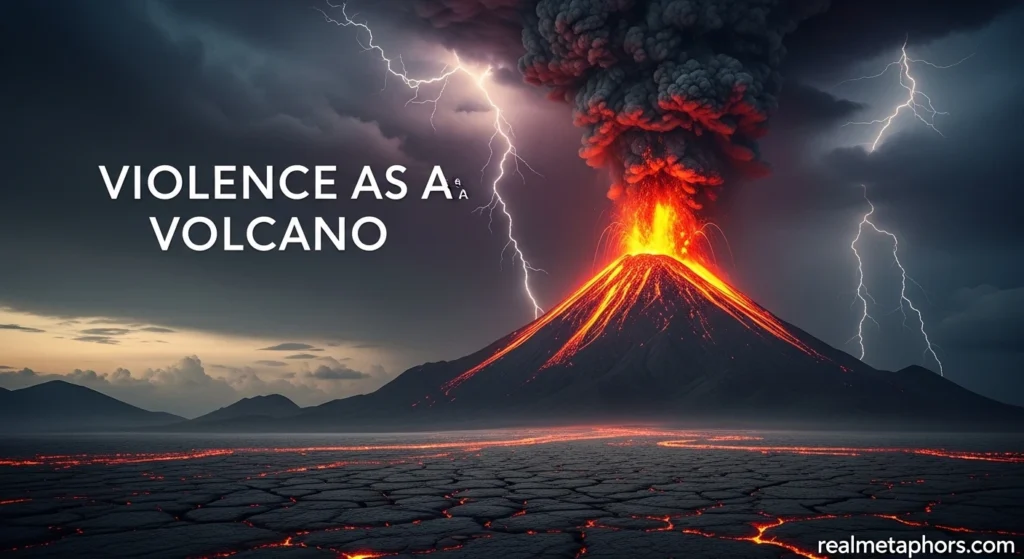
Meaning: Built-up pressure that erupts explosively.
Example: “Years of resentment erupted like a volcano.”
Expansion:
- Molten anger
- Lava of hatred
Sensory Layer: Heat, smoke, and explosive release.
7. Violence as a Shattered Mirror
Meaning: It breaks trust and identity into fragments.
Example: “The betrayal shattered their friendship like glass.”
Alternative:
- Splintered peace
- Fractured community
Emotional Detail: Reflection is distorted after the break.
8. Violence as a Disease
Meaning: Contagious, spreading through communities or generations.
Example: “Hate is a disease that infects minds.”
Creative Angle:
- Social infection
- Epidemic of aggression
Real-Life Relevance: Cycles of abuse passed through generations.
9. Violence as a Cage
Meaning: It traps victims emotionally or physically.
Example: “She felt trapped in a cage of fear.”
Expansion:
- Prison of intimidation
- Chains of control
Imaginative Detail: The metallic clang of invisible bars.
10. Violence as a Shadow
Meaning: Always present, lurking behind light.
Example: “Violence followed the protest like a shadow.”
Creative Forms:
- Dark silhouette of harm
- A shadow across history
11. Violence as a Blade
Meaning: Sharp, precise, cutting deeply.
Example: “His words were blades slicing through her confidence.”
Alternative Expressions:
- Dagger of betrayal
- Knife-edged tone
12. Violence as a Tidal Wave
Meaning: Overpowering and unstoppable.
Example: “The riot surged like a tidal wave.”
Sensory Element: Roaring sound, overwhelming force.
13. Violence as a Broken Clock
Meaning: It disrupts the natural rhythm of life.
Example: “After the attack, time felt broken.”
Creative Angle:
- Stopped moments
- Frozen seconds
14. Violence as Rust
Meaning: Slowly erodes trust and relationships.
Example: “Suspicion rusted their marriage.”
Alternative:
- Corrosion of respect
15. Violence as a Thunderclap
Meaning: Sudden and shocking.
Example: “The slap landed like a thunderclap.”
16. Violence as a Torn Canvas
Meaning: Destroys beauty and creativity.
Example: “The war tore the country’s cultural fabric.”
17. Violence as a Chess Game
Meaning: Strategic and calculated.
Example: “The conflict unfolded like a deadly chess match.”
18. Violence as a Black Hole
Meaning: Consumes everything, leaving emptiness.
Example: “Grief after the violence felt like a black hole.”
19. Violence as a Spark in Dry Grass
Meaning: Triggered easily under tension.
Example: “One insult was the spark in dry grass.”
20. Violence as a Cracked Foundation
Meaning: Weakens entire structures (family, society).
Example: “Injustice is a crack in the foundation of peace.”
21. Violence as a Puppet Master
Meaning: Controls people through fear.
Example: “Terror acted as a puppet master over the crowd.”
22. Violence as Ice
Meaning: Cold, emotionless cruelty.
Example: “There was ice in his voice.”
23. Violence as a Hammer
Meaning: Blunt and forceful.
Example: “Authority came down like a hammer.”
24. Violence as a Cage of Echoes
Meaning: Trauma repeats internally.
Example: “Her mind echoed with the violence long after.”
25. Violence as a Battlefield of Words
Meaning: Verbal conflict mirrors physical war.
Example: “The debate turned into a battlefield.”
26. Violence as a Tornado
Meaning: Chaotic destruction.
Example: “The fight spun out of control like a tornado.”
Reader Engagement Section: Practice Creating Metaphors for Violence
Creative Writing Exercise
- Describe an argument using only weather metaphors.
- Write a short paragraph where silence represents violence.
- Turn a news headline into a poetic metaphor.
Reflection Prompts
- What kind of violence feels like “rust” in your experience?
- Have you seen violence spread like a disease in stories or history?
Bonus Tips for Using Metaphors
- In storytelling: Use metaphor to show emotional damage without graphic detail.
- In social media captions: “Hate spreads like wildfire — choose water, not fuel.”
- In conversation: “Let’s not let this turn into a storm.”
Avoid clichés by adding sensory detail or unexpected twists.
FAQs
What are metaphors for violence?
Metaphors for violence are figurative comparisons that describe violence using symbolic images like storms, fire, poison, or earthquakes. They help explain emotional or physical harm creatively and indirectly.
Why use metaphors when talking about violence?
Metaphors soften harsh topics while still conveying emotional intensity. They make writing more vivid, thoughtful, and engaging without relying on graphic descriptions.
How do metaphors improve communication?
Metaphors create imagery that readers and listeners can visualize. This makes complex or heavy topics easier to understand and remember.
How can I create effective metaphors for violence?
Think about the qualities of violence — suddenness, destruction, coldness, spread — and compare them to natural forces, objects, or experiences that share similar traits.
What mistakes should I avoid?
Avoid overused clichés without adding fresh detail. Also avoid mixing metaphors in confusing ways.
Can metaphors about violence be used in daily conversation?
Yes. People often say things like “words cut deep” or “anger exploded.” These are everyday metaphors that communicate intensity clearly.
Are metaphors better than direct description?
Not always — but they add emotional depth and creative power, especially in storytelling, essays, speeches, and content writing.
By exploring metaphors for violence, we transform a harsh reality into language that helps us reflect, create, and communicate more powerfully. Metaphors give shape to chaos. They turn raw force into understanding. And in doing so, they remind us that even when describing destruction, language itself can build insight.