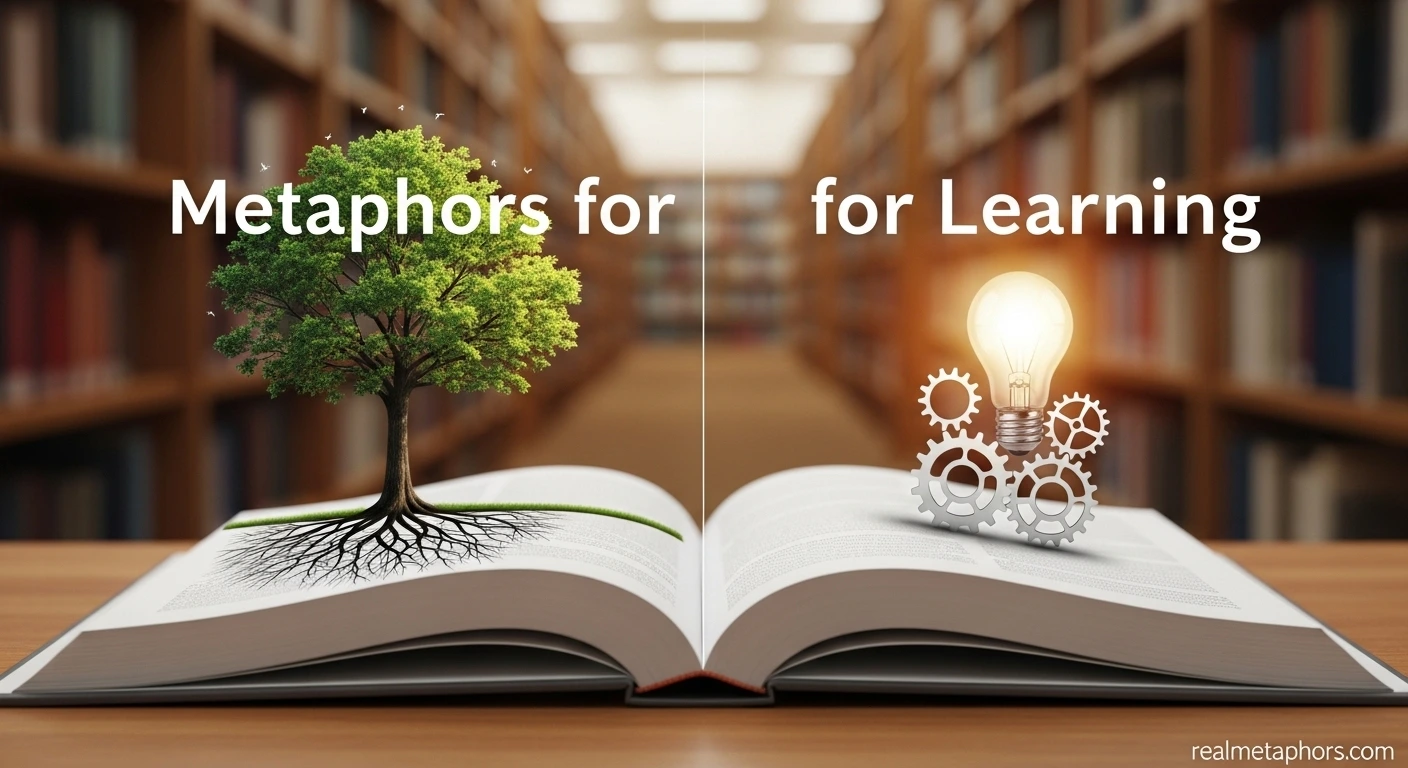
Imagine a child sitting under a tree, reading an old, colorful book. Every page feels like a new world. At first, the words are strange and heavy. But slowly, the child begins to smile because knowledge feels like opening a treasure chest.
Learning is like this. It is not just studying in school. It is exploring, growing, and understanding life step by step. Metaphors for learning help us describe this beautiful journey in simple and creative ways.
Let’s explore 25+ easy metaphors for learning that are fun to understand and use.
1. Learning Is a Seed Growing in the Soil
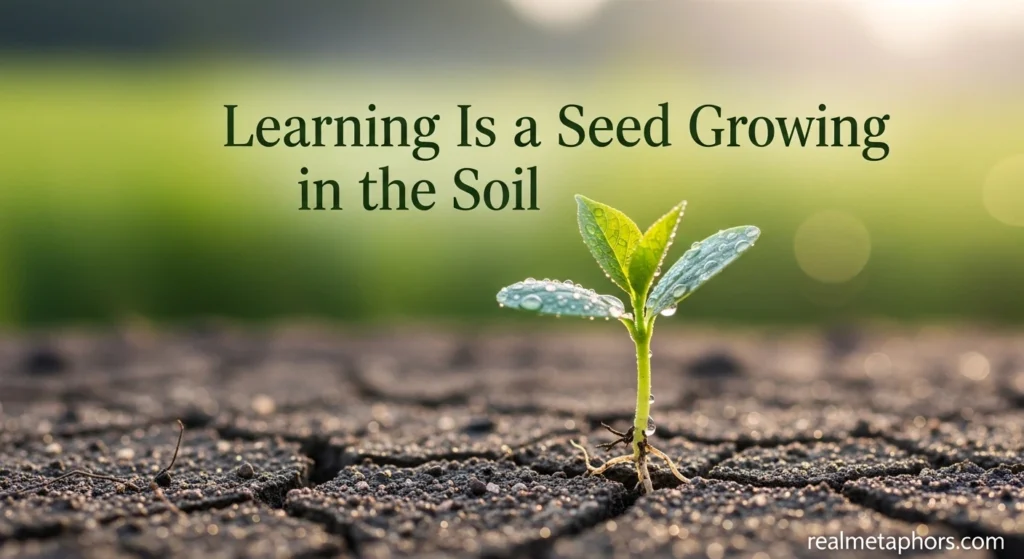
Learning starts small and grows slowly like a seed.
- Meaning: Knowledge needs time, care, and patience.
- Example: “Her skills are like a seed growing in good soil.”
- Another way to say it: Knowledge blossoms over time.
- Imagine: Watering a plant every day until you see the green shoot.
2. Learning Is Climbing a Mountain
Learning can be difficult, like climbing a tall mountain.
- Meaning: You must work hard to reach higher levels of knowledge.
- Example: “Passing the exam felt like reaching the mountain top.”
- Another way to say it: Knowledge is a long climb.
- Detail: Every step forward is progress.
3. Learning Is Filling an Empty Cup
At the beginning, the mind is like an empty cup waiting to be filled.
- Meaning: You gain knowledge by studying and listening.
- Example: “The teacher poured knowledge into our empty cups.”
- Another way: The mind is a container for ideas.
- Imagine: Pouring warm tea into a cup slowly.
4. Learning Is Lighting a Lamp
Learning is like turning on a light in a dark room.
- Meaning: Knowledge removes confusion.
- Example: “This lesson lit a lamp in my mind.”
- Another way: Understanding brings light.
- Small detail: Darkness represents ignorance.
5. Learning Is Opening a Door
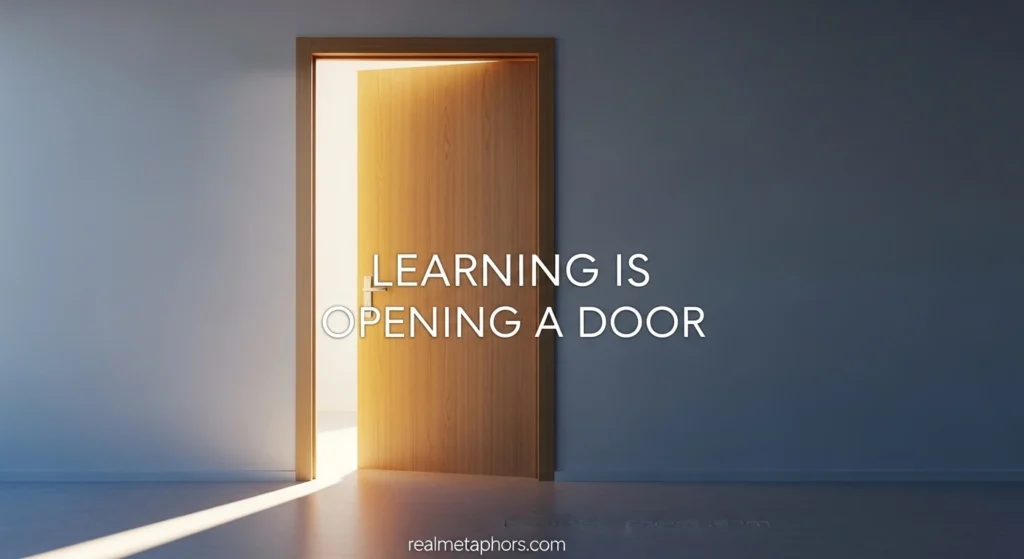
Every new lesson is like opening a new door.
- Meaning: Knowledge gives opportunities.
- Example: “Education opened many doors for him.”
- Another way: Learning unlocks life’s rooms.
- Imagine: Turning a golden door handle.
6. Learning Is Building a House
Knowledge is the foundation of a strong house.
- Meaning: You must learn basics before advanced ideas.
- Example: “Grammar is the foundation of language learning.”
- Another way: Skills are bricks of success.
- Detail: Strong walls need strong foundations.
7. Learning Is Walking on a Road
Learning is a journey, not a race.
- Meaning: You improve step by step.
- Example: “She is walking her learning road slowly.”
- Another way: Knowledge is a lifelong path.
- Imagine: Footprints on a dusty road.
8. Learning Is Eating Food for the Mind
Just like food feeds the body, knowledge feeds the brain.
- Meaning: Learning is necessary for mental growth.
- Example: “Reading books is food for the brain.”
- Another way: Knowledge is mental nutrition.
- Detail: Without food, the body becomes weak.
9. Learning Is Planting a Garden of Ideas
Your brain can be like a beautiful garden.
- Meaning: Different subjects are different flowers.
- Example: “She planted many ideas in her mind.”
- Another way: Knowledge blooms like flowers.
- Imagine: Colorful roses and tulips growing.
10. Learning Is Sharpening a Sword
Practice makes skills stronger.
- Meaning: Repetition improves ability.
- Example: “Practice is sharpening your thinking sword.”
- Another way: Training polishes talent.
- Small detail: A dull sword cannot cut well.
11. Learning Is Collecting Stars
Every new idea is like catching a star in the sky.
- Meaning: Knowledge is precious and beautiful.
- Example: “She collected stars of wisdom.”
- Another way: Learning shines like night stars.
- Imagine: Putting stars in a small jar.
12. Learning Is Unlocking a Treasure Chest
Knowledge is a treasure full of value.
- Meaning: Education gives life rewards.
- Example: “Books are treasure chests of wisdom.”
- Another way: Knowledge is hidden gold.
- Detail: You must open the chest to find gems.
13. Learning Is Sailing on an Ocean
The world of knowledge is vast like the sea.
- Meaning: There is always more to learn.
- Example: “He sailed through science lessons.”
- Another way: Learning is exploring water worlds.
- Imagine: Waves moving gently.
14. Learning Is Building a Puzzle
Knowledge pieces fit together.
- Meaning: Understanding comes step by step.
- Example: “The history lesson finally completed the puzzle.”
- Another way: Learning connects ideas.
- Detail: Missing pieces create confusion.
15. Learning Is Training a Muscle
The brain becomes stronger with exercise.
- Meaning: Practice improves memory and skill.
- Example: “Solve problems to exercise your brain.”
- Another way: Knowledge is mental fitness.
- Imagine: Lifting intellectual weights.
16. Learning Is Painting a Picture
Ideas are colors on a mental canvas.
- Meaning: Creativity grows through knowledge.
- Example: “Her writing paints beautiful stories.”
- Another way: Learning is artistic thinking.
- Detail: Every lesson adds color.
17. Learning Is Growing Wings
Education helps people fly higher in life.
- Meaning: Knowledge gives freedom and opportunities.
- Example: “Education gave him wings.”
- Another way: Learning helps you soar.
- Imagine: Flying over mountains.
18. Learning Is Polishing a Diamond
Skills become brighter with practice.
- Meaning: Talent needs improvement.
- Example: “Hard work polished his talent.”
- Another way: Learning removes roughness.
- Detail: Diamonds shine after cutting.
19. Learning Is Drinking from a River
Knowledge flows continuously.
- Meaning: You can keep learning forever.
- Example: “She drank wisdom from many books.”
- Another way: Learning is a flowing river.
- Imagine: Fresh water moving slowly.
20. Learning Is Building a Bridge
Education connects you to opportunities.
- Meaning: Knowledge helps cross difficulties.
- Example: “English became a bridge for his career.”
- Another way: Learning links two worlds.
- Detail: Bridges help you cross rivers.
21. Learning Is Watching the Sunrise
Understanding comes like morning light.
- Meaning: Knowledge removes confusion gradually.
- Example: “The lesson was like sunrise in my mind.”
- Another way: Learning brings new beginnings.
- Imagine: Golden light spreading.
22. Learning Is Collecting Keys
Each lesson gives a new key.
- Meaning: Knowledge opens different doors.
- Example: “Math is a key to science.”
- Another way: Learning unlocks success.
- Detail: Some doors need many keys.
23. Learning Is Writing on the Mind’s Paper
The brain records experiences.
- Meaning: Memory stores knowledge.
- Example: “The story was written in his heart.”
- Another way: Learning is mental writing.
- Imagine: Invisible ink forming words.
24. Learning Is Climbing Steps of a Ladder
Progress happens step by step.
- Meaning: You cannot jump learning stages.
- Example: “She climbed the education ladder.”
- Another way: Knowledge is a staircase.
- Detail: Each step matters.
25. Learning Is Planting Light in the Heart
Knowledge creates inner brightness.
- Meaning: Learning improves wisdom and character.
- Example: “Good education plants light inside people.”
- Another way: Learning feeds the soul.
26. Learning Is Opening Windows of the Mind
New ideas bring fresh air.
- Meaning: Learning encourages thinking.
- Example: “Travel opened windows in his mind.”
- Another way: Knowledge lets ideas breathe.
Fun Exercises to Practice Learning Metaphors
Try these simple activities:
1. Complete the Metaphor
- Learning is like ______ because ______.
2. Write Your Own Metaphor
Choose one idea:
- School
- Books
- Teacher
- Knowledge
- Practice
Make your own metaphor.
3. Describe Your Day Using Metaphors
Example:
- “Today my brain was a busy garden growing ideas.”
4. Share on Social Media
Use metaphors to describe your study experience.
Tips for Using Learning Metaphors
- Use simple words.
- Add emotions and imagination.
- Do not mix too many metaphors in one sentence.
- Match metaphors with your message.
- Use them in stories, essays, or speeches.
FAQs
1. What is a metaphor for learning?
A metaphor for learning is a way of describing learning by comparing it to something else, like a journey, plant growth, or light.
2. Why are metaphors useful?
Metaphors make ideas easier to understand, more interesting, and more memorable.
3. How do I create my own learning metaphor?
Think about learning and ask yourself: “What does learning feel like?” Then compare it with nature, daily life, or objects.
4. Are metaphors important in writing?
Yes. They help make stories, essays, and speeches more attractive and clear.
5. Can children use metaphors?
Yes. Simple metaphors help children express ideas.
6. What are common mistakes when using metaphors?
- Using too many metaphors together.
- Choosing confusing comparisons.
- Making the meaning unclear.
7. Where can I use learning metaphors?
In stories, social media posts, school essays, speeches, and creative writing.
Final Thought
Learning is a beautiful journey. It is a seed, a light, a road, and a dream growing inside the mind. When you use metaphors, you make knowledge more alive and interesting.