Imagine a busy marketplace where people are talking, laughing, arguing, and sharing stories. In one corner, a child is learning new words like collecting colorful stones. In another corner, a poet is shaping feelings into beautiful sounds. Language is like magic dust that helps humans share thoughts and emotions.
Language is not just words. It is a living thing. It can flow, grow, dance, and even heal. That is why people use metaphors for language to make ideas more colorful and interesting.
Let’s explore 25+ easy metaphors for language that you can understand and use in daily life.
1. Language is a River
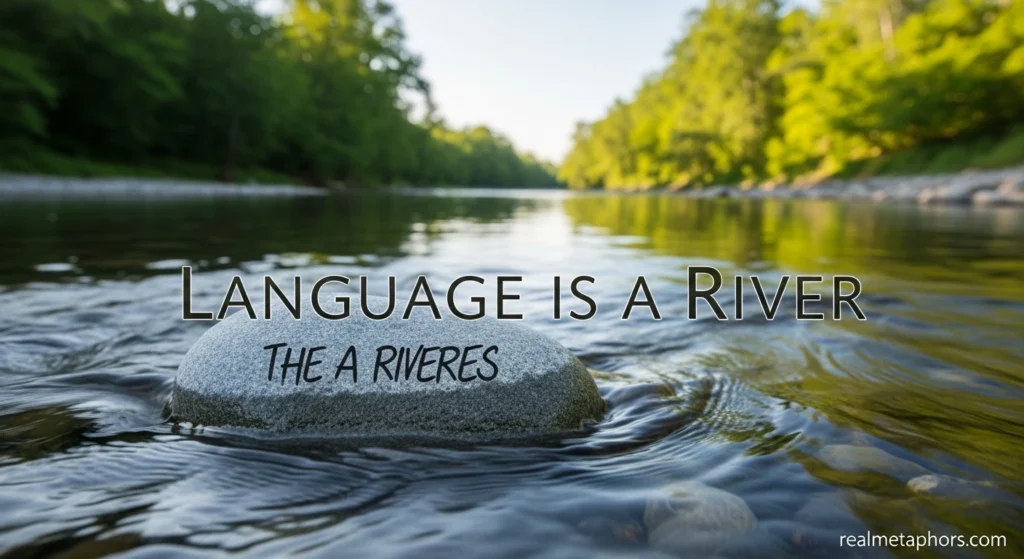
Meaning: Language flows like water, carrying ideas and emotions smoothly.
Example:
- Her words flowed like a river during the speech.
Another way to say it: Words are a stream.
Details: Imagine a river moving quietly, sometimes fast, sometimes slow. Good language should feel natural like that.
2. Language is a Bridge
Meaning: Language connects people and cultures.
Example:
- English is a bridge between many international communities.
Another way to say it: Words connect hearts.
Details: Like a bridge over water, language helps people cross differences.
3. Language is a Key
Meaning: Language opens knowledge and understanding.
Example:
- Learning new words is the key to success in communication.
Another way to say it: Vocabulary unlocks doors.
Details: Think of a key turning in a lock and opening a secret room.
4. Language is a Garden
Meaning: Language grows like plants when we practice it.
Example:
- Reading books helps my language skills bloom like a garden.
Another way to say it: Words are flowers of expression.
Details: Good vocabulary is like watering plants every day.
5. Language is Music
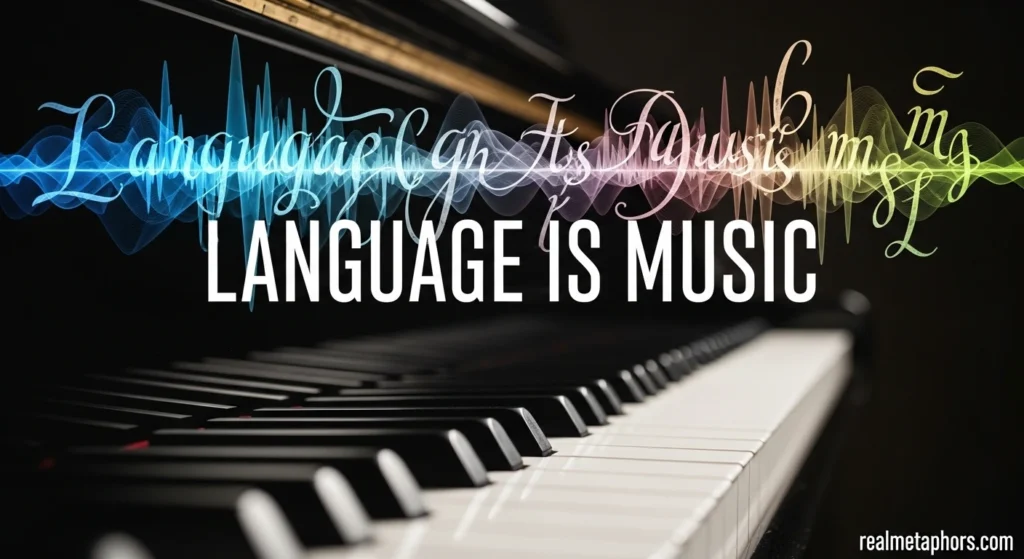
Meaning: Language can sound beautiful and rhythmic.
Example:
- Her poem sounded like soft music.
Another way to say it: Speech has melody.
Details: Think of words playing like piano notes.
6. Language is a Tool
Meaning: Language helps people solve problems.
Example:
- We use language as a tool to share ideas at work.
Another way to say it: Words are instruments.
Details: Like a hammer or screwdriver, language helps build things.
7. Language is a Living Creature
Meaning: Language changes and evolves.
Example:
- Internet slang shows that language is alive.
Another way to say it: Words grow and breathe.
Details: New words are born every year.
8. Language is Fire
Meaning: Language can inspire or hurt.
Example:
- Angry words can burn like fire.
Another way to say it: Words can ignite emotions.
Details: Fire can warm or destroy depending on how it is used.
9. Language is a Window
Meaning: Language shows the world and ideas.
Example:
- Stories are windows to different cultures.
Another way to say it: Words open views.
Details: Like looking through glass, language lets you see beyond.
10. Language is a Painting
Meaning: Language creates pictures in the mind.
Example:
- The writer painted the night sky with words.
Another way to say it: Words sketch images.
Details: Good description helps readers imagine scenes.
11. Language is a Road
Meaning: Language helps people travel through ideas.
Example:
- Grammar is the road that guides sentences.
Another way to say it: Words are pathways.
Details: Without a road, communication can get lost.
12. Language is a Weapon
Meaning: Language can defend or attack.
Example:
- His argument was sharp as a sword.
Another way to say it: Words can fight battles.
Details: Use this metaphor carefully because it shows strong emotion.
13. Language is a Treasure
Meaning: Language is valuable knowledge.
Example:
- Learning new vocabulary is collecting treasure.
Another way to say it: Words are gold.
Details: Each new word is like finding a shiny coin.
14. Language is a Computer Program
Meaning: Language follows rules.
Example:
- Grammar works like coding rules.
Another way to say it: Language is structured logic.
Details: If one rule is wrong, the message may crash.
15. Language is a Dance
Meaning: Words move gracefully together.
Example:
- Poetry dances on the page.
Another way to say it: Sentences perform.
Details: Think of partners moving in rhythm.
16. Language is a House
Meaning: Vocabulary and grammar are building blocks.
Example:
- Strong grammar is the foundation of good writing.
Another way to say it: Words are bricks.
Details: Without bricks, a house falls.
17. Language is Air
Meaning: Communication is essential for life.
Example:
- Ideas need language like humans need air.
Another way to say it: Words are breath.
Details: Silence can feel like suffocation in conversation.
18. Language is a Boat
Meaning: Language carries meaning across ideas.
Example:
- Stories are boats sailing through imagination.
Another way to say it: Words float messages.
Details: Imagine a small boat on a calm sea.
19. Language is a Puzzle
Meaning: Meaning is built by combining parts.
Example:
- Understanding slang can be like solving a puzzle.
Another way to say it: Words fit together.
Details: Each piece is important.
20. Language is a Mirror
Meaning: Language reflects culture and personality.
Example:
- The way we speak shows who we are.
Another way to say it: Speech reflects the soul.
Details: Like a mirror, it shows truth.
21. Language is Honey
Meaning: Kind words are sweet.
Example:
- Her polite speech was like honey.
Another way to say it: Words are sweetness.
Details: Honey attracts and comforts.
22. Language is a Seed
Meaning: Words can create big ideas.
Example:
- One story can plant a seed of change.
Another way to say it: Ideas grow from words.
Details: Small seeds can grow into big trees.
23. Language is Wind
Meaning: Words can spread quickly.
Example:
- News travels like wind.
Another way to say it: Information flies.
Details: Wind can be gentle or strong.
24. Language is a Star
Meaning: Good language shines in communication.
Example:
- His speech was the star of the meeting.
Another way to say it: Words sparkle.
Details: Stars guide travelers at night.
25. Language is a Thread
Meaning: Language connects ideas in a story.
Example:
- The writer used a red thread to keep the story united.
Another way to say it: Words weave meaning.
Details: Like sewing cloth, thread keeps things together.
Fun Practice Exercises
Try These Writing Prompts
- Write 5 sentences using “language is…” metaphors.
- Describe your favorite person using a language metaphor.
- Create a new metaphor for language.
Challenge Yourself
- Explain your day using only one metaphor.
- Turn a simple conversation into a poetic description.
- Share your metaphor in a story or social media post.
Tips for Using Language Metaphors
- Use simple metaphors in daily conversation.
- Avoid mixing too many metaphors in one sentence.
- Choose metaphors that match your emotion.
- Practice by reading poetry and stories.
- Think of nature, objects, and life experiences.
FAQs
1. What is a metaphor for language?
A metaphor for language compares language to another thing to explain meaning creatively.
2. Why are metaphors useful?
They help people understand ideas easily and make writing more interesting.
3. How do I create my own metaphor?
Think of language as something you can compare with (nature, objects, or actions).
4. What are common mistakes in metaphors?
Using confusing or mixed comparisons and overloading sentences with metaphors.
5. Can I use metaphors in daily speech?
Yes. Simple metaphors make conversation more colorful.
6. Are metaphors only for poetry?
No. They are used in stories, speeches, marketing, and everyday life.
7. How many metaphors should I use?
Use a few good metaphors instead of many weak ones.
Final Thought
Language is the heartbeat of human connection. When you use metaphors, you turn simple words into living art. Keep practicing, observe the world, and let your language flow like a river of ideas.