
The first gray strand of hair caught in the morning light feels like a whisper from time itself. It’s subtle, almost invisible at first, but it tells a story of years lived, lessons learned, and seasons passed. Aging is more than the passage of days; it’s a narrative etched into our skin, our bones, and our memories. And sometimes, the simplest way to capture the essence of this journey is through metaphor—imagery that turns abstract feelings into vivid, relatable experiences.
Metaphors help us articulate what it feels like to grow older, both the joys and the bittersweet challenges. They deepen our empathy, enhance our writing, and make everyday conversations more poetic. Below, we explore over 25 metaphors for aging, with explanations, examples, and exercises to inspire your creativity.
1. A Tree Shedding Leaves
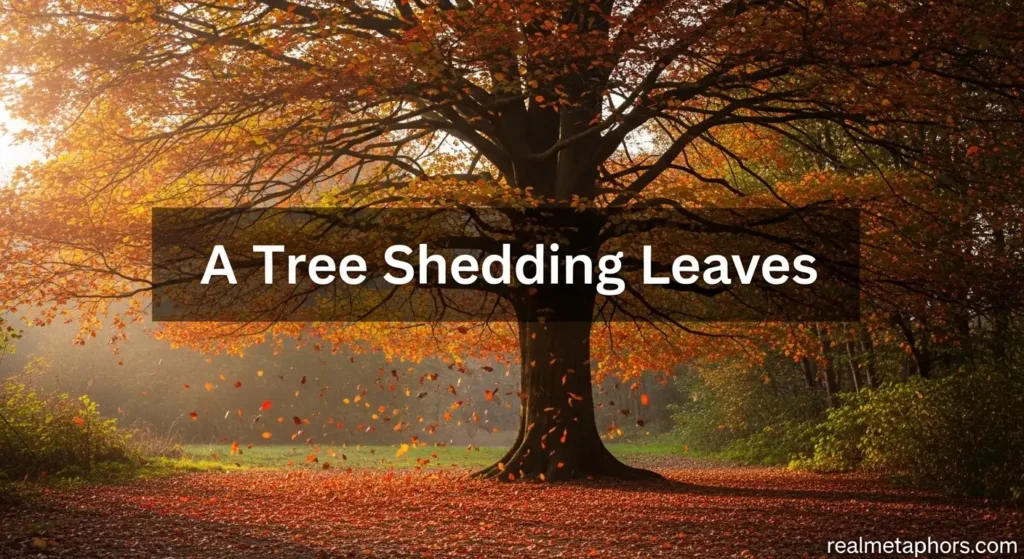
Aging can feel like a tree shedding its leaves in autumn—slow, natural, and inevitable. The branches remain strong, but the vibrant foliage falls, symbolizing loss, wisdom, and renewal. Example: “Her laughter had grown quieter, like leaves drifting from an old oak in the fall.” Alternative: “Like a willow releasing its last golden leaves, he moved gracefully into retirement.” Exercise: Describe someone aging using a season or tree metaphor. Try capturing both loss and growth.
2. Winter Arriving Slowly
Time creeps in like winter’s frost, covering familiar landscapes with a soft, cold touch. Aging isn’t sudden—it blankets us gradually, reminding us to cherish warmth while we can. Example: “He felt winter settling over his shoulders, each year adding a thin layer of frost.” Writing Tip: Use seasonal metaphors to convey emotion subtly. Social media caption idea: “Frost on the windows, silver in my hair—embracing the quiet beauty of winter within.”
3. Rivers Carving Stone
The flow of years shapes our character as a river shapes the stone—smooth, enduring, and uniquely patterned. Hard edges soften, and strength emerges in subtle forms. Example: “Her wisdom, carved over decades like water against rock, was impossible to ignore.” Exercise: Compare your life experiences to a natural element shaping you.
4. A Clock’s Gentle Tick
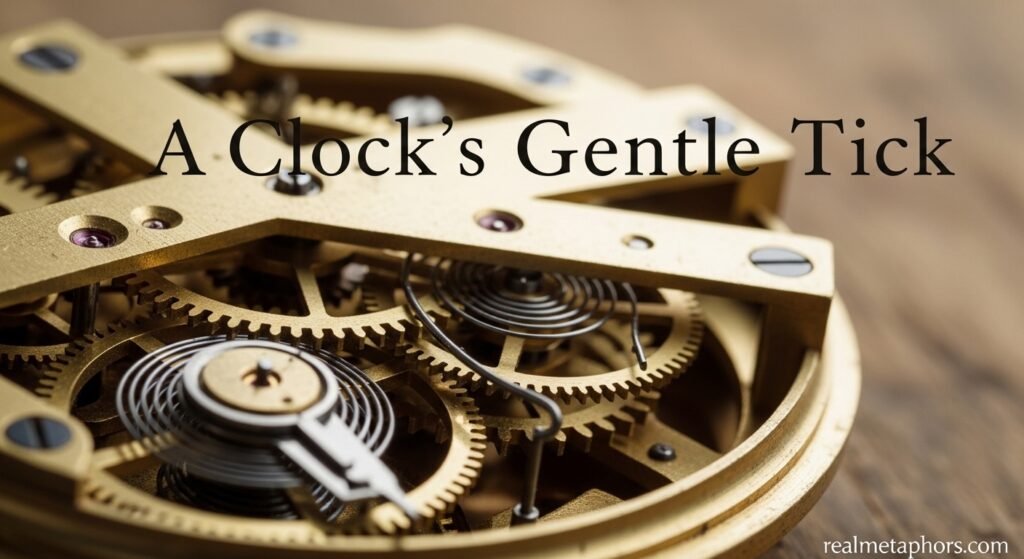
Aging can be felt in each heartbeat or tick of the clock—a steady reminder of passing moments. The rhythm is comforting to some, melancholic to others. Example: “He listened to the ticking of the old mantel clock, each beat a whisper of the years behind him.” Alternative: “Time danced quietly around her, like the subtle hands of a clock brushing against the face of a century.”
5. Sand Through an Hourglass
Life slips like sand through an hourglass—each grain a memory or experience, fleeting yet essential. Exercise: Write a short story or journal entry using sand imagery to describe your favorite memory.
6. Waves on the Shore
Years roll in like ocean waves: some gentle, some relentless, leaving traces of shells and stones on the beach of memory. Example: “Each wrinkle was a wave washed ashore, a story etched in the sand.”
7. A Weathered Painting
Aging is like a painting exposed to the sun and rain—the colors fade, edges fray, but the essence and beauty deepen. Example: “His hands were a weathered canvas, each line a brushstroke of a life fully lived.” Tip: Writers can use this metaphor to show both vulnerability and beauty simultaneously.
8. A Patina on Bronze
Time leaves a patina—a greenish-blue sheen that turns ordinary metal into something valuable, historic, and beautiful. Example: “Her patience had acquired a patina, a quiet beauty that shimmered under the right light.” Exercise: Take an object in your room and imagine it aging gracefully. Write a short paragraph describing its transformation.
9. A Quilt of Memories
Years stitch themselves together like a patchwork quilt, each square a vivid memory, experience, or relationship. Example: “His life was a quilt of laughter, tears, and late-night conversations, warm against the chill of solitude.”
10. Silver Threads in Hair
Each gray hair is a silver thread, a medal for resilience, challenges overcome, and wisdom gained. Example: “Her hair glimmered like moonlight on calm water, each strand a story untold.”
11. Wrinkles as Rivers on Skin
Lines on our face are rivers carved by joy, sorrow, and endurance. They show movement, depth, and experience. Exercise: Describe your own face or a loved one’s face using rivers, streams, or flowing water imagery.
12. A Lantern Dimming
Aging can feel like a lantern slowly dimming—not extinguished, but glowing differently, in subtler, warmer tones. Example: “His presence was quieter now, a dimming lantern illuminating memory and wisdom.”
13. Fading Ink
Memories and energy sometimes fade like ink on paper, leaving faint but meaningful traces. Example: “Her recollections were like ink fading on an old letter, still legible but softened with time.”
14. A Book with Dog-Eared Pages
Life stories accumulate like books with pages turned, folded, and marked by hands that care and forget alike. Tip: Use this metaphor for social media captions reflecting nostalgia or gratitude.
15. A Worn Path
Habits, routines, and personal growth create worn paths—evidence of journeys walked many times over. Exercise: Reflect on your life path. Write a paragraph describing your “worn trail” using natural or urban imagery.
- Metaphor Mapping: Take a stage of your life—childhood, adolescence, adulthood, or elderhood—and list five metaphors that describe it. Share or journal your reflections.
- Sensory Storytelling: Choose one metaphor (river, tree, lantern) and describe it using at least three senses: sight, sound, and touch.
- Creative Social Media: Turn one metaphor into a short post, quote, or caption. Example: “Like waves on the shore, time leaves treasures on the beaches of memory.”
Bonus Tips for Using Aging Metaphors
- In writing, metaphors create layers of meaning and evoke emotion.
- On social media, they craft memorable captions or poetic reflections.
- In daily conversation, they help express empathy, nostalgia, and respect for life’s journey.
Conclusion
Aging is inevitable, but our understanding and expression of it can transform the experience. Metaphors turn wrinkles, gray hairs, and quiet evenings into rich stories, revealing beauty in impermanence. By seeing aging as seasons, rivers, lanterns, and quilts, we celebrate the resilience, wisdom, and emotional depth that each year adds to our lives.
Time may pass, but with metaphor, every moment becomes a canvas—painted, etched, and illuminated by the subtle poetry of living.
FAQs
1. What is a metaphor, and why is it useful for describing aging?
A metaphor is a figure of speech that compares one thing to another to explain it vividly. Using metaphors for aging helps us express complex feelings—like the passage of time, wisdom, and loss—in a relatable and poetic way. For example, saying “her hair was silver threads” paints a clearer emotional picture than simply stating “she is old.”
2. Can metaphors for aging be positive, or are they only about decline?
Metaphors can be both positive and realistic. Aging isn’t only about physical changes—it also represents growth, wisdom, and beauty. Metaphors like “a quilt of memories” or “a river carving stone” highlight resilience, depth, and life experience.
3. How can I create my own metaphors for aging?
Start by thinking of nature, objects, or experiences that change over time—trees, rivers, seasons, lanterns, or books. Compare those changes to aspects of human life. Ask yourself: “If my life were a river, what kind of river would it be?” Practice writing one sentence for each comparison.
4. Can metaphors for aging be used in writing, social media, or daily conversation?
Absolutely! In writing, metaphors add emotion and imagery. On social media, they make captions memorable and relatable. In conversation, they help express empathy, nostalgia, or admiration for life’s journey. For example: “Time has given you a lantern that glows warmly with wisdom.”
5. Are metaphors for aging universal across cultures?
Many cultures use metaphors for aging, though imagery may differ. Some focus on seasons, like autumn and winter; others use natural elements, like rivers or mountains. Metaphors often reflect respect for elders and the beauty of life experience, even if the specific images vary.