One afternoon, Ali left a bowl of milk on the kitchen table. He forgot about it. Hours later, he came back, took a sip, and made a terrible face. “Ugh! This is bad,” he said.
But what did he really mean?
Did he mean evil? Dangerous? Rotten? Unpleasant? Disappointing?
The word “bad” is simple, but it covers many meanings. Something bad can be harmful, unfair, poor quality, unlucky, or morally wrong. Because the word is so broad, we often use metaphors for bad to describe it in a more colorful and powerful way.
Instead of saying, “That day was bad,” we might say, “That day was a storm that never stopped.”
In this article, you’ll discover 25+ easy metaphors for bad, with clear explanations, examples, and creative ideas to help you use them in stories, conversations, and social media.
1. A Rotten Apple
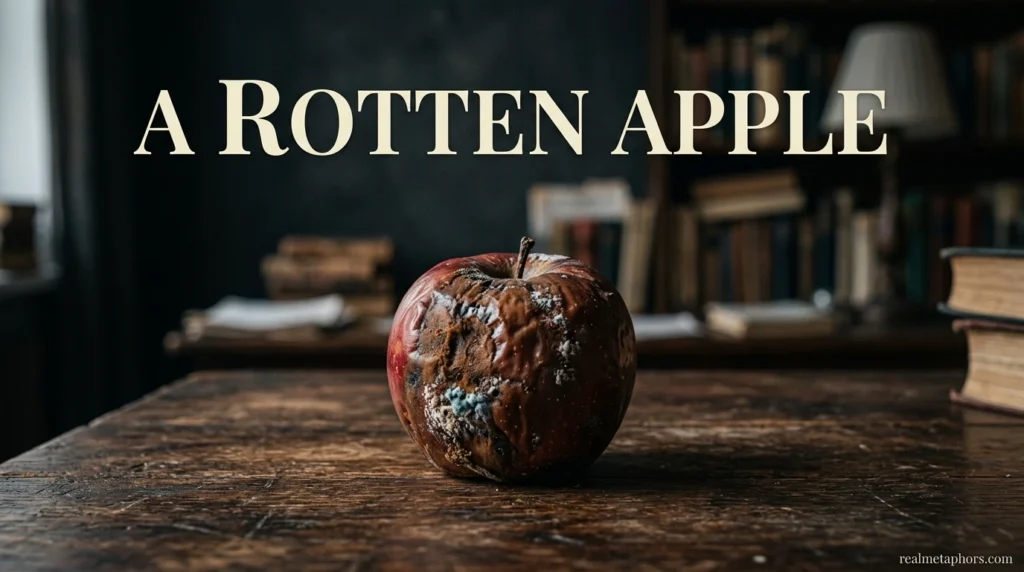
Meaning: Something that looks fine but is spoiled inside.
Example: “That deal was a rotten apple—it sounded good, but it ruined everything.”
Another way to say it: “It was spoiled from the start.”
Imagine this: You bite into a shiny red apple, but inside it’s brown and mushy. Disappointment hits instantly.
2. A Dark Cloud
Meaning: Something that brings sadness or trouble.
Example: “His bad mood was a dark cloud over the party.”
Another way to say it: “He ruined the atmosphere.”
Picture this: Bright sunshine suddenly covered by thick gray clouds.
3. A Poisoned Well
Meaning: A situation that has been ruined and can’t be trusted.
Example: “After the lies, their friendship became a poisoned well.”
Another way: “Trust was destroyed.”
Imagine: Clear water that now makes you sick if you drink it.
4. A Sinking Ship
Meaning: Something failing quickly.
Example: “The company felt like a sinking ship.”
Another way: “It was falling apart.”
Visual: Water rushing in while people panic.
5. A Broken Mirror
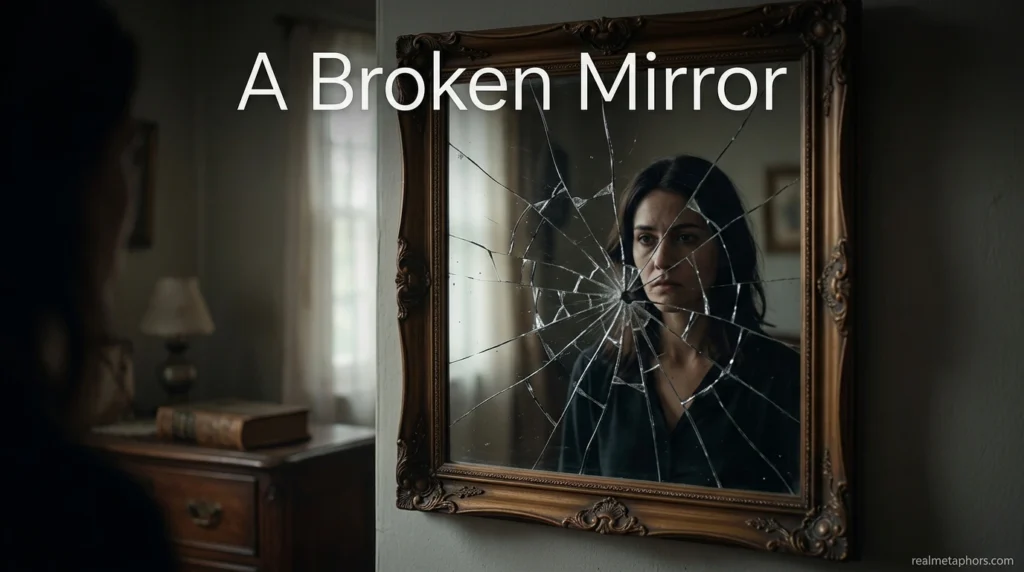
Meaning: Something damaged beyond easy repair.
Example: “Their relationship was a broken mirror.”
Another way: “It was shattered.”
Detail: Even if you glue it back together, cracks remain.
6. A Storm Without Warning
Meaning: Sudden trouble.
Example: “The bad news hit like a storm without warning.”
Another way: “It came out of nowhere.”
Imagine: Thunder crashing when the sky was clear minutes ago.
7. A Black Hole
Meaning: Something that destroys or consumes everything.
Example: “Debt became a black hole for his savings.”
Another way: “It swallowed all his money.”
Visual: Everything pulled into darkness.
8. A Rusty Knife
Meaning: Something harmful and unpleasant.
Example: “Her words were a rusty knife.”
Another way: “Her words hurt deeply.”
Detail: Not just sharp—but dirty and painful.
9. A Dead End Street
Meaning: No progress or solution.
Example: “The investigation hit a dead end street.”
Another way: “There was no way forward.”
Picture: A narrow road that suddenly stops.
10. A Cracked Foundation
Meaning: Weak support from the beginning.
Example: “Their plan was built on a cracked foundation.”
Another way: “It was flawed from the start.”
Imagine: A house slowly tilting.
11. A Snake in the Grass
Meaning: Hidden danger or betrayal.
Example: “He turned out to be a snake in the grass.”
Another way: “He betrayed us.”
Visual: Something dangerous hiding quietly.
12. A House of Cards
Meaning: Easily destroyed.
Example: “His lies were a house of cards.”
Another way: “They could collapse anytime.”
Detail: One small breath makes it fall.
13. A Burning Bridge
Meaning: Destroying relationships permanently.
Example: “Quitting like that was burning a bridge.”
Another way: “He ended things badly.”
Picture: Flames cutting off your path back.
14. A Sour Taste
Meaning: A lingering bad feeling.
Example: “The argument left a sour taste.”
Another way: “It felt unpleasant afterward.”
Imagine: Bitter lemon lingering on your tongue.
15. A Heavy Chain
Meaning: Something that limits freedom.
Example: “Guilt was a heavy chain around her heart.”
Another way: “She felt trapped.”
Visual: Cold metal pulling you down.
16. A Thorn in the Side
Meaning: Constant annoyance.
Example: “The broken printer is a thorn in my side.”
Another way: “It’s very irritating.”
Detail: Small—but always painful.
17. A Shadow That Follows
Meaning: Ongoing trouble.
Example: “Fear was a shadow that followed him.”
Another way: “He couldn’t escape it.”
Imagine: Darkness behind you wherever you go.
18. A Leaking Boat
Meaning: Slowly worsening situation.
Example: “Ignoring the problem is like sitting in a leaking boat.”
Another way: “It will get worse.”
Picture: Drip… drip… until it sinks.
19. A Bitter Pill
Meaning: Hard truth.
Example: “Failure was a bitter pill to swallow.”
Another way: “It was difficult to accept.”
Imagine: Medicine that tastes awful but is necessary.
20. A Wildfire
Meaning: Rapidly spreading trouble.
Example: “Rumors spread like wildfire.”
Another way: “They spread very fast.”
Visual: Flames racing across dry grass.
21. A Frozen Heart
Meaning: Lack of kindness.
Example: “His reaction showed a frozen heart.”
Another way: “He showed no sympathy.”
Picture: Ice instead of warmth.
22. A Cracked Bell
Meaning: Something that sounds wrong or unpleasant.
Example: “The speech felt like a cracked bell—loud but painful.”
Another way: “It was unpleasant to hear.”
Detail: A ringing noise that hurts your ears.
23. A Dirty Window
Meaning: Poor perspective.
Example: “Anger is a dirty window.”
Another way: “It clouds judgment.”
Visual: Smudges blocking your view.
24. A Time Bomb
Meaning: Hidden danger waiting to explode.
Example: “That secret is a time bomb.”
Another way: “It will cause future trouble.”
Picture: A ticking clock.
25. A Wilted Flower
Meaning: Something once good that has faded.
Example: “Their love became a wilted flower.”
Another way: “It slowly died.”
Visual: Petals falling softly.
26. A Broken Compass
Meaning: Loss of direction.
Example: “Without guidance, he felt like a broken compass.”
Another way: “He felt lost.”
Imagine: The needle spinning wildly.
Fun Exercises to Practice Metaphors for Bad
1. Finish the Sentence
- “My Monday morning felt like ______.”
- “That exam result was a ______.”
2. Turn “Bad” Into a Picture
Pick a situation:
- A bad date
- A bad meal
- A bad decision
Describe it without using the word “bad.” Use images instead.
3. Social Media Challenge
Write a short caption using one metaphor:
- “Today was a sinking ship 🚢”
- “My motivation is a wilted flower today.”
4. Story Starter
Write a short story beginning with:
“The day started as sunshine, but by noon it was a wildfire.”
Tips for Using Metaphors for Bad
- Be specific. Choose images people understand.
- Match the emotion. A “wildfire” feels intense. A “thorn” feels small but annoying.
- Don’t overuse them. One strong metaphor is better than five weak ones.
- Keep it relatable. Everyday objects work best.
Metaphors make your writing stronger. They turn plain sentences into memorable pictures.
FAQs
1. What does “bad” really mean?
“Bad” can mean harmful, poor quality, unpleasant, unlucky, or morally wrong. Context matters.
2. Why use metaphors instead of just saying “bad”?
Metaphors create images. They help readers feel and understand more deeply.
3. How do I create my own metaphor?
Ask: “What does this feel like?” Then compare it to something visual, like weather, objects, or nature.
4. Can metaphors be simple?
Yes! Simple ones like “a dark cloud” are powerful and easy to understand.
5. What’s a common mistake when using metaphors?
Mixing too many images. For example: “It was a sinking wildfire of broken glass.” That’s confusing.
6. Are metaphors good for social media?
Absolutely. Short, strong metaphors make captions more interesting and emotional.
7. Can I use metaphors in daily conversation?
Yes! Saying “This project is a house of cards” sounds clearer than just “This is bad.”
Final Thoughts
The word “bad” is small. But its meanings are big.
When you use these metaphors for bad, you don’t just describe a problem—you paint a picture. And pictures stay in people’s minds long after simple words fade away.