In a quiet village, there stood a tree at the edge of a dusty road. Its trunk was thick and rough, its branches stretched wide, and its leaves whispered stories whenever the wind passed by. People said that tree had seen everything—storms, sunshine, laughter, and tears.
One day, a young boy asked his grandfather, “Why is this tree so special?”
The grandfather smiled and said, “Because it is old—not just in years, but in stories.”
The boy looked confused. “What does old really mean?”
The grandfather replied, “Old is not just about age. It is about time, experience, and change.”
This is where metaphors for old help us. They turn a simple word like old into something rich, visual, and meaningful.
1. Old as the Hills
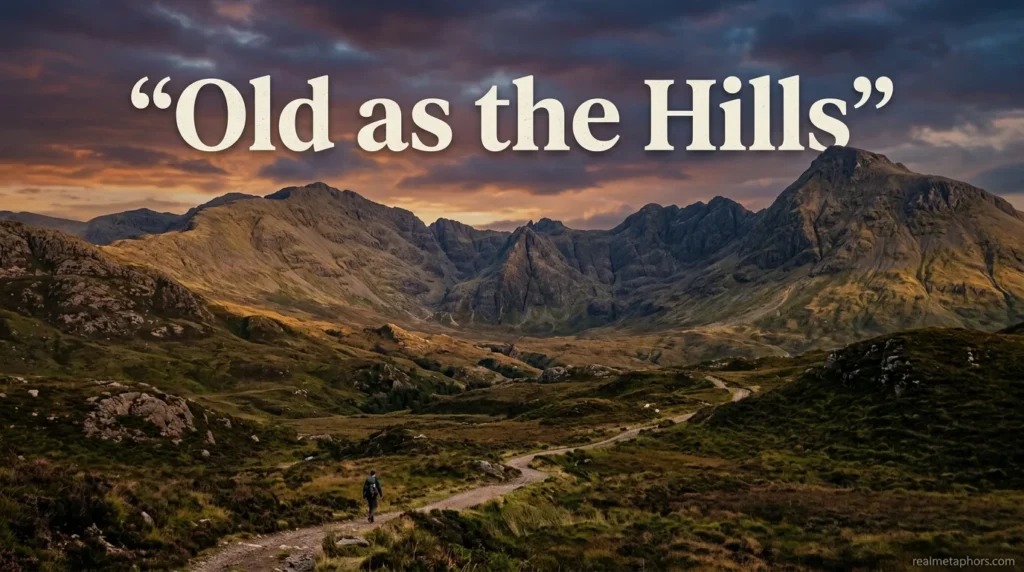
Meaning: Very, very old
Example: “That story is as old as the hills.”
Another way: Ancient
Imagine: Giant hills that have stood for thousands of years.
2. A Rusty Machine
Meaning: Something worn out with age
Example: “My bike is like a rusty machine now.”
Another way: Worn-out
Imagine: A machine creaking and struggling to move.
3. A Faded Photograph
Meaning: Something aged and losing clarity
Example: “Her memories felt like a faded photograph.”
Another way: Worn by time
Imagine: Colors slowly disappearing from an old picture.
4. A Cracked Wall
Meaning: Showing signs of aging and damage
Example: “The building stood like a cracked wall.”
Another way: Aging and weak
Imagine: Lines spreading across a wall over time.
5. A Dusty Book
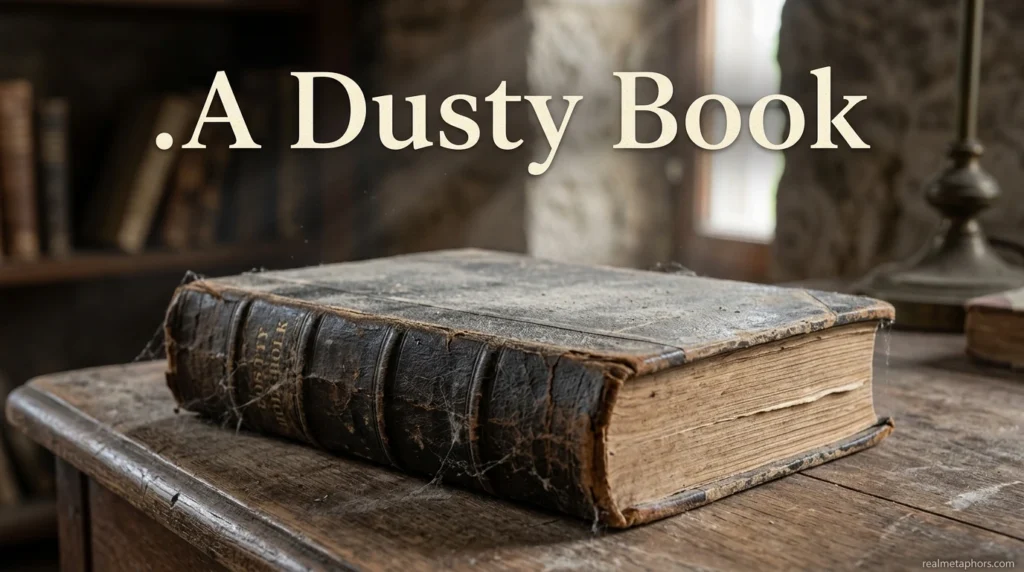
Meaning: Something forgotten or very old
Example: “That tradition is like a dusty book.”
Another way: Long forgotten
Imagine: A book covered in dust on a shelf.
6. A Wrinkled Map
Meaning: Full of experience and history
Example: “His face was a wrinkled map of life.”
Another way: Full of stories
Imagine: Lines showing journeys and paths.
7. A Slow Clock
Meaning: Moving slowly due to age
Example: “He walked like a slow clock ticking.”
Another way: Sluggish
Imagine: A clock ticking slowly, almost stopping.
8. A Weathered Stone
Meaning: Strong but shaped by time
Example: “She stood like a weathered stone.”
Another way: Aged but strong
Imagine: A rock shaped by wind and rain.
9. A Broken Record
Meaning: Repeating old things
Example: “He sounds like a broken record.”
Another way: Repetitive
Imagine: A record stuck on the same line.
10. A Dying Candle
Meaning: Near the end of life or time
Example: “His energy was like a dying candle.”
Another way: Fading away
Imagine: A candle slowly losing its flame.
11. A Worn-Out Shoe
Meaning: Used too much and old
Example: “These shoes are like worn-out shoes.”
Another way: Used up
Imagine: Torn and tired footwear.
12. A Silent Library
Meaning: Full of old knowledge and history
Example: “His mind was a silent library.”
Another way: Full of wisdom
Imagine: Shelves filled with ancient books.
13. A Dry Leaf
Meaning: Fragile and aged
Example: “His hands felt like dry leaves.”
Another way: Fragile
Imagine: A leaf that crumbles easily.
14. A Forgotten Song
Meaning: Something once loved but now old
Example: “Their love became a forgotten song.”
Another way: Lost in time
Imagine: Music no one remembers.
15. A Long Road
Meaning: A life full of years and experiences
Example: “He has walked a long road.”
Another way: Lived a long life
Imagine: A road stretching far into the distance.
16. A Setting Sun
Meaning: The later stage of life
Example: “He is in the setting sun of life.”
Another way: Near old age
Imagine: The sun slowly going down.
17. A Rusted Key
Meaning: Something old and rarely used
Example: “The lock opened with a rusted key.”
Another way: Outdated
Imagine: A key covered in rust.
18. A Fragile Glass
Meaning: Weak due to age
Example: “She felt like fragile glass.”
Another way: Easily broken
Imagine: Glass that can shatter anytime.
19. A Slow River
Meaning: Moving gently with time
Example: “His days flowed like a slow river.”
Another way: Calm and aged
Imagine: Water moving slowly.
20. A Timeworn Path
Meaning: Something used for a long time
Example: “They followed a timeworn path.”
Another way: Well-used
Imagine: A path shaped by many footsteps.
21. A Fading Star
Meaning: Losing brightness with age
Example: “He was once famous, now a fading star.”
Another way: Losing shine
Imagine: A star slowly dimming.
22. A Tired Clock
Meaning: Old and not working properly
Example: “That watch is a tired clock.”
Another way: Not functioning well
Imagine: A clock that stops often.
23. A Weak Bridge
Meaning: Aging and unstable
Example: “His body felt like a weak bridge.”
Another way: Unstable
Imagine: A bridge shaking under weight.
24. A Dusty Road
Meaning: Something from the past
Example: “Those memories are a dusty road.”
Another way: Long gone
Imagine: An old road no one uses.
25. A Bent Tree
Meaning: Aged but still standing
Example: “He stood like a bent tree.”
Another way: Old but strong
Imagine: A tree leaning but not falling.
26. A Quiet Echo
Meaning: A memory from long ago
Example: “Her voice was a quiet echo.”
Another way: Fading memory
Imagine: A sound slowly disappearing.
27. A Crumbling Castle
Meaning: Once strong, now aging
Example: “The house looked like a crumbling castle.”
Another way: Falling apart
Imagine: Stones breaking down.
Fun Exercises & Practice
1. Fill in the Blank
Complete this:
“Old age feels like ________ because ________.”
2. Create Your Own Metaphor
Think about something old around you (a phone, a building, a person). Now compare it to:
- Nature (tree, river, mountain)
- Objects (clock, book, candle)
3. Social Media Challenge
Write a short post:
“Today I feel like a ________.”
4. Mini Story Exercise
Write 4–5 lines about an old person or object using at least 2 metaphors.
Tips for Using Metaphors for Old
- ✔ Use simple and familiar comparisons
- ✔ Think about time, change, and experience
- ✔ Avoid using too many metaphors together
- ✔ Match your metaphor with emotion (respect, sadness, wisdom)
- ✔ Practice by observing real life
FAQs
1. What are metaphors for old?
They are creative ways to describe age using comparisons.
2. Why use metaphors for old?
They make writing more interesting and meaningful.
3. Can metaphors show respect?
Yes, metaphors like “a wise old tree” show respect and honor.
4. How do I create a metaphor?
Think about what “old” feels like and compare it to something similar.
5. What is a common mistake?
Using confusing or mixed metaphors.
6. Are metaphors only for writing?
No, you can use them in speech, social media, and daily life.
7. Can metaphors be positive and negative?
Yes, they can show wisdom or weakness depending on usage.
8. What’s the difference between metaphor and simile?
A metaphor says something is something else. A simile uses “like” or “as.”
Conclusion
The word old may seem simple, but it carries deep meaning—time, memory, strength, and change. With metaphors, we can turn this simple word into something powerful and beautiful.