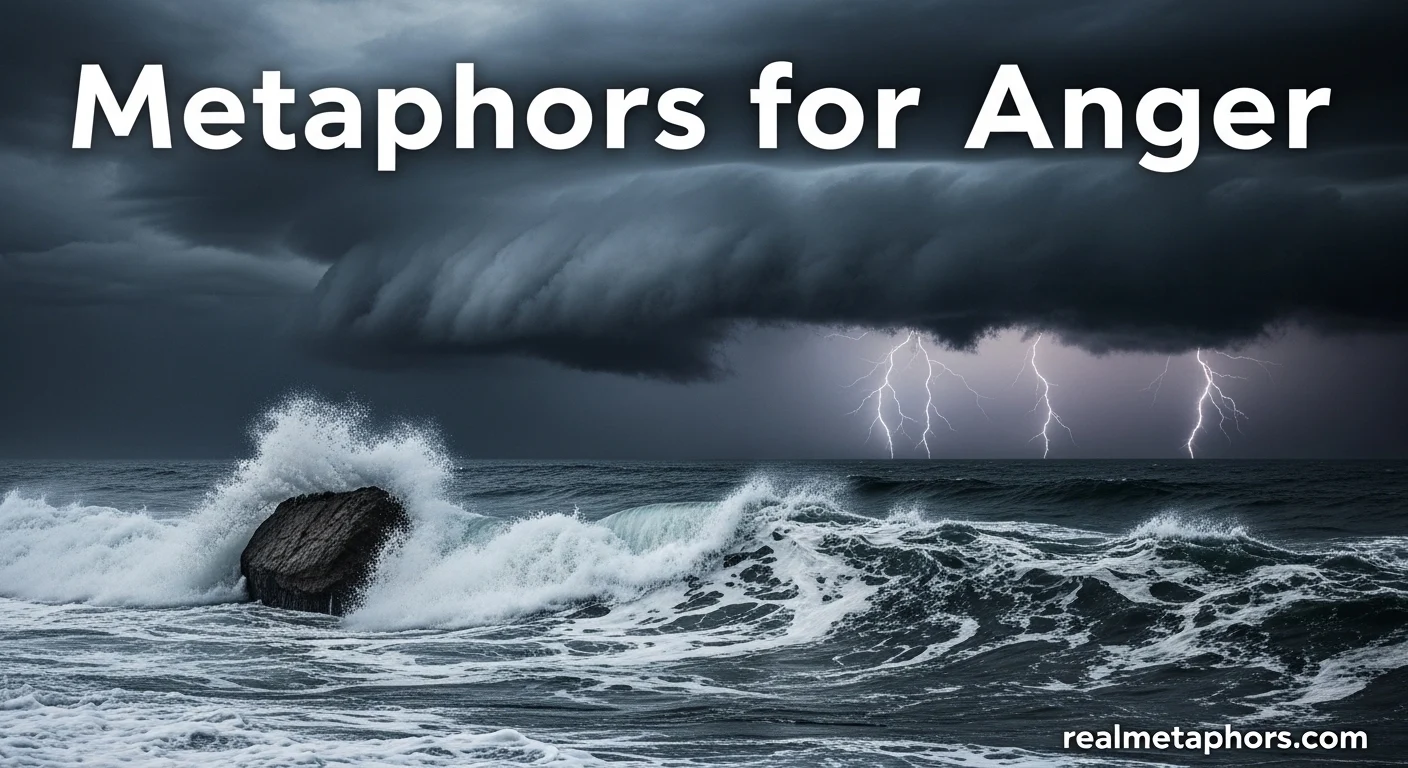
Anger isn’t just a fleeting emotion—it’s a force that can shake our minds, ripple through our bodies, and sometimes erupt like a volcano we never saw coming. Picture this: you’re sitting in traffic, stuck behind a car that refuses to move, and suddenly your chest tightens, your hands clench the steering wheel, and the heat of frustration spreads like wildfire. That feeling—so intense, yet so familiar—can be captured, explored, and expressed through metaphors.
Metaphors allow us to translate complex emotions into vivid imagery. They give language color, texture, and depth, letting others not just understand what we feel, but experience it alongside us. By exploring metaphors for anger, we gain insight into our emotional landscape, develop empathy, and even enhance our creative writing, storytelling, or daily communication.
Here, we present 25+ powerful metaphors for anger, each with explanations, examples, and creative expansions to help you connect deeply with the emotion and express it more richly.
1. Anger as a Volcano
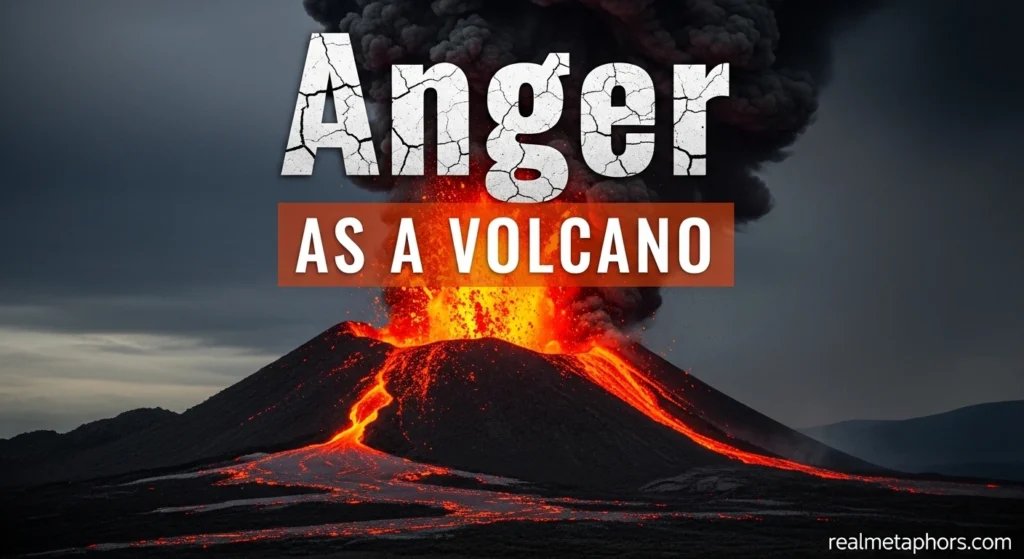
Meaning: Explosive, sudden, and potentially destructive.
Example: “His anger erupted like a volcano, scorching everyone in its path.”
Creative Expansion: “Molten rage bubbling under the surface, waiting for a tremor to set it free.”
Sensory Detail: Feel the heat, the trembling, the unstoppable force.
2. Anger as a Storm
Meaning: Chaotic, turbulent, and encompassing.
Example: “She was a storm, her fury raining down on anyone who crossed her.”
Creative Expansion: Thunderclaps of resentment, lightning strikes of indignation.
3. Anger as a Wildfire
Meaning: Spreads quickly and uncontrollably.
Example: “The argument started small, but anger spread like wildfire.”
Creative Expansion: Sparks of irritation catching dry fuel of old grudges.
4. Anger as Boiling Water
Meaning: Intense heat beneath the surface, ready to overflow.
Example: “His temper was like a pot of boiling water, ready to spill over at any moment.”
Creative Expansion: Steam hissing, bubbles surging—pressure mounting until release.
5. Anger as a Caged Lion
Meaning: Fierce energy restrained but threatening.
Example: “Her anger was a caged lion, pacing restlessly and baring its teeth.”
Creative Expansion: Muscles taut, eyes blazing—an unstoppable predator in waiting.
6. Anger as a Raging River
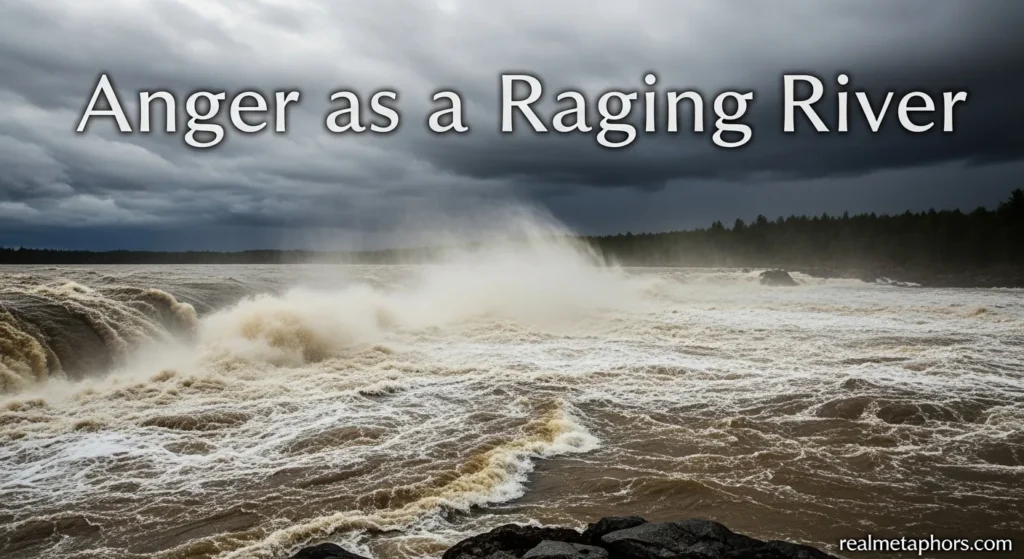
Meaning: Unstoppable flow, sweeping everything along.
Example: “His words came out like a raging river, drowning logic and patience alike.”
Creative Expansion: Whitewater rapids of frustration, crashing against reason.
7. Anger as Smoldering Ash
Meaning: Quiet but persistent, capable of flaring up.
Example: “Her resentment was smoldering ash, waiting for a breeze to ignite it.”
Creative Expansion: Soft grey embers hiding deep heat and potential fire.
8. Anger as a Thunderclap
Meaning: Sudden, startling, and powerful.
Example: “He shouted, a thunderclap of fury shaking the room.”
Creative Expansion: Shockwaves of rage reverberating long after the moment.
9. Anger as a Tornado
Meaning: Whirlwind destruction, leaving chaos behind.
Example: “Her anger twisted through the office like a tornado.”
Creative Expansion: Papers, words, and tempers swirling in unstoppable rotation.
10. Anger as Poison
Meaning: Toxic, corrosive, and harmful to self and others.
Example: “Every bitter word dripped with poison, corroding friendships.”
Creative Expansion: Venom slowly spreading through veins, leaving a sting that lingers.
11. Anger as Fireworks
Meaning: Brief but intense bursts of energy.
Example: “He exploded like fireworks, loud and dazzling, then gone.”
Creative Expansion: Crackling sparks, vibrant hues, moments of brilliance before darkness.
12. Anger as a Hammer
Meaning: Forceful and direct, often hitting hard.
Example: “She struck back with words like a hammer against fragile glass.”
Creative Expansion: Each blow precise, echoing, leaving marks behind.
13. Anger as a Boomerang
Meaning: Returns to the source if unchecked.
Example: “His insults came back to him like a boomerang fueled by anger.”
Creative Expansion: Unintended consequences circling back, striking unexpectedly.
14. Anger as a Caged Storm
Meaning: Contained fury threatening to burst.
Example: “He sat quietly, a caged storm waiting to break free.”
Creative Expansion: Lightning flickers behind clenched eyes, wind swirling in tense silence.
15. Anger as a Volcano of Words
Meaning: Overflow of verbal rage.
Example: “She unleashed a volcano of words, scorching everyone with sharp truths.”
Creative Expansion: Lava of accusations flowing, consuming reason in its path.
16. Anger as Ice
Meaning: Cold, hard, unfeeling rage.
Example: “He gave her a look of anger as sharp as ice.”
Creative Expansion: Frost creeping over warmth, silence cutting deeper than fire.
17. Anger as a Cannon
Meaning: Explosive, sudden, and far-reaching.
Example: “Her fury blasted like a cannon, echoing across the hall.”
Creative Expansion: Smoke, rumble, and the aftershock of impact.
18. Anger as a Snake
Meaning: Sly, sudden, and potentially venomous.
Example: “His anger struck like a snake, swift and surprising.”
Creative Expansion: Coiling, waiting, striking with precision.
19. Anger as a Rolling Boulder
Meaning: Heavy, unstoppable, and destructive.
Example: “His rage rolled through the room like a boulder tumbling downhill.”
Creative Expansion: Crushing obstacles, unstoppable, gathering momentum.
20. Anger as a Thunderstorm in Summer
Meaning: Intense but temporary, refreshing after release.
Example: “Her anger was a summer thunderstorm, fierce but brief.”
Creative Expansion: Lightning illuminating truths, rain washing away tension.
21. Anger as a Blazing Sun
Meaning: Overpowering, inescapable, relentless.
Example: “His anger shone like a blazing sun, scorching everyone nearby.”
Creative Expansion: Heat radiating, light revealing hidden tensions.
22. Anger as a Sharp Blade
Meaning: Cutting, precise, and painful.
Example: “Her sarcasm cut through him like a sharp blade of anger.”
Creative Expansion: Edges glinting, slicing through conversation and calm.
23. Anger as a Hurricane
Meaning: All-consuming and destructive force of nature.
Example: “He entered the room like a hurricane, leaving chaos in his wake.”
Creative Expansion: Winds howling, debris of reason scattered everywhere.
24. Anger as a Pressure Cooker
Meaning: Builds quietly under containment until release.
Example: “He kept his frustrations hidden, a pressure cooker ready to blow.”
Creative Expansion: Steam whistling, metal rattling, eventual explosive release.
25. Anger as a Lightning Bolt
Meaning: Sudden, shocking, illuminating.
Example: “A flash of anger struck her mind like a lightning bolt.”
Creative Expansion: Electric clarity, momentary brilliance, immediate consequence.
26. Anger as a Tight Knot
Meaning: Confined tension causing discomfort and strain.
Example: “Her anger twisted inside her like a tight knot in her stomach.”
Creative Expansion: Winding, uncomfortable, pulling at nerves until unraveled.
Reader Engagement: Exercises and Reflection Prompts
- Metaphor Mapping: Choose one emotion you feel today and create 3 different metaphors for it. Try to use sensory or nature-inspired imagery.
- Story Expansion: Pick one metaphor for anger from above and write a short story (100–200 words) incorporating it.
- Daily Dialogue: When experiencing irritation, describe it metaphorically instead of literally: e.g., “I feel like a kettle about to whistle.”
- Creative Twist: Combine two metaphors to create a new one, such as “a lightning bolt trapped in ice.”
Bonus Tips:
- Use these metaphors in social media captions to make posts more vivid and relatable.
- In storytelling, metaphors can show rather than tell emotions.
- Practice describing ordinary frustrations metaphorically to improve emotional literacy.
FAQs
What is a metaphor for anger?
A metaphor for anger is a figurative way to describe anger by comparing it to something else, like a storm or a volcano, to make the emotion more vivid and relatable.
Why are metaphors useful for understanding anger?
They help articulate complex feelings, improve emotional awareness, and make communication more engaging and expressive.
How do metaphors improve communication and creativity?
Metaphors paint images with words, allowing readers or listeners to experience emotions, sparking imagination, empathy, and memorable storytelling.
How can I create effective metaphors for anger?
Observe your emotions, think in terms of nature, objects, or animals, and consider the intensity, suddenness, or persistence of the anger.
What common mistakes should I avoid when using metaphors for anger?
Avoid clichés, overcomplicated comparisons, or mixing too many images at once, which can confuse readers.
Can metaphors be used in daily life or writing?
Yes! They enhance dialogue, social media posts, personal journals, poetry, and storytelling, making descriptions more relatable and expressive.
How do I expand a single metaphor creatively?
Add sensory details, emotions, or narrative context. For example, a “caged lion” can become “a caged lion pacing under the fading sun, growling at shadows of past wrongs.”
Conclusion
Metaphors turn raw emotions into vivid experiences. By exploring anger through these 25+ metaphors, you gain not only expressive tools but also deeper emotional insight, creative inspiration, and the power to communicate your feelings in ways that resonate. Next time anger rises, don’t just feel it—name it, shape it, and let it speak in metaphors.