Have you ever felt that prickly sensation when someone’s words or actions gnaw at your patience like tiny relentless ants? Maybe it’s the coworker who hums off-key during meetings, the neighbor who revs their motorcycle at dawn, or that persistent buzzing of a mosquito in the quiet of night. Annoyance is universal, yet elusive—hard to describe in plain words. That’s where metaphors step in, transforming abstract irritation into vivid, relatable imagery. By exploring metaphors for “annoying,” we not only understand our feelings better but also enrich our language, deepen creative expression, and connect more vividly with others.
Metaphors shape emotions into stories, turning the invisible tug of irritation into tangible, shared experiences. Here, we present 25+ metaphors for annoying, each with explanations, examples, and creative expansions to spark imagination, writing, and daily communication.
1. A Mosquito at Midnight
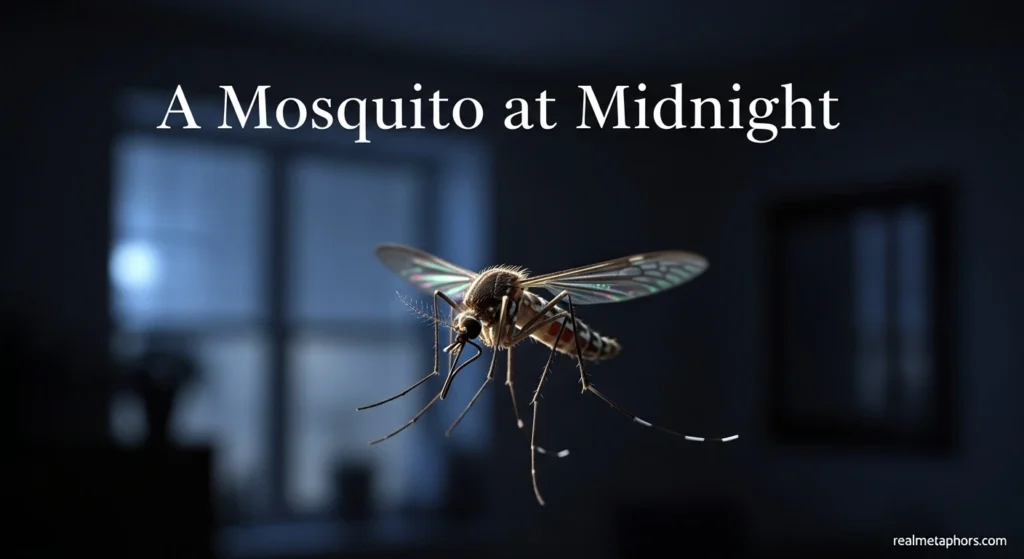
Meaning: A small irritation that is impossible to ignore.
Example: “His constant tapping was like a mosquito at midnight—tiny but maddening.”
Creative Twist: Compare different “mosquitoes”—some buzz quietly in the background, some bite hard and leave lasting marks.
Sensory Detail: The high-pitched whine slicing through silence creates tension and impatience.
2. Chalk on a Blackboard
Meaning: Sharp, grating annoyance.
Example: “Her voice scraping through the phone was like chalk on a blackboard.”
Alternative: Screeching fingernails, squeaky hinges.
Emotional Detail: Conveys both discomfort and instinctive cringing.
3. A Stone in Your Shoe
Meaning: Persistent discomfort that follows you everywhere.
Example: “That unresolved issue at work is a stone in your shoe you can’t ignore.”
Scenario: A minor but constant frustration that distracts from daily life.
Creative Expansion: Could be literal in storytelling—imagine a character limping through life with invisible stones.
4. Static on a Radio
Meaning: Continuous, unwanted interference.
Example: “His unnecessary comments were static on my otherwise peaceful day.”
Alternative: Background noise, digital glitches.
Sensory Detail: Fuzzy, crackling, irritating to the ears; symbolizes disruption of clarity.
5. Sand in the Gears

Meaning: Something small that causes major disruption.
Example: “Her passive-aggressive remarks were like sand in the gears of the project.”
Creative Twist: Compare with other mechanical failures—grinding, jamming, or stuttering motion.
6. An Itchy Sweater
Meaning: Discomfort you cannot ignore, often minor but persistent.
Example: “Every time he corrected me unnecessarily, it was like an itchy sweater against my skin.”
Alternative: Scratchy tag in a shirt, prickly wool.
Emotional Detail: Highlights irritation with a tactile, physical metaphor.
7. A Siren in the Library
Meaning: A loud, disruptive annoyance in a calm or inappropriate space.
Example: “Her loud laughter was a siren in the library, impossible to ignore.”
Scenario: Situations where someone’s behavior stands out unpleasantly.
Creative Twist: Compare with other “intrusions” into peace.
8. A Pebble in Your Boot
Meaning: Small, nagging irritations in everyday life.
Example: “His constant questioning was a pebble in my boot during the meeting.”
Alternative: Similar to stone in your shoe; emphasizes minor yet persistent.
9. Static Cling
Meaning: Stubborn, lingering annoyance that won’t let go.
Example: “Her repeated excuses stuck to me like static cling.”
Creative Expansion: Use sticky or clingy imagery for relational annoyances.
10. A Car Alarm at Dawn
Meaning: Abrupt, unavoidable irritation.
Example: “The unexpected phone calls were a car alarm at dawn, shocking me awake from peace.”
Sensory Detail: Jarring, disruptive, impossible to ignore.
11. Mosquito Bites on a Hot Day
Meaning: Minor annoyances that become unbearable over time.
Example: “Her sarcasm was mosquito bites on a hot day—small, persistent, and maddening.”
Emotional Detail: Heightens sense of discomfort, heat, and frustration.
12. Nails on a Chalkboard
Meaning: Grating, almost physically painful irritation.
Example: “His whining sounded like nails on a chalkboard to everyone in the room.”
Alternative: Screeching, shrill, or piercing sounds in literature.
13. A Pebble in Your Pocket
Meaning: Constant mental irritation or distraction.
Example: “The unresolved email was a pebble in my pocket all morning.”
Scenario: Everyday minor annoyances that nag at focus.
14. A Clogged Drain
Meaning: Slow-building annoyance that disrupts flow.
Example: “Bureaucracy is a clogged drain for anyone trying to get simple things done.”
Creative Twist: Compare to emotional bottlenecks or creative blockages.
15. Repeated Alarm Buzzes
Meaning: Persistent irritation that interrupts concentration.
Example: “His repeated reminders were like alarm buzzes I couldn’t snooze.”
Sensory Detail: Emphasizes urgency and relentless disturbance.
16. Flies at a Picnic
Meaning: Small, unavoidable irritations that spoil enjoyment.
Example: “Interruptions during the party were like flies at a picnic.”
Alternative: Bugs in general; minor intrusions in enjoyable experiences.
17. A Ringing Phone During a Movie
Meaning: Unexpected annoyance breaking focus or peace.
Example: “Her text messages were a ringing phone during a movie, pulling attention away.”
Creative Expansion: Use interruptions in storytelling to symbolize frustration.
18. Static Electricity Shock
Meaning: Sudden, sharp irritation.
Example: “His rude comment was a static electricity shock, jarring and unwelcome.”
Sensory Detail: Quick, surprising, and unpleasant.
19. A Leaky Faucet
Meaning: Constant, dripping annoyance that wears you down.
Example: “Her petty complaints were a leaky faucet I couldn’t shut off.”
Emotional Detail: Evokes slow erosion of patience.
20. A Screeching Brake
Meaning: Abrupt, attention-grabbing irritation.
Example: “The editor’s critique was a screeching brake in my creative flow.”
Alternative: Sudden halts, disruptions, or jarring events.
21. A Barking Dog at Midnight
Meaning: Persistent external annoyance disrupting rest.
Example: “Her loud arguments were a barking dog at midnight, stealing my peace.”
Scenario: Use animals to create relatable sensory metaphors.
22. A Pop-Up Ad You Can’t Close
Meaning: Annoying, unavoidable digital interruption.
Example: “The endless notifications were like pop-up ads you can’t close.”
Creative Twist: Perfect for modern, tech-related writing.
23. A Beeping Smoke Alarm
Meaning: Alarming, persistent irritant.
Example: “His constant nagging was a beeping smoke alarm I couldn’t ignore.”
Sensory Detail: Sharp, urgent, and persistent.
24. A Rumbling Stomach at a Meeting
Meaning: Inconvenient annoyance that draws attention.
Example: “His awkward jokes were a rumbling stomach at a meeting—uncontrollable and loud.”
Emotional Detail: Embarrassment and distraction rolled into one.
25. Paper Cuts
Meaning: Small, subtle irritations that sting sharply.
Example: “Her passive-aggressive emails were paper cuts—minor but painful.”
Creative Expansion: Use cumulative small annoyances for narrative tension.
26. Wind Whistling Through Cracks
Meaning: Continuous, nagging discomfort.
Example: “His persistent questions were wind whistling through cracks in my focus.”
Sensory Detail: Cold, subtle, persistent; hard to ignore over time.
Reader Engagement: Interactive Metaphor Exercises
- Create Your Own: Think of one person, situation, or thing that annoys you. Write 3 metaphors to describe the experience.
- Story Expansion: Take one of your metaphors and build a short story or scenario around it.
- Swap Sensory Details: Replace auditory metaphors with visual, tactile, or emotional ones. Example: “buzzing mosquito” → “shadows creeping along the wall.”
- Daily Practice: Track small annoyances during your day and describe them metaphorically in a journal.
Bonus Tips: Use these metaphors to spice up writing, social media captions, or everyday conversations. They turn mundane complaints into memorable, vivid expressions that can entertain, explain, or persuade.
Conclusion
Annoyance is universal, but expressing it creatively transforms frustration into insight, humor, and connection. Through these 25+ metaphors, you’ve gained a toolkit to describe irritation vividly, relate to others more deeply, and sharpen your writing. Metaphors not only clarify feelings—they invite creativity, imagination, and storytelling into everyday life. The next time irritation strikes, think beyond plain words. Let a buzzing mosquito, a leaking faucet, or a chalkboard scratch convey your experience, and watch how language brings it to l
FAQs
1. What does “annoying” mean in everyday life?
Annoying describes something or someone that causes mild discomfort, irritation, or frustration. It can be physical, emotional, or situational.
2. Why use metaphors to describe annoyance?
Metaphors make invisible feelings visible. They allow readers or listeners to experience your irritation vividly, improving communication and creative expression.
3. How do metaphors improve writing or storytelling?
Metaphors add imagery, emotion, and relatability. They turn simple statements into memorable, expressive moments that connect with readers on a sensory and emotional level.
4. Can anyone create effective metaphors?
Yes! Start with experiences, sensations, or emotions. Compare them to familiar objects, animals, or situations. Practice by journaling and observing everyday life.
5. What are common mistakes when making metaphors?
- Using clichés excessively (“like a thorn in my side”)
- Overcomplicating comparisons
- Losing clarity by mixing unrelated images
6. How can metaphors for annoying be used in daily conversation?
They help express frustration humorously or creatively, describe situations vividly, or add flair to storytelling and social media posts.
7. Are metaphors for annoyance universal?
While feelings of irritation are universal, metaphors often draw from cultural or personal experiences, so they may vary across audiences.
8. How many metaphors should I use in writing?
Use as many as needed to convey clarity and emotion. Too few may under-express feelings; too many may overwhelm the reader. Balance is key.