
You sit by a rain-streaked window, the sound of droplets tapping against glass filling the quiet room. Outside, the world hustles and hums, yet inside, there is only you—and a vast, echoing silence. Being alone can feel like a pause in the endless symphony of life, a moment of reflection, or sometimes, a cavernous emptiness. Yet, understanding solitude doesn’t always come from straightforward words—it often emerges through the subtle power of metaphor.
Metaphors give shape to feelings that are difficult to describe. They allow us to explore the inner landscape of loneliness, introspection, and independence with creativity and depth. By comparing abstract experiences to tangible images, metaphors transform the intangible into something vivid, relatable, and deeply human. In this article, we dive into 25+ metaphors for being alone, each offering unique insight and creative inspiration.
1. A Ship Adrift on a Silent Sea
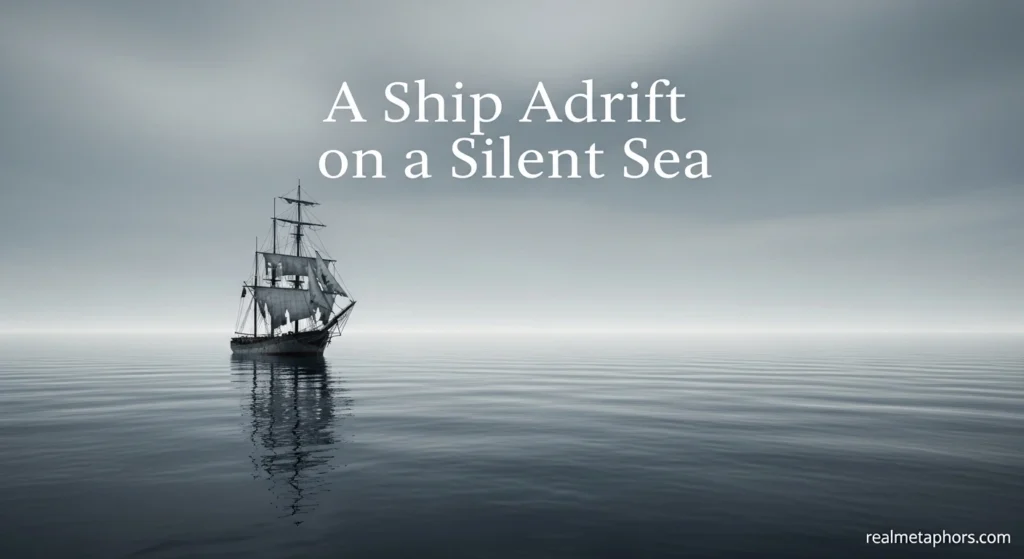
Meaning: Feeling untethered and navigating life without guidance.
Example: “She felt like a ship adrift on a silent sea, moving with the currents but unsure of the destination.” Creative Expansion: You could describe the moonlit waves, the gentle rocking, or the endless horizon to heighten the sensory experience.
2. A Candle Flickering in the Wind
Meaning: Fragile, vulnerable, yet still shining despite adversity.
Example: “Even alone, he was a candle flickering in the wind, casting warmth in a cold world.”
Creative Twist: Explore the scent of melted wax, the shadows it casts, or the sudden gust that threatens to extinguish it.
3. An Empty Stage After the Curtain Falls
Meaning: Isolation after attention, company, or activity has vanished.
Example: “She lingered like an empty stage after the curtain falls, memories of applause echoing in her mind.”
Expansion: Add sensory details—dim lights, the scent of old curtains, creaking floorboards.
4. A Single Leaf on a Vast Tree
Meaning: Feeling small, yet part of a larger whole.
Example: “He felt like a single leaf on a vast tree, swaying alone in the wind yet connected to unseen roots.” Creative Twist: Compare it to seasons changing, or the rustle of surrounding leaves, to evoke the cycles of life.
5. A Desert Under the Moonlight
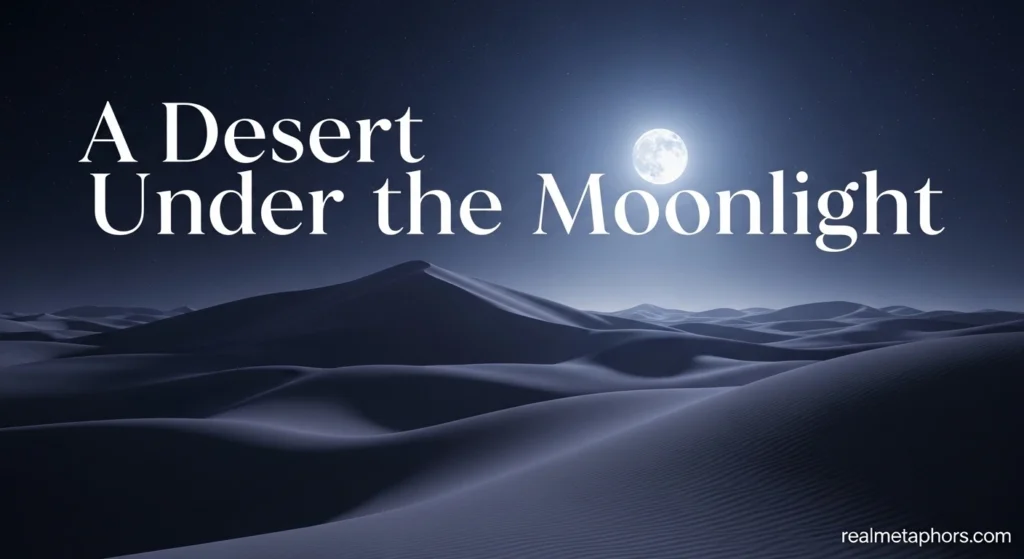
Meaning: Solitude can be stark, beautiful, and reflective.
Example: “Her thoughts spread out like a desert under the moonlight—vast, quiet, and endless.”
Expansion: Bring in sand textures, chill night air, or the twinkling of distant stars.
6. A Book Left Open on a Forgotten Shelf
Meaning: Stories, memories, or potential awaiting rediscovery.
Example: “He was a book left open on a forgotten shelf, pages yearning to be read.”
Creative Twist: Describe the scent of aged paper, the dust motes dancing in the sunlight, or the quiet anticipation of a reader.
7. A Lone Wolf Howling at the Sky
Meaning: Independence mixed with yearning for connection.
Example: “She wandered the city streets like a lone wolf howling at the sky, strong yet aching for companionship.”
Expansion: Consider soundscapes, moonlit settings, or pack memories to enrich the metaphor.
8. A Raindrop on a Windowpane
Meaning: A single perspective among countless experiences.
Example: “He felt like a raindrop on a windowpane, separate yet part of the same storm.”
Creative Twist: Highlight reflections, streaks, or the moment before it joins the larger pool.
9. A Star in an Empty Sky
Meaning: Alone, yet holding potential brilliance.
Example: “Even in a crowded city, she was a star in an empty sky—quiet, radiant, unnoticed.”
Expansion: Imagine constellations, the cold vacuum around, or the distance to other stars.
10. A Forgotten Melody
Meaning: Past joys or connections linger in memory.
Example: “His laughter now was a forgotten melody, echoing faintly in the corridors of solitude.”
Creative Twist: Add instruments, rhythm, or the haunting tone of recollection.
11. A Snowflake in the Blizzard
Meaning: Unique, fragile, easily lost in a crowd.
Example: “She was a snowflake in the blizzard, visible for a moment, then swept away.”
Expansion: Describe the cold, crunch of snow underfoot, or the swirl of the storm around them.
12. A Candle in an Abandoned House
Meaning: Light, hope, or presence in isolation.
Example: “He was a candle in an abandoned house, quietly fighting the darkness.”
Creative Twist: Play with shadows, empty rooms, and echoing silence.
13. A Seed Buried in Winter Soil
Meaning: Potential and growth awaiting the right conditions.
Example: “Her ideas were seeds buried in winter soil, waiting for spring’s warmth.”
Expansion: Describe damp earth, frost, or the patience required for growth.
14. A Lantern Floating Downstream
Meaning: Guidance, introspection, or surrendering to the flow.
Example: “He drifted like a lantern floating downstream, uncertain but moving forward.”
Creative Twist: Add glowing reflections on water, gentle currents, or night-time sounds.
15. A Deserted Train Station at Dawn
Meaning: Transitional solitude, waiting for connection or movement.
Example: “She lingered like a deserted train station at dawn, anticipating a journey yet to begin.”
Expansion: Include platform smells, distant whistles, or morning fog.
16. A Broken Compass in the Wilderness
Meaning: Feeling directionless and alone.
Example: “He felt like a broken compass in the wilderness, lost but still moving.”
Creative Twist: Contrast with stars, trees, and unmarked paths for dramatic effect.
17. A Kite Without a String
Meaning: Free, unanchored, but susceptible to chaos.
Example: “She soared like a kite without a string, untethered yet vulnerable to every gust.”
Expansion: Play with wind textures, sunlight, and the sensation of floating.
18. An Echo in a Canyon
Meaning: Solitude amplifies thoughts and feelings.
Example: “His doubts bounced around like an echo in a canyon, returning louder each time.”
Creative Twist: Emphasize sound, silence, and the surrounding landscape.
19. A Lighthouse on a Stormy Coast
Meaning: Stability and purpose amid isolation.
Example: “She stood like a lighthouse on a stormy coast, guiding herself even when alone.”
Expansion: Waves crashing, salt spray, or the comforting beam slicing through fog.
20. A Single Thread in a Tapestry
Meaning: Alone yet part of a larger whole.
Example: “He was a single thread in a tapestry, unnoticed but essential to the pattern.”
Creative Twist: Include texture, color, and the intricate weaving of life’s connections.
21. A Shadow Under the Noon Sun
Meaning: Present but unseen, quiet and overlooked.
Example: “She moved through the crowd like a shadow under the noon sun, visible yet unnoticed.” Expansion: Play with heat, light, and subtle movements.
22. A Stone at the Edge of a River
Meaning: Stability in isolation, observing change around.
Example: “He sat like a stone at the edge of a river, steady while the world flowed past.”
Creative Twist: Incorporate water sounds, moss textures, or sunlight reflecting off ripples.
23. A Cloud Drifting Across the Sky
Meaning: Free-floating, transient, or introspective.
Example: “She wandered the streets like a cloud drifting across the sky, untethered and invisible.”
Expansion: Describe shapes, winds, or shadows on the earth below.
24. A Locked Door Without a Key
Meaning: Barriers to connection or self-discovery.
Example: “He felt like a locked door without a key, isolated and inaccessible.”
Creative Twist: Add textures, sounds of creaking hinges, or imagined rooms beyond.
25. A Candle in a Storm
Meaning: Vulnerable yet resilient, shining despite adversity.
Example: “Even in chaos, she burned like a candle in a storm, refusing to be extinguished.”
Expansion: Emphasize wind, rain, and the warmth of persistence.
26. A Distant Island on a Foggy Horizon
Meaning: Solitude as a place of mystery or unattainable desire.
Example: “Her dreams were a distant island on a foggy horizon, visible yet unreachable.”
Creative Twist: Include waves, mist, and the longing gaze of the observer.
Reader Engagement: Exercises & Prompts
- Metaphor Creation Challenge: Choose a personal moment of solitude. Write 3 metaphors describing it in unique ways.
- Sensory Exploration: Pick a metaphor from the list and add at least 3 sensory details (sight, sound, smell, touch, taste).
- Story Starter Prompt: Begin a short story with “I felt like…” and pick a metaphor to guide the narrative.
- Daily Reflection: Journal one metaphorical description of your alone time each day for a week.
Bonus Tips:
- Use metaphors in social media captions to evoke emotion.
- Add metaphors in storytelling to convey complex feelings simply.
- Experiment with combining multiple metaphors for poetic depth.
FAQs
1. What does it mean to be alone?
Being alone refers to the state of physical or emotional solitude, which can feel peaceful, reflective, or isolating depending on context.
2. Why are metaphors useful for understanding being alone?
Metaphors translate complex emotions into visual or tangible images, making it easier to communicate and process the experience.
3. How can metaphors improve creativity?
They encourage abstract thinking, enrich storytelling, and help explore emotions from new perspectives.
4. Can metaphors help in daily communication?
Yes! They make explanations more vivid, memorable, and emotionally engaging in conversations, writing, or social media.
5. What are common mistakes when creating metaphors?
Avoid clichés, overcomplicating images, or forcing unrelated comparisons that confuse the reader.
6. How do I create effective metaphors?
Observe emotions and environments, look for unusual comparisons, and ensure the metaphor feels relatable and resonant.
7. Can metaphors change the way we perceive solitude?
Absolutely. They can transform solitude from loneliness into a space for reflection, growth, and creative exploration.
8. How can I use these metaphors in writing or journaling?
Use them as story starters, descriptive imagery, personal reflections, or to deepen emotional resonance in poetry and prose.