Imagine walking a tightrope stretched high above a bustling city street. The wind teases your hair, the crowd’s murmur drifts up from below, and every step requires perfect focus. In life, balance often feels exactly like that—an intricate dance between forces, priorities, and emotions. Understanding balance is not just about knowing what it is—it’s about feeling it, and metaphors give us that bridge between the abstract and the tangible.
Metaphors transform ideas into vivid experiences. By exploring metaphors for balance, we can illuminate this essential life skill in ways that resonate emotionally, spark creativity, and inspire reflection. Whether you’re writing, reflecting, or simply seeking perspective, metaphors can deepen your understanding of balance and help communicate it in memorable, compelling ways.
Here’s a collection of 25+ powerful metaphors for balance, each explained, illustrated, and enriched with practical insights.
1. Walking a Tightrope
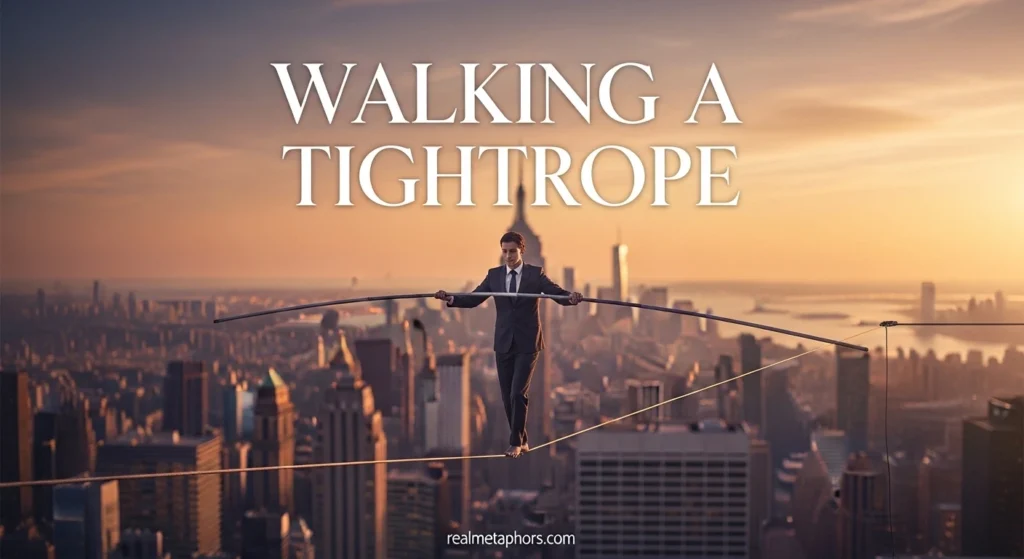
Meaning: Balancing delicate aspects of life with precision.
Example: “Managing her career and family felt like walking a tightrope over an endless canyon.”
Creative Expansion: Picture juggling flaming torches while on a tightrope—heightening tension and skill. Sensory Detail: Hear the faint sway of the rope and the rush of wind; every step demands calm focus.
2. Juggling Balls
Meaning: Maintaining multiple responsibilities without dropping any.
Example: “He’s juggling work, studies, and parenting like a circus performer.”
Creative Expansion: Swap balls for candles, fragile eggs, or glowing orbs—symbolizing the stakes.
Emotional Detail: The thrill of keeping everything afloat mirrors real-life stress and achievement.
3. Balancing Scales
Meaning: Equally weighing decisions, options, or emotions.
Example: “She tried to balance her generosity and fairness like an ancient set of scales.”
Expansion: Imagine golden scales in a sunlit temple, emphasizing moral or emotional equilibrium.
Cultural Reference: Symbolic of justice and fairness in Western art and law.
4. Tides of the Ocean
Meaning: Balancing life’s highs and lows naturally.
Example: “His moods rose and fell like the ocean tides, teaching him patience.”
Sensory Detail: Salt in the air, waves lapping, the rhythmic push and pull of water mirrors emotional cycles.
5. A Pendulum
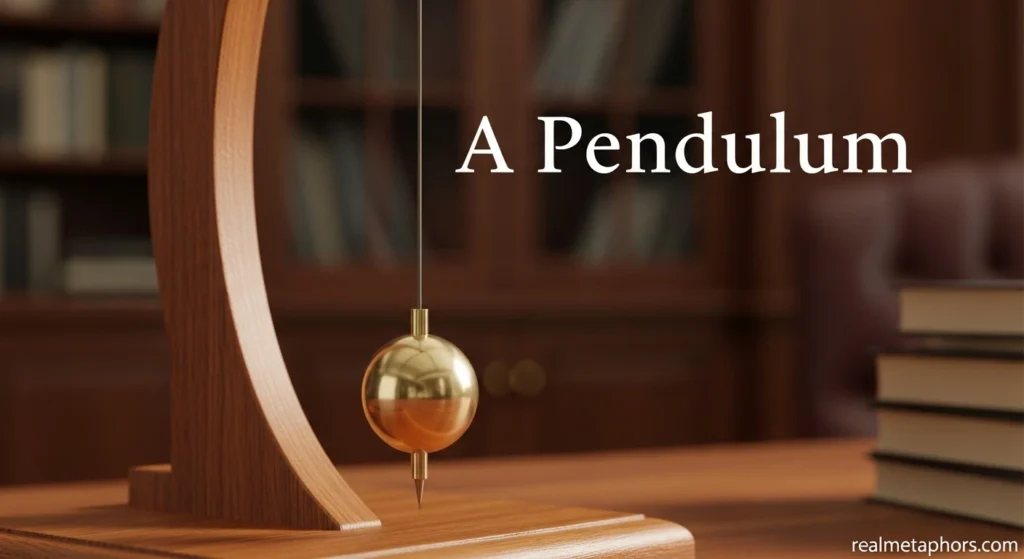
Meaning: Oscillating between extremes until settling in the middle.
Example: “Her energy swings between focus and exhaustion, like a pendulum in motion.”
Creative Expansion: Visualize a glowing pendulum casting shadows—light and dark in harmony.
6. Tightrope Walker Over Fire
Meaning: Balancing risk and caution simultaneously.
Example: “Negotiating the deal felt like a tightrope walk over fire—one misstep could burn everything.” Sensory Detail: The heat, crackle, and tension heighten the metaphorical stakes.
7. Wheel of a Bicycle
Meaning: Maintaining forward motion while staying upright.
Example: “Life’s challenges are like pedaling a bike—you fall without balance.”
Expansion: Imagine a bike gliding through sunlight-dappled paths, the wind marking progress and stability.
8. Dancing on a Beam
Meaning: Gracefully managing delicate situations.
Example: “She handled office politics like dancing on a narrow beam, avoiding missteps.”
Sensory Detail: Light footsteps, focused breath, the thrill of poise under pressure.
9. Tightrope Between Mountains
Meaning: Balancing ambition and caution in high-stakes situations.
Example: “His investment strategy felt like a tightrope walk between two towering cliffs.”
Emotional Detail: The height and risk create tension that mirrors real-world stakes.
10. A Spinning Plate
Meaning: Keeping multiple projects or responsibilities in motion.
Example: “She had six spinning plates at work and couldn’t afford to drop one.”
Creative Expansion: Add visual flair—each plate glowing a different color to represent priorities.
11. Balancing on Ice
Meaning: Navigating slippery situations with care.
Example: “Negotiating with them was like skating on thin ice—one wrong move could crack trust.”
Sensory Detail: Feel the cold bite and hear the creaking beneath fragile footing.
12. See-Saw
Meaning: Alternating attention or energy between two things.
Example: “Parenting and work were like a see-saw, each requiring effort to stay level.”
Creative Expansion: Imagine a playground at dusk, highlighting playful balance in life.
13. A Tightrope with a Balancing Pole
Meaning: Using tools or support to maintain equilibrium.
Example: “Meditation became her balancing pole for mental health tightrope walks.”
Sensory Detail: The pole’s weight and steadiness symbolize external aids or coping strategies.
14. Walking on a Ridge
Meaning: Navigating narrow paths between opposing forces.
Example: “Her career decisions felt like walking along a mountain ridge—beautiful but precarious.” Imaginative Detail: Gusts of wind, panoramic vistas, the thrill of calculated steps.
15. Two Hands Carrying a Tray
Meaning: Handling responsibilities evenly and carefully.
Example: “He balanced his team’s needs like carrying a tray full of fragile glasses.”
Creative Expansion: Each glass could symbolize a different project, relationship, or value.
16. Balancing a Book on Your Head
Meaning: Practicing discipline and poise.
Example: “She balanced her life like balancing a book on her head—steady and mindful.”
Sensory Detail: Slight movements, gentle corrections, emphasizing focus and awareness.
17. Tightrope Between Worlds
Meaning: Balancing conflicting identities, cultures, or expectations.
Example: “Immigrants often feel like they’re walking a tightrope between two worlds.”
Emotional Detail: Sense of tension, longing, and negotiation in everyday life.
18. A Kite in the Wind
Meaning: Maintaining control while allowing freedom.
Example: “Parenting teenagers is like flying a kite—control the string, but let the wind guide them.”
Sensory Detail: The pull and tug, sunlight and breeze, the delicate negotiation of forces.
19. Yin and Yang
Meaning: Harmonizing opposing forces for holistic balance.
Example: “She found balance in life by embracing the yin and yang of work and play.”
Cultural Reference: Rooted in Chinese philosophy, emphasizing duality and interconnectedness.
20. A Tightrope Over Fog
Meaning: Balancing without clarity or certainty.
Example: “Launching a startup felt like walking a tightrope over thick fog.”
Sensory Detail: Cold dampness, obscured paths, trust in instinct and skill.
21. Balancing on One Foot
Meaning: Maintaining focus and stability under challenge.
Example: “Negotiating contracts left him balancing on one foot, mentally and emotionally.”
Creative Expansion: Add imagery of yoga poses, showing controlled tension and calmness.
22. A Tree in Wind
Meaning: Flexibly maintaining balance amidst external pressures.
Example: “Like a tree in a storm, she bent but didn’t break under life’s challenges.”
Sensory Detail: Swaying branches, rustling leaves, grounding roots emphasize resilience.
23. Walking Between Raindrops
Meaning: Skillfully navigating tricky or chaotic situations.
Example: “He managed office politics by walking between raindrops, avoiding conflict.”
Imaginative Detail: Puddles and soft rain, the sense of agility and mindfulness.
24. A Tightrope on a Guitar String
Meaning: Balancing tension and harmony.
Example: “Her creative projects felt like tightrope walks on guitar strings—delicate yet musical.”
Sensory Detail: Hear the string’s vibration, feel the tension, imagine musical balance in motion.
25. Balancing on a Beam of Light
Meaning: Achieving clarity and focus amidst chaos.
Example: “Meditation made her feel like she was balancing on a beam of light above her worries.” Imaginative Detail: Sunlight, shimmer, ethereal glow—balance becomes transcendent and poetic.
26. A Tightrope of Time
Meaning: Juggling schedules and priorities with precision.
Example: “Parents often walk a tightrope of time, dividing hours between work and family.”
Creative Expansion: Each second becomes a step, emphasizing mindfulness in temporal balance.
Reader Engagement
- Creative Expansion: Take a common metaphor like “tightrope” and add sensory or emotional layers to make it vivid.
- Metaphor Mashup: Combine two metaphors for balance into one story or sentence (e.g., tightrope + kite).
- Daily Observation: Each day, notice a moment where balance appears. Describe it using one of these metaphors.
- Social Media Challenge: Share a metaphor for balance in 1 sentence and ask friends to interpret it.
Bonus Tips for Applying Metaphors:
- Use metaphors in storytelling to show internal conflict or growth.
- Craft social media captions that evoke emotion and imagination.
- Enhance personal expression or journaling to better reflect on your life.
- In content writing, metaphors make abstract ideas concrete and memorable.
FAQs
1. What does “balance” really mean in life?
Balance refers to the ability to maintain stability across emotional, mental, physical, or situational aspects, ensuring one area doesn’t overwhelm others.
2. Why are metaphors useful for understanding balance?
Metaphors make abstract concepts tangible, helping readers feel balance through imagery, story, or sensory experience.
3. How can metaphors improve communication?
Metaphors create vivid mental pictures, making ideas relatable, memorable, and emotionally resonant.
4. What are tips for creating effective metaphors?
- Relate them to sensory experiences or emotions.
- Connect them to familiar objects, actions, or stories.
- Keep them concise but evocative.
5. Common mistakes to avoid in metaphors
- Being too obscure or forced.
- Overloading with multiple ideas at once.
- Ignoring the audience’s frame of reference.
6. How can I use metaphors in writing or daily life?
- Journaling or reflection exercises
- Social media captions or blog content
- Storytelling, speeches, or presentations
- Teaching or explaining complex ideas
7. Can metaphors help with creativity?
Absolutely! They encourage lateral thinking, connect disparate ideas, and inspire imaginative expression.
8. How many metaphors should I use in a single piece?
Use enough to clarify or enrich your message without overwhelming the reader. Quality and clarity always outweigh quantity.
Metaphors are more than literary tools—they are lenses to see the delicate dance of life’s balance. By experimenting with these 25+ metaphors, you can transform abstract ideas into living images, enhance creativity, and communicate with depth and clarity.