Imagine you walk into a home you’ve never visited before. The smell of spices fills the air. Family photos line the walls. Shoes are left at the door. People greet each other in a language you don’t understand—but you can feel the warmth.
You may not know the rules yet, but you can sense something powerful at work.
That something is culture.
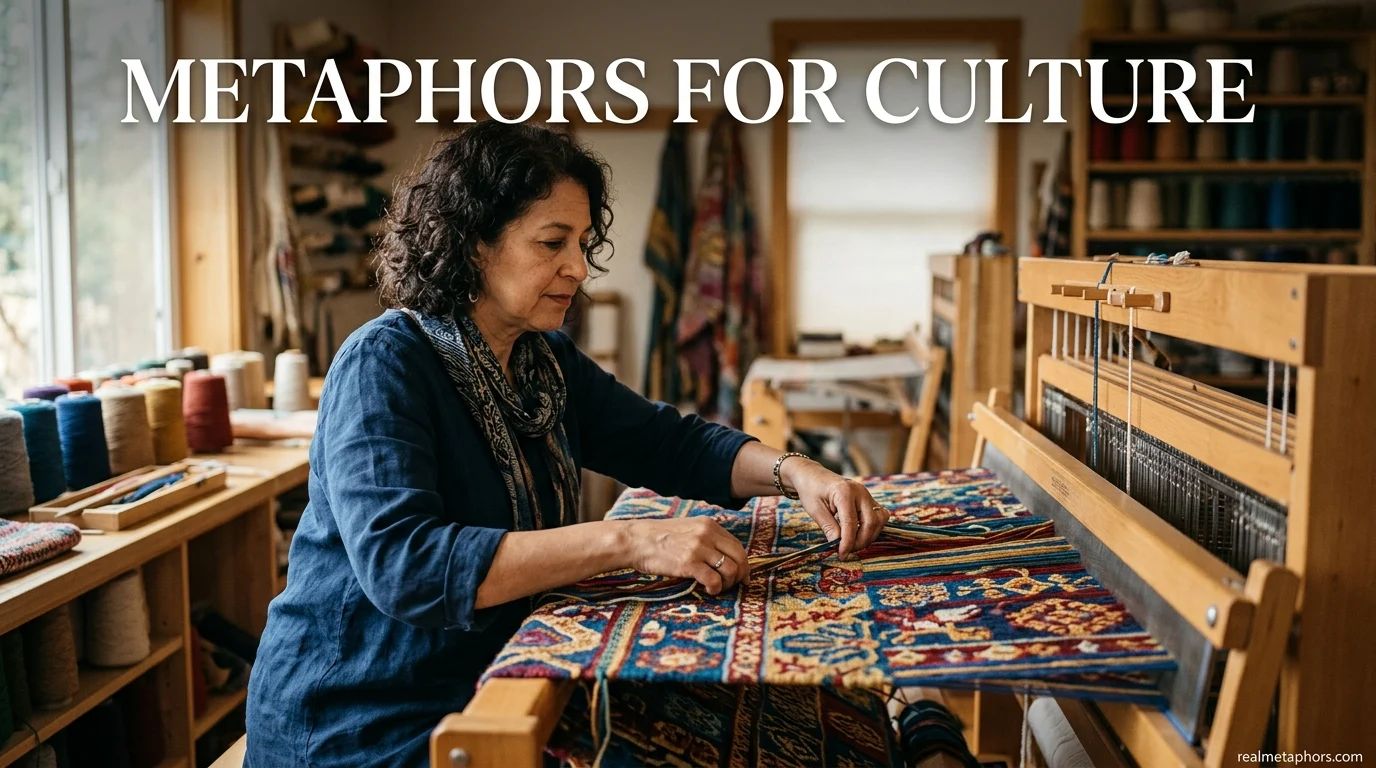
Culture is the shared way people live. It includes traditions, language, food, music, beliefs, values, and habits. It shapes how we think, speak, celebrate, and connect. But culture can be hard to explain directly.
That’s where metaphors for culture help.
Metaphors turn big ideas into pictures we can see and feel. Below are 25+ easy metaphors for culture, each explained with meaning, examples, and creative alternatives to help you use them in writing, stories, school, or daily conversation.
1. Culture Is a Tapestry
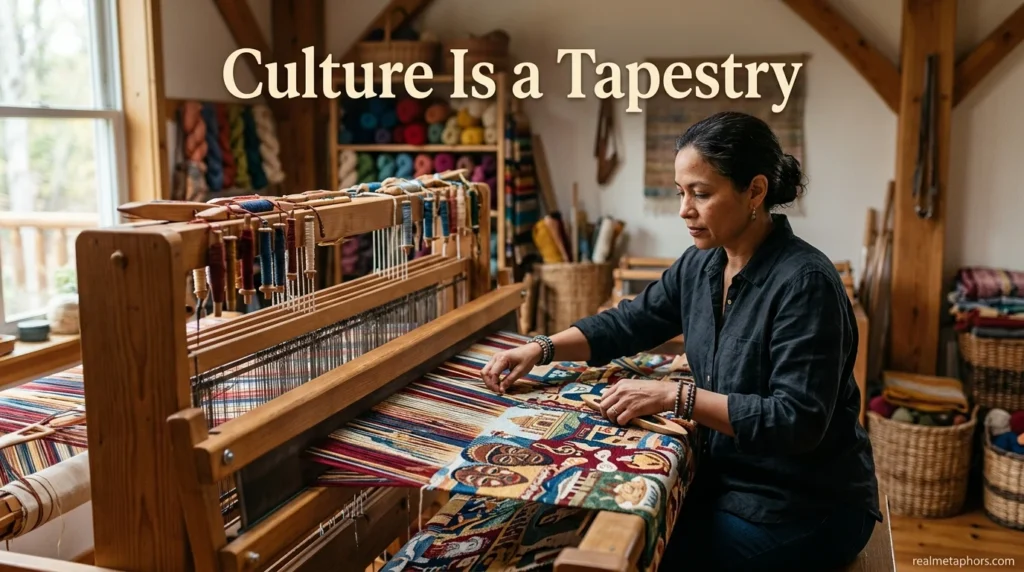
Meaning: Culture is woven from many threads—history, language, traditions, and people.
Example: “Pakistan’s culture is a rich tapestry of regional traditions.”
Another Way to Say It: Culture is beautifully woven together.
Imagine: Bright threads crossing each other to form a colorful design. Every thread matters.
2. Culture Is an Iceberg
Meaning: Most of culture is hidden beneath the surface.
This idea became popular through cultural models like those used in anthropology.
Example: “Food and clothing are visible parts of culture, but values are the iceberg beneath.”
Another Way to Say It: Culture has hidden depths.
Imagine: A massive iceberg where only the top is visible above the ocean.
3. Culture Is a Garden
Meaning: Culture grows, changes, and needs care.
Example: “A community must nurture its culture like a garden.”
Another Way to Say It: Culture blossoms over time.
Imagine: Different plants growing side by side, each needing sunlight and water.
4. Culture Is the Soil We Grow In
Meaning: Culture shapes who we become.
Example: “Children absorb the soil of their culture without realizing it.”
Another Way to Say It: Culture nurtures our roots.
Imagine: A tree growing strong because of rich soil underneath.
5. Culture Is a Mirror
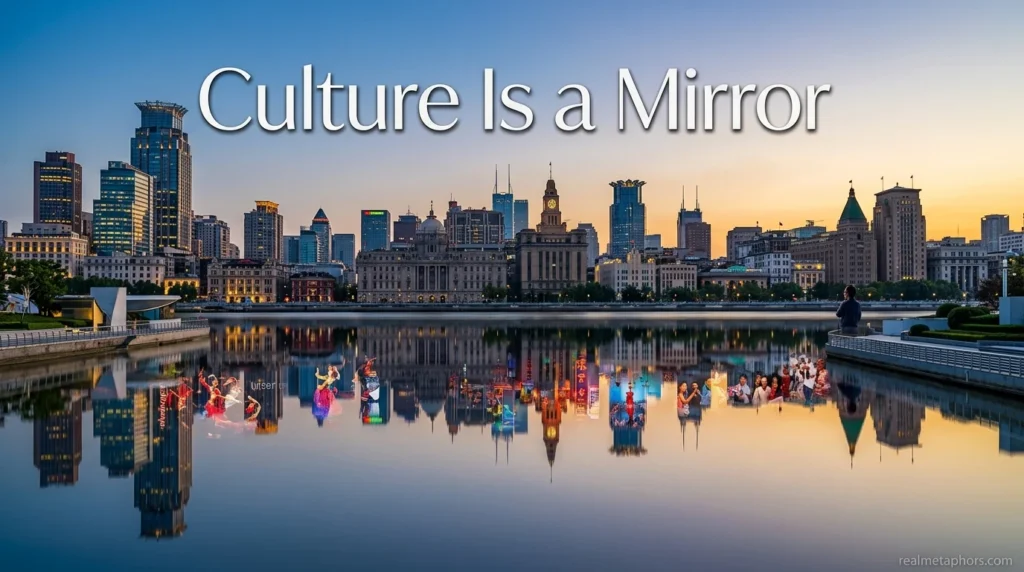
Meaning: Culture reflects who we are.
Example: “Music acts as a mirror of society’s culture.”
Another Way to Say It: Culture reflects our identity.
Imagine: Looking into a mirror and seeing traditions reflected back.
6. Culture Is a Bridge
Meaning: Culture connects people.
Think of global events like the Olympics, where culture builds understanding.
Example: “Food festivals build bridges between cultures.”
Another Way to Say It: Culture connects worlds.
Imagine: A bridge stretching over a river, linking two sides.
7. Culture Is a Lens
Meaning: Culture shapes how we see the world.
Example: “Our culture acts as a lens through which we interpret events.”
Another Way to Say It: Culture filters our perspective.
Imagine: Wearing glasses with colored lenses that tint everything you see.
8. Culture Is a River
Meaning: Culture flows and changes over time.
Example: “Language evolves as culture flows like a river.”
Another Way to Say It: Culture moves forward.
Imagine: A river carving new paths while carrying history downstream.
9. Culture Is a Compass
Meaning: Culture guides our decisions.
Example: “His moral compass was shaped by his culture.”
Another Way to Say It: Culture points the way.
Imagine: A compass needle always guiding north.
10. Culture Is a Blueprint
Meaning: Culture provides a design for living.
Example: “Family traditions serve as a blueprint for behavior.”
Another Way to Say It: Culture maps out life.
Imagine: An architect’s plan guiding how a house is built.
11. Culture Is a Mosaic
Meaning: Culture is made of many small pieces.
Example: “America is a mosaic of different cultures.”
Another Way to Say It: Culture is made of colorful fragments.
Imagine: Tiny tiles forming a big, beautiful picture.
12. Culture Is a Storybook
Meaning: Culture holds stories passed down through generations.
Example: “Folktales are pages in our cultural storybook.”
Another Way to Say It: Culture tells our story.
Imagine: An old book filled with family legends.
13. Culture Is a Living Organism
Meaning: Culture grows, adapts, and evolves.
Example: “Digital media has changed the organism of modern culture.”
Another Way to Say It: Culture is alive.
Imagine: A living body constantly growing and adapting.
14. Culture Is Music
Meaning: Culture has rhythm and harmony.
Think of global artists like Nusrat Fateh Ali Khan or BTS spreading culture through sound.
Example: “Music carries culture across borders.”
Another Way to Say It: Culture has a rhythm.
Imagine: A drumbeat echoing across generations.
15. Culture Is a Tree
Meaning: Culture has roots, branches, and growth.
Example: “Our traditions are the roots of our cultural tree.”
Another Way to Say It: Culture grows from deep roots.
Imagine: A massive tree with strong roots underground.
16. Culture Is a Map
Meaning: Culture shows where we come from.
Example: “Her accent is a map of her cultural journey.”
Another Way to Say It: Culture shows direction.
Imagine: A map filled with paths and landmarks.
17. Culture Is a Flame
Meaning: Culture keeps identity alive.
Example: “Grandparents keep the cultural flame burning.”
Another Way to Say It: Culture lights the way.
Imagine: A small flame passed from candle to candle.
18. Culture Is a Recipe
Meaning: Culture mixes ingredients from history and tradition.
Example: “Every region adds its own spice to the cultural recipe.”
Another Way to Say It: Culture is carefully blended.
Imagine: A pot simmering with flavors from different spices.
19. Culture Is a Language
Meaning: Culture communicates values without words.
Example: “Silence can speak volumes in some cultures.”
Another Way to Say It: Culture speaks silently.
Imagine: Body language saying more than speech.
20. Culture Is a Time Capsule
Meaning: Culture preserves the past.
Example: “Traditional clothing is a cultural time capsule.”
Another Way to Say It: Culture saves history.
Imagine: Opening a box filled with old memories.
21. Culture Is a Fabric
Meaning: Culture holds society together.
Example: “Respect is part of the social fabric.”
Another Way to Say It: Culture binds us.
Imagine: Threads tightly woven so nothing falls apart.
22. Culture Is a Playground
Meaning: Culture allows creativity and expression.
Example: “Street art turns the city into a cultural playground.”
Another Way to Say It: Culture invites creativity.
Imagine: Children freely exploring and inventing games.
23. Culture Is a Library
Meaning: Culture stores knowledge and wisdom.
Example: “Oral traditions act as a living cultural library.”
Another Way to Say It: Culture preserves wisdom.
Imagine: Shelves filled with stories and memories.
24. Culture Is a Shield
Meaning: Culture protects identity.
Example: “Language can act as a cultural shield.”
Another Way to Say It: Culture guards identity.
Imagine: A shield protecting something valuable.
25. Culture Is a Seed
Meaning: Culture spreads and grows in new places.
Example: “Migration plants seeds of culture worldwide.”
Another Way to Say It: Culture takes root elsewhere.
Imagine: A seed carried by wind and growing in new soil.
26. Culture Is a Puzzle
Meaning: Culture makes sense when all pieces fit together.
Example: “To understand a society, you must see the whole puzzle.”
Another Way to Say It: Culture is interconnected.
Imagine: Puzzle pieces snapping into place.
Fun Exercises and Writing Prompts
Exercise 1: Build Your Own Metaphor
Finish this sentence:
- “Culture is like ______ because ______.”
Example: Culture is like Wi-Fi because it connects everyone invisibly.
Exercise 2: Describe Your City
Write 5 metaphors for your local culture in Faisalabad or your hometown.
Social Media Challenge
Create a short Instagram caption: “Culture is a ______, and I carry it with me wherever I go.”
Creative Challenge
Combine two metaphors: “Culture is a river flowing through the roots of a tree.”
Tips for Using Metaphors for Culture
- Keep them simple.
- Make them visual.
- Connect them to real life.
- Avoid mixing too many metaphors at once.
- Use them in essays, speeches, storytelling, or social media posts.
FAQs
1. What is culture in simple words?
Culture is the shared way people live, think, celebrate, and connect.
2. Why use metaphors for culture?
Because culture is abstract. Metaphors make it easier to see and understand.
3. How do I create my own metaphor?
Compare culture to something familiar. Ask: “What does culture remind me of?”
4. What are common mistakes?
Mixing too many images or choosing confusing comparisons.
5. Can metaphors be used in academic writing?
Yes. Just keep them clear and relevant.
6. Are metaphors useful in daily life?
Absolutely. They help explain ideas, tell stories, and connect with others.
7. How do I know if a metaphor works?
If people understand it quickly and can picture it, it works.
Final Thoughts
Culture is powerful. It shapes who we are and how we connect. Using metaphors for culture helps us explain something complex in a simple, beautiful way.