The room was quiet, but tension filled the air like thunder before a storm. Two friends sat across from each other, avoiding eye contact. Words were sharp. Silence was heavier than noise. It felt like standing on two sides of a burning bridge.
Conflict is part of life. People fight, disagree, and struggle with ideas or emotions. Sometimes conflict is loud. Sometimes it is silent but strong.
That’s where metaphors help.
Metaphors make conflict easier to imagine. They turn anger, disagreement, and struggle into pictures our minds can see.
Now let’s explore 25+ simple metaphors for conflict.
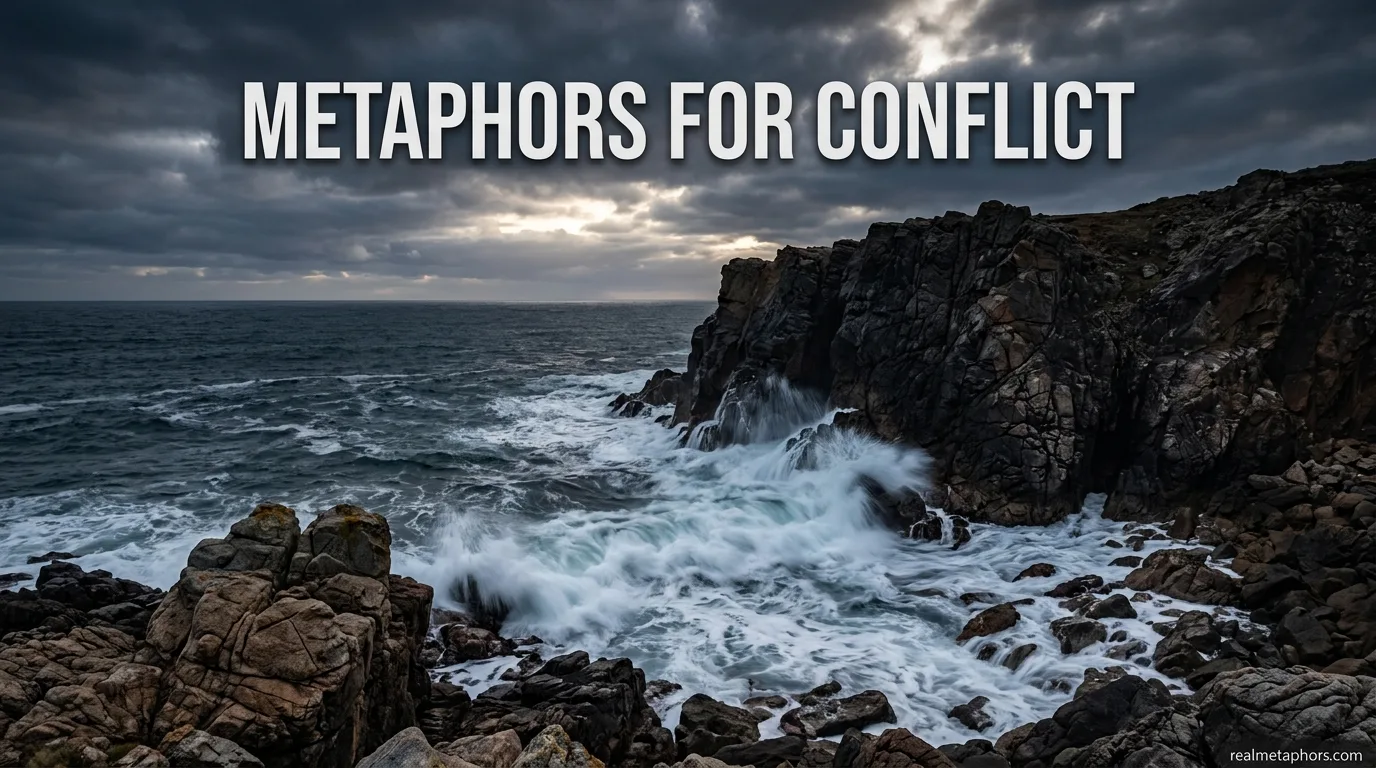
1. Conflict Is a Storm
Conflict can feel like a storm because it is noisy, messy, and powerful.
- Meaning: Arguments or problems are like bad weather.
- Example: “Their fight started like a sudden storm.”
- Another way to say it: Emotional hurricane, social thunder.
- Detail: Storms bring fear because you cannot control them.
2. Conflict Is Fire
Fire shows anger, passion, or strong disagreement.
- Meaning: Conflict spreads like burning flames.
- Example: “Their words added fuel to the fire.”
- Another way to say it: Burning rage.
- Detail: Fire can destroy but also show passion.
3. Conflict Is a Battlefield
Conflict sometimes feels like war.
- Meaning: Two sides are fighting for victory.
- Example: “The office became a battlefield of opinions.”
- Another way to say it: Zone of war.
- Detail: People may feel tired after emotional battles.
4. Conflict Is a Broken Bridge
This metaphor shows separation.
- Meaning: Communication is lost between people.
- Example: “Their argument broke the bridge between them.”
- Another way to say it: Emotional distance.
- Detail: Repairing the bridge means forgiveness.
5. Conflict Is a Locked Door
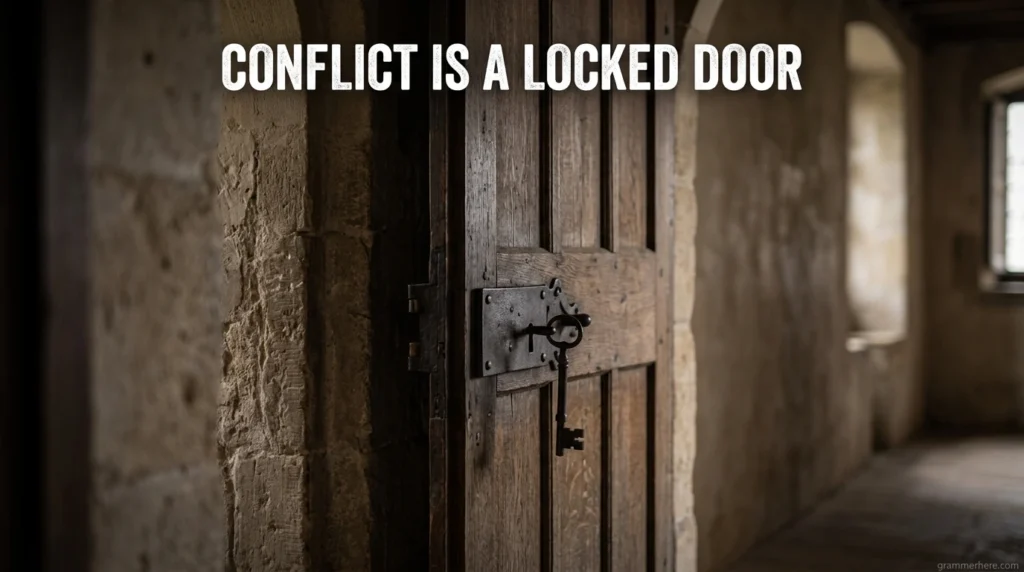
Conflict can block understanding.
- Meaning: No one can enter each other’s thoughts.
- Example: “Her anger was like a locked door.”
- Another way to say it: Closed heart.
- Detail: Patience can sometimes open the door.
6. Conflict Is a Sharp Knife
Words during conflict can hurt.
- Meaning: Arguments can feel painful.
- Example: “His words were a knife to my heart.”
- Another way to say it: Cutting words.
- Detail: Emotional wounds can stay longer than physical ones.
7. Conflict Is a Mountain
Conflict feels big and difficult to solve.
- Meaning: Problems look hard to climb.
- Example: “Solving this disagreement is a mountain to climb.”
- Another way to say it: Huge challenge.
- Detail: Reaching the top means solving the problem.
8. Conflict Is a Spider Web
People can get trapped in arguments.
- Meaning: Hard to escape once conflict starts.
- Example: “She was caught in a web of family conflict.”
- Another way to say it: Emotional trap.
- Detail: The more you struggle, the tighter it feels.
9. Conflict Is Dark Clouds
Conflict brings sadness and tension.
- Meaning: Bad feelings cover happiness.
- Example: “Dark clouds hung over their friendship.”
- Another way to say it: Emotional shadow.
- Detail: Clouds usually come before rain.
10. Conflict Is an Earthquake
Conflict shakes stability.
- Meaning: Life feels unstable.
- Example: “The disagreement was an earthquake in the company.”
- Another way to say it: Emotional shockwave.
- Detail: Aftershocks can follow arguments.
11. Conflict Is a Ticking Bomb
This shows hidden danger.
- Meaning: Conflict may explode anytime.
- Example: “Their silence was like a ticking bomb.”
- Another way to say it: Time bomb emotion.
- Detail: Small issues can grow bigger.
12. Conflict Is a Wrestling Match
Conflict can be like physical struggle.
- Meaning: Two sides push against each other.
- Example: “Their ideas were wrestling in the meeting.”
- Another way to say it: Power struggle.
- Detail: Sometimes there is no quick winner.
13. Conflict Is a Burning Forest
Conflict spreads quickly and is hard to stop.
- Meaning: Anger spreads among people.
- Example: “The rumor became a burning forest of anger.”
- Another way to say it: Social wildfire.
- Detail: One spark can start chaos.
14. Conflict Is a Heavy Chain
Conflict can feel like restriction.
- Meaning: You feel emotionally stuck.
- Example: “His pride was a chain during the argument.”
- Another way to say it: Invisible prison.
- Detail: Chains are hard to break.
15. Conflict Is Thunder
Conflict is loud and frightening.
- Meaning: Arguments sound harsh.
- Example: “Their voices were like thunder in the hall.”
- Another way to say it: Angry sky noise.
- Detail: Thunder often follows lightning.
16. Conflict Is Poison
Conflict can slowly harm relationships.
- Meaning: Negative feelings grow silently.
- Example: “Jealousy was poison in their friendship.”
- Another way to say it: Emotional toxin.
- Detail: Poison works slowly.
17. Conflict Is a Broken Mirror
Conflict distorts understanding.
- Meaning: You cannot see truth clearly.
- Example: “The fight broke the mirror of trust.”
- Another way to say it: Shattered trust.
- Detail: Mirrors reflect identity.
18. Conflict Is a Sandstorm
Conflict creates confusion.
- Meaning: You cannot see clearly.
- Example: “The debate became a sandstorm of opinions.”
- Another way to say it: Mental dust storm.
- Detail: Sandstorms hide the path.
19. Conflict Is a Hungry Beast
Conflict can grow if not controlled.
- Meaning: Problems demand more attention.
- Example: “Anger became a hungry beast.”
- Another way to say it: Emotional monster.
- Detail: Feeding the beast makes it stronger.
20. Conflict Is Rust
Conflict slowly damages relationships.
- Meaning: Neglect causes emotional decay.
- Example: “Their friendship was rusting.”
- Another way to say it: Slow decay.
- Detail: Rust spreads quietly.
21. Conflict Is an Unfinished Puzzle
Conflict means something is missing.
- Meaning: Understanding is incomplete.
- Example: “Their story felt like a puzzle without pieces.”
- Another way to say it: Missing connection.
- Detail: Finding the piece solves the picture.
22. Conflict Is a Burning Candle
Conflict can slowly fade energy.
- Meaning: Emotional strength is melting.
- Example: “His patience was like a burning candle.”
- Another way to say it: Dying light.
- Detail: Candles end when wax finishes.
23. Conflict Is a Tight Rope
Conflict feels risky.
- Meaning: One wrong step may worsen things.
- Example: “He walked a tight rope during the argument.”
- Another way to say it: Emotional balance test.
- Detail: Rope walking needs focus.
24. Conflict Is a Growing Shadow
Conflict follows you.
- Meaning: Problems are hard to escape.
- Example: “The conflict became a shadow in her life.”
- Another way to say it: Dark companion.
- Detail: Shadows appear when light is blocked.
25. Conflict Is a Locked Chest
Important feelings are hidden.
- Meaning: People hide emotions during conflict.
- Example: “His heart was a locked chest.”
- Another way to say it: Secret box.
- Detail: Keys represent trust.
26. Conflict Is an Endless Road
Conflict feels long and tiring.
- Meaning: No solution appears quickly.
- Example: “Their argument was an endless road.”
- Another way to say it: Never-ending journey.
- Detail: Walking long roads is exhausting.
Fun Practice Exercises
Try these simple challenges:
- Write 3 metaphors for conflict using nature ideas.
- Describe an argument using food metaphors.
- Turn one conflict metaphor into a short story.
- Use a conflict metaphor in a social media caption.
- Imagine conflict as an animal and describe it.
Tips for Using Conflict Metaphors
- Use simple metaphors in daily conversation.
- Choose metaphors that match the emotion.
- Don’t mix too many metaphors in one sentence.
- In stories, repeat one strong metaphor for effect.
- On social media, short metaphors work better.
FAQs
1. What is a metaphor for conflict?
It is a comparison that helps describe arguments, tension, or disagreement using imagination.
2. Why are metaphors useful?
They make difficult emotions easier to understand and more interesting to read or hear.
3. How can I create my own conflict metaphor?
Think about conflict and ask: What does it feel like? What does it look like? Compare it to nature, objects, or animals.
4. What are common mistakes when making metaphors?
Using very confusing comparisons, mixing too many ideas, or choosing unrelated images.
5. Can I use conflict metaphors in daily life?
Yes. They are great for storytelling, writing, speaking, and even social media posts.
6. Are simple metaphors better?
Usually yes, because they are easy to understand.
7. How many metaphors should I use in one story?
One or two strong metaphors are usually enough.
Final Thought
Conflict is part of human life. Metaphors help us talk about it without fear. They turn anger into pictures, and disagreement into stories.