
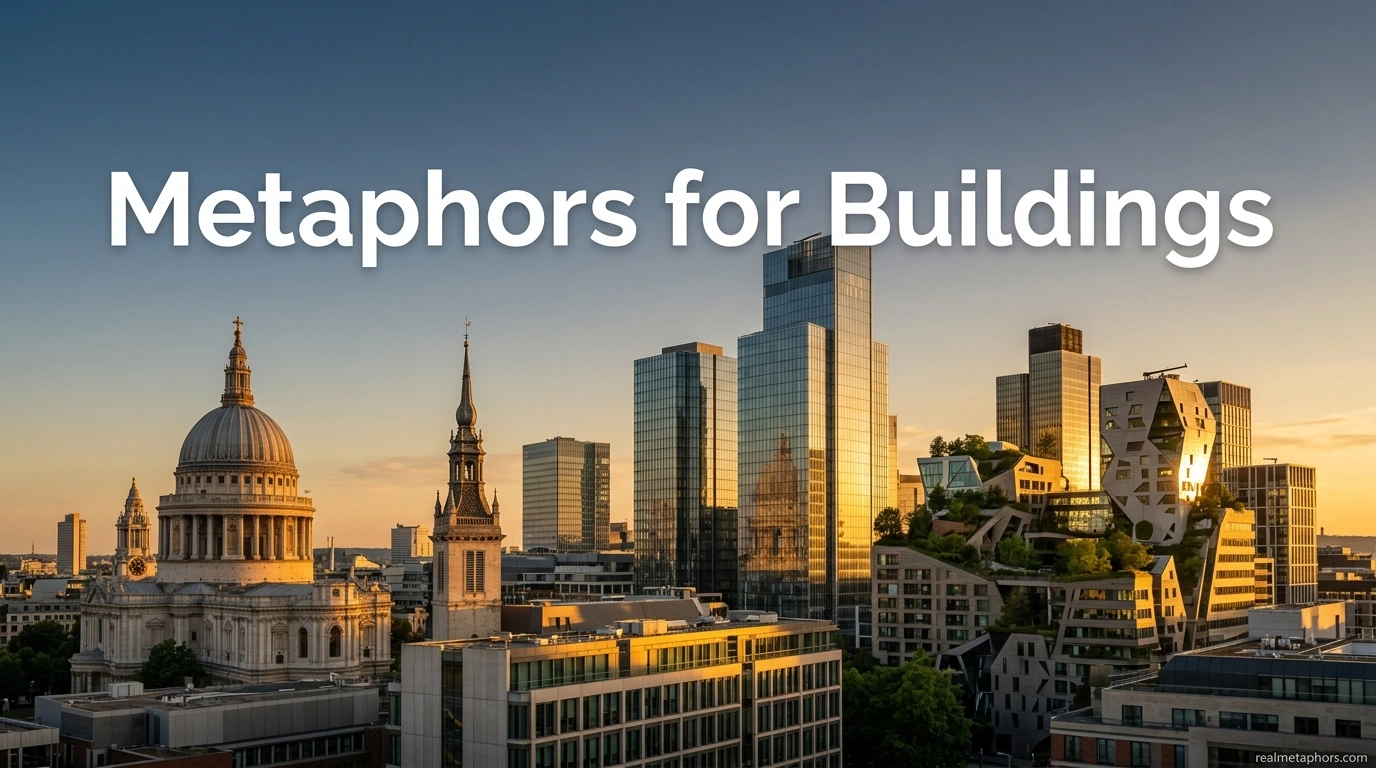
On a quiet evening, Sara looked at the old building near her home. It stood tall like a silent guardian, watching the street lights flicker one by one. She always thought buildings were more than bricks and cement. To her, a building could be a body, a heart, or even a memory holding the past inside its walls.
That is the magic of metaphors for buildings. We use them to describe strength, history, safety, or even emotions connected to structures. Let’s explore 25+ easy building metaphors you can use in daily life.
1. Buildings Are Mountains of Concrete
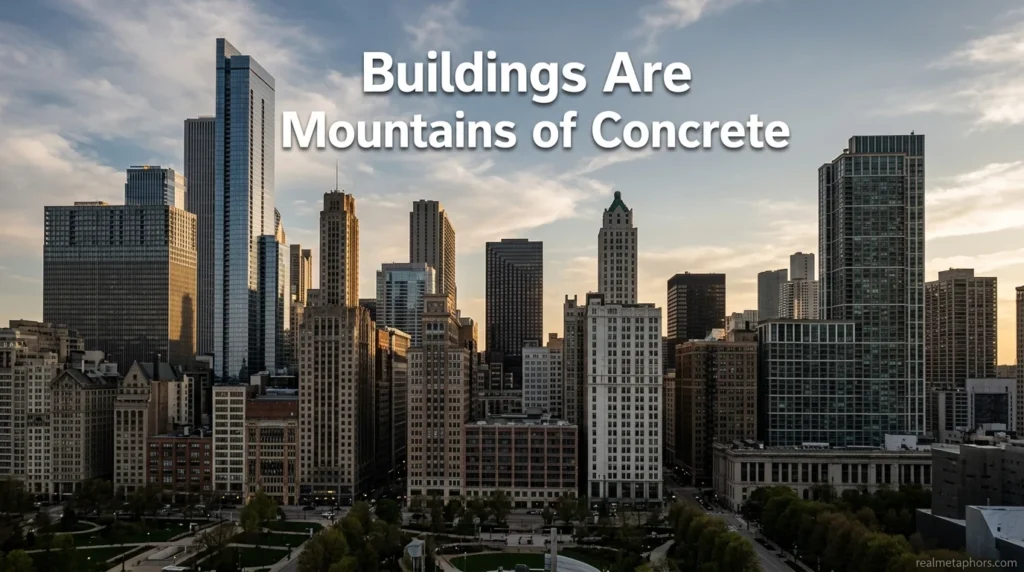
Meaning: Buildings can look strong, tall, and permanent like mountains.
Example:
- The office tower stood like a mountain of concrete in the city center.
Another way to say it:
- Concrete giant
- Stone mountain structure
Small detail: Imagine standing at the bottom and looking up until your neck feels tired.
2. Buildings Are Sleeping Giants
Meaning: Large buildings sometimes feel quiet and powerful, like giant creatures resting.
Example:
- The abandoned factory was a sleeping giant near the river.
Another way to say it:
- Silent giant
- Resting monster of stone
Small detail: Think of a giant breathing slowly while people walk nearby.
3. Buildings Are Stone Trees
Meaning: Buildings grow upward like trees, but instead of leaves, they have windows.
Example:
- The city skyline looked like a forest of stone trees.
Another way to say it:
- Concrete forest trunk
Small detail: Each window is like a small leaf catching sunlight.
4. Buildings Are Protective Arms
Meaning: Some buildings feel safe and comforting.
Example:
- My home felt like protective arms after a long journey.
Another way to say it:
- Hugging walls
- Stone shelter
Small detail: Imagine walls wrapping gently around you.
5. Buildings Are Time Capsules
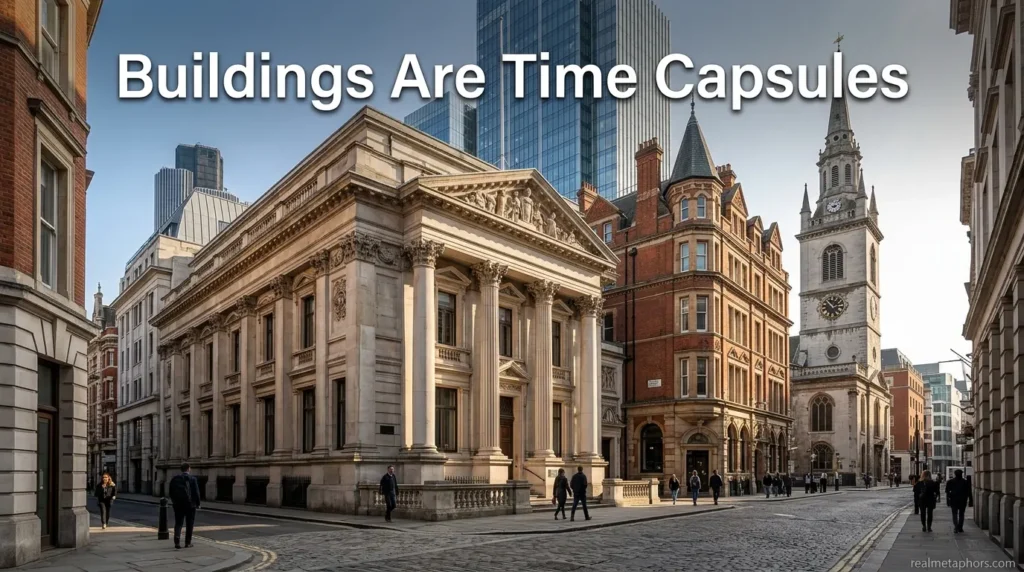
Meaning: Old buildings keep history inside.
Example:
- The museum building is a time capsule of our culture.
Another way to say it:
- Memory box of stone
Small detail: Every crack might tell a forgotten story.
6. Buildings Are Silent Storybooks
Meaning: Buildings can tell stories without speaking.
Example:
- The old school building was a silent storybook of childhood memories.
Another way to say it:
- Stone diary
Small detail: Paint marks and old doors are like written pages.
7. Buildings Are Sleeping Ships
Meaning: Some buildings feel like ships resting on land.
Example:
- The hotel looked like a sleeping ship waiting for the sea.
Another way to say it:
- Land boat
Small detail: Long balconies may look like ship decks.
8. Buildings Are Steel Skeletons
Meaning: The internal structure of modern buildings looks like a skeleton.
Example:
- The construction site showed a steel skeleton rising in the sky.
Another way to say it:
- Metal body frame
Small detail: You can imagine ribs of steel holding everything.
9. Buildings Are Guardians of the Street
Meaning: Buildings protect streets by surrounding them.
Example:
- The old shops stood like guardians of the market.
Another way to say it:
- Street watchmen
Small detail: Like soldiers standing silently.
10. Buildings Are Cities’ Crowns
Meaning: Famous tall buildings can feel like crowns on a city.
Example:
- The tower was the city’s shining crown at night.
Another way to say it:
- Urban jewel hat
Small detail: Lights look like diamonds.
11. Buildings Are Ant Hills of Humans
Meaning: Busy buildings feel like ant colonies.
Example:
- The apartment complex was an ant hill of workers and families.
Another way to say it:
- Human hive
Small detail: People move quickly like ants carrying food.
12. Buildings Are Glass Mirrors
Meaning: Glass buildings reflect the sky and surroundings.
Example:
- The office tower was a giant glass mirror of clouds.
Another way to say it:
- Sky reflection wall
Small detail: Morning sunlight dances on the surface.
13. Buildings Are Stone Mountains Growing From the Ground
Meaning: Emphasizes strength and height.
Example:
- The new mall looked like a stone mountain growing slowly.
Another way to say it:
- Earth-born mountain
Small detail: Construction cranes look like birds sitting on it.
14. Buildings Are People’s Second Skin
Meaning: Buildings protect and surround human life.
Example:
- Our house feels like a second skin during winter.
Another way to say it:
- Living shell
Small detail: Like clothing you never take off.
15. Buildings Are Light Boxes at Night
Meaning: Windows with lights look like glowing boxes.
Example:
- The city turned into a light box after sunset.
Another way to say it:
- Night lantern city
Small detail: Each window feels like a small star.
16. Buildings Are Memory Houses
Meaning: Places where memories live.
Example:
- The childhood home was a memory house for her.
Another way to say it:
- Past shelter
Small detail: Old photos feel alive there.
17. Buildings Are Stone Soldiers
Meaning: Buildings stand firm like soldiers guarding land.
Example:
- The old fort stood like a stone soldier.
Another way to say it:
- Concrete warrior
Small detail: Rain and wind cannot easily move it.
18. Buildings Are Urban Mountains of Light
Meaning: Night lights make buildings look magical.
Example:
- The downtown towers were mountains of golden light.
Another way to say it:
- Electric hills
Small detail: Cars below look like moving ants.
19. Buildings Are Human Nests
Meaning: Buildings are places where people live and grow.
Example:
- The apartment was a warm human nest.
Another way to say it:
- Family shell
Small detail: Like birds protecting eggs.
20. Buildings Are Sleeping Memories
Meaning: Old empty buildings hold past life quietly.
Example:
- The deserted school was a sleeping memory.
Another way to say it:
- Quiet past house
Small detail: Wind sounds like old voices.
21. Buildings Are Vertical Cities
Meaning: Tall buildings hold many people inside one structure.
Example:
- The skyscraper was a vertical city.
Another way to say it:
- Tower town
Small detail: Floors feel like streets.
22. Buildings Are Stone Oceans Standing Still
Meaning: Rows of buildings look like waves frozen in time.
Example:
- The city center was a stone ocean.
Another way to say it:
- Concrete sea
Small detail: Walking feels like sailing between waves.
23. Buildings Are Growing Giants
Meaning: New construction feels alive and growing.
Example:
- The construction site showed a growing giant reaching the sky.
Another way to say it:
- Sky seeker structure
Small detail: Each new floor is a step upward.
24. Buildings Are Silent Friends
Meaning: Familiar buildings feel like companions.
Example:
- The old library was her silent friend.
Another way to say it:
- Stone companion
Small detail: You feel comfort when you see it.
25. Buildings Are Human Dreams in Stone
Meaning: Buildings represent human ideas and ambitions.
Example:
- The city skyline was dreams turned into stone.
Another way to say it:
- Frozen ambition
Small detail: Every tower started as a thought.
Fun Practice Exercises
Try these activities to improve your metaphor skills:
- Look at a building and complete this sentence: “This building is like ______ because ______.”
- Write 3 new building metaphors using nature.
- Describe your home using one metaphor.
- Imagine a building talking. What would it say?
- Turn one building into a character in a story.
Tips for Using Building Metaphors
- Use simple comparisons that readers can imagine.
- Add emotions when writing stories.
- Use metaphors in social media captions to make them attractive.
- Don’t mix too many metaphors in one sentence.
- Think about color, shape, and feeling.
FAQs
1. What are metaphors for buildings?
They are comparisons that describe buildings using other objects or ideas.
2. Why are building metaphors useful?
They help make writing more interesting, emotional, and easy to imagine.
3. How can I create my own building metaphors?
Think about the building’s shape, size, function, or feeling and compare it to something similar.
4. What are common mistakes in metaphor use?
Using very confusing comparisons or mixing many metaphors together.
5. Can I use building metaphors in daily life?
Yes. You can use them in stories, captions, speeches, or school writing.
6. Are simple metaphors better?
Usually yes, because they are easier to understand.
7. How many metaphors should I use in one paragraph?
One or two are enough.