

The smell of fresh-cut grass, the echo of sneakers squeaking against polished gym floors, the rhythmic pounding of a heartbeat rising with every sprint—athletes live in a world of sensation, intensity, and motion. But how often do we try to translate that energy into words that capture not just what athletes do, but who they are, how they feel, and the poetic rhythm of their lives? Metaphors allow us to do just that, bridging the gap between the physicality of sports and the imagination of the mind.
In this article, we’ll explore over 25 metaphors for athletes—each carefully crafted with explanation, examples, and creative expansions. Whether you’re a writer, coach, social media creator, or simply an admirer of human performance, these metaphors can enhance your understanding, storytelling, and expression.
Why Metaphors Matter for Understanding Athletes
A metaphor is more than a decorative figure of speech—it is a bridge. By comparing an athlete to something vivid, surprising, or emotionally resonant, we can illuminate qualities that statistics, scores, or mere observation cannot. Metaphors make abstract ideas tangible: speed becomes lightning, determination becomes a mountain, and teamwork becomes an intricate dance. For readers, understanding athletes through metaphors deepens empathy, sparks creativity, and transforms mundane descriptions into memorable imagery.
1. The Athlete as a Caged Hurricane
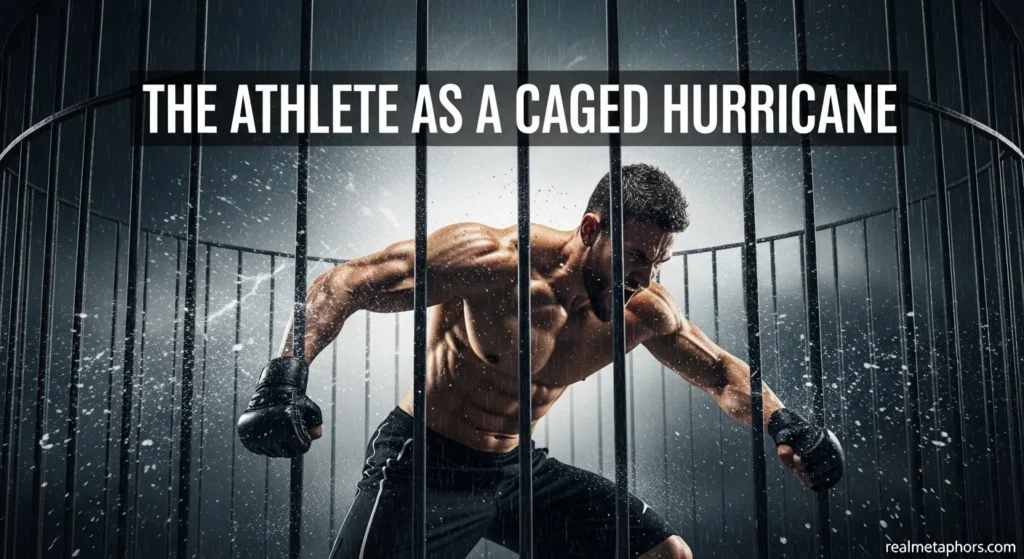
Meaning: Explosive energy barely contained, ready to unleash.
Example: The sprinter crouched at the starting line, a caged hurricane waiting for the gunshot.
Creative Expansion: Imagine gusts of wind, swirling leaves, and tremors of power.
Sensory Detail: Hear the roar in the lungs, feel the tension in every muscle.
2. The Athlete as a Precision Engine
Meaning: Every movement is calculated, efficient, and mechanical yet graceful.
Example: The swimmer sliced through the water like a precision engine, each stroke synchronized perfectly. Alternative Expression: “A clockwork of sinew and sweat.”
3. The Athlete as a Predator on the Hunt
Meaning: Focused, alert, strategic, and ready to strike.
Example: On the soccer field, he prowled the defense like a predator on the hunt.
Mini-Storytelling: Eyes narrow, muscles coiled, mind calculating angles like a chessboard.
4. The Athlete as a Rising Phoenix
Meaning: Overcoming injuries, setbacks, or challenges to emerge stronger.
Example: After months of rehabilitation, she returned to the track, a rising phoenix from her ashes.
Sensory Detail: Smoke of past failure clears; feathers of resilience glint in the sun.
5. The Athlete as a River

Meaning: Flowing, adaptable, and unstoppable when in motion.
Example: His dribbling on the basketball court moved like a river, weaving past defenders effortlessly. Alternative Expansion: Stream, torrent, or tidal wave imagery.
6. The Athlete as a Warrior Poet
Meaning: Combining raw strength with artistry and strategy.
Example: She attacked the mat like a warrior poet, every move both brutal and beautiful.
Cultural Reference: Reminiscent of samurai discipline and artistry.
7. The Athlete as a Rocket
Meaning: Sudden acceleration, energy, and unstoppable trajectory.
Example: Off the blocks, he launched like a rocket, leaving competitors in his wake.
Sensory Detail: The crack of the starting gun mirrors ignition; the air vibrates with motion.
8. The Athlete as a Mountain
Meaning: Steadfast, immovable, and enduring.
Example: In defense, he was a mountain, unyielding and constant.
Creative Expansion: Mountains weather storms—just like athletes face setbacks.
9. The Athlete as a Chameleon
Meaning: Adapts to circumstances, opponents, or strategies seamlessly.
Example: On the tennis court, she shifted like a chameleon, responding to every serve.
Imaginative Twist: Blend into situations, change colors to suit the game.
10. The Athlete as a Lightning Bolt
Meaning: Fast, electrifying, and impossible to predict.
Example: His breakaway sprint struck the goal like a lightning bolt.
Sensory Detail: Feel the charge in the air, see the flash before it disappears.
11. The Athlete as a Gladiator
Meaning: Courageous, resilient, and fighting against odds.
Example: In the final quarter, he battled the opposing team like a gladiator in the arena.
Historical Reference: Echoes of Roman arenas and heroic struggle.
12. The Athlete as a Tightrope Walker
Meaning: Balancing skill, risk, and precision.
Example: Every pass she made was a high-stakes move, like a tightrope walker over the void.
Sensory Detail: Heartbeats sync with steps, fear and focus intertwine.
13. The Athlete as a Tornado
Meaning: Powerful, chaotic, and destructive in competition.
Example: He charged downfield like a tornado, scattering the defense.
Alternative Expression: Tempest, cyclone, or whirlwind.
14. The Athlete as a Sculptor
Meaning: Shapes the game, crafts opportunities, and molds outcomes.
Example: On the court, she sculpted plays as a sculptor shapes clay.
Imaginative Twist: Each movement leaves a mark, an artistic signature.
15. The Athlete as a Gladiator of Mind and Body
Meaning: Mental toughness is as important as physical prowess.
Example: He faced the championship match like a gladiator of mind and body.
Creative Expansion: Mind as armor, strategy as sword.
16. The Athlete as a Fire
Meaning: Passionate, consuming, and contagious energy.
Example: The crowd felt her presence like fire spreading through a stadium.
Sensory Detail: Heat radiates, sparks fly, intensity is felt in the chest.
17. The Athlete as a Machine
Meaning: Efficient, relentless, and consistent.
Example: His training regimen was precise; he functioned like a machine.
Alternative Expression: “A metronome of endurance and power.”
18. The Athlete as a Phoenix of Perseverance
Meaning: Returning stronger after failure, emphasizing resilience.
Example: After a lost season, he returned as a phoenix of perseverance.
Imaginative Detail: Flames of past struggles give rise to renewed energy.
19. The Athlete as a Wind-Up Toy
Meaning: Explosive energy unleashed after careful preparation.
Example: Once the whistle blew, she moved like a wind-up toy released from tension.
Creative Expansion: Kinetic energy, anticipation, and sudden action.
20. The Athlete as a Storm Surge
Meaning: Overpowering, overwhelming, and unstoppable.
Example: The forward surged into the defense like a storm surge.
Sensory Detail: Roar of the crowd like crashing waves, momentum building.
21. The Athlete as a Tightrope Between Chaos and Control
Meaning: Maintaining balance amid high stakes and pressure.
Example: Every decision in the final seconds felt like walking a tightrope between chaos and control. Alternative Expression: “Balancing on the edge of instinct and strategy.”
22. The Athlete as a Lion
Meaning: Regal, commanding, and courageous.
Example: On the field, he prowled the midfield like a lion surveying his territory.
Sensory Detail: Sun on the mane, roar echoing in the chest.
23. The Athlete as a Lightning Conductor
Meaning: Channels energy, focus, and momentum efficiently.
Example: She channeled the team’s nervous energy like a lightning conductor in a storm.
Imaginative Twist: Sparks fly from fingertips to action.
24. The Athlete as a Time Traveler
Meaning: Moves with perception beyond the immediate moment, anticipating the game.
Example: He read plays ahead of time, like a time traveler predicting the future.
Creative Expansion: Slow-motion perception, foresight, prescience.
25. The Athlete as a Phoenix Feather
Meaning: Rare, graceful, and capable of inspiring awe.
Example: Her jump in the final round was like a phoenix feather floating through air.
Sensory Detail: Light as air, glowing with effort and beauty.
26. The Athlete as a Conductor of Chaos
Meaning: Organizes unpredictable elements into rhythm and purpose.
Example: On the court, he orchestrated plays like a conductor of chaos.
Mini Storytelling: Defenders clash, balls fly, yet his guidance turns turmoil into art.
27. The Athlete as a Mirror
Meaning: Reflects the energy, emotion, and intensity of opponents or teammates.
Example: She mirrored her rival’s aggression, matching intensity move for move.
Creative Expansion: Reflection, duality, and strategy interplay.
Engaging Readers: Exercises & Reflection Prompts
- Metaphor Mapping: Choose your favorite athlete and write five original metaphors that describe their energy, skill, or personality.
- Scenario Swap: Take one of the metaphors above and rewrite it for a different sport or situation.
- Visual Metaphor Sketch: Draw or imagine a scene where the metaphor comes alive (e.g., “athlete as lightning bolt”).
- Creative Storytelling: Start a short story using one metaphor as the opening line: “She was a hurricane, tearing across the soccer field…”
Bonus Tips:
- Use metaphors in captions for Instagram, tweets, or blog posts to create a vivid impression.
- Mix emotional, sensory, and visual details for maximum impact.
- Experiment with extended metaphors to tell longer narratives about an athlete’s journey.
FAQs
What does it mean to describe someone as an athlete metaphorically?
Metaphorically describing an athlete highlights qualities like speed, endurance, focus, or resilience in imaginative, symbolic ways beyond literal performance.
Why are metaphors useful for understanding athletes?
Metaphors make abstract qualities tangible, evoke emotion, and deepen connection between the observer and the athlete’s experiences.
How can metaphors improve storytelling about sports?
Metaphors transform ordinary action into vivid imagery, engaging readers’ senses and emotions, making narratives memorable and impactful.
What are tips for creating effective metaphors for athletes?
Focus on sensory details, compare physical or mental traits to vivid objects or forces, and ensure the metaphor reflects the athlete’s energy or essence.
What are common mistakes to avoid when using metaphors?
Avoid clichés, overly complicated comparisons, or metaphors that don’t align with the athlete’s actual qualities.
Can metaphors be used in everyday conversation about sports?
Absolutely. Phrases like “he’s a lion on the field” or “she’s a hurricane at the net” make discussions more engaging and expressive.
How can I expand a simple athlete metaphor creatively?
Add sensory, emotional, or situational layers, or turn it into an extended metaphor telling a story about the athlete’s journey.
What other creative applications exist for athlete metaphors?
You can use them in content writing, motivational speeches, social media posts, poetry, and even personal reflection or journaling.
Conclusion
Metaphors breathe life into description, turning athletes from mere performers into living stories of power, grace, and determination. With these 25+ metaphors, you now have a toolkit to capture the poetry of motion and inspire readers, fans, and creators alike.